Steve Welsh MarketingKilmarnock · Ayrshire · UKCall NowBook a free call

Category: Marketing Strategy Posts

  • Digital Marketing KPIs for Scottish Businesses: What to Measure and Why

    Digital Marketing KPIs for Scottish Businesses: What to Measure and Why

    Digital marketing can generate a steady flow of website visitors, enquiries and sales, but only when performance is measured against clear business objectives. For Scottish businesses, knowing which digital marketing KPIs to track helps you understand what is working, where money is being wasted and which activities deserve more investment.

    The right measures will differ between a tradesperson in Dundee, a professional services firm in Edinburgh, a tourism operator in the Highlands and an ecommerce business serving customers across the UK. However, the principle remains the same: focus on meaningful commercial outcomes rather than collecting data for its own sake.

    This guide explains the most useful digital marketing KPIs for Scottish businesses, how to choose them and how to build a straightforward monthly review process. It also covers digital marketing metrics for Scottish businesses, including website performance, local SEO, lead generation, social media and marketing efficiency.

    Quick answer

    The most useful digital marketing KPIs for Scottish businesses are the measures that connect marketing activity to enquiries, customers and profitable growth. Start with one clear objective, such as generating more qualified enquiries in Glasgow or increasing online bookings across the Highlands. Then track five to eight KPIs, including website conversion rate, qualified leads, cost per qualified lead, lead-to-customer conversion rate, sales revenue and return on marketing investment. Supporting measures such as organic traffic, search visibility, Google Business Profile actions and engagement can explain performance, but should not replace commercial outcomes. Review results monthly using reliable data from GA4, Search Console, advertising platforms, CRM records and sales systems.

    1-Digital Marketing KPIs for Scottish Businesses: A Practical Guide

    What are digital marketing KPIs and why do they matter?

    A key performance indicator, or KPI, is a measurable result used to assess progress towards a specific business objective. In digital marketing, this could include the number of qualified enquiries generated, the percentage of website visitors who complete a contact form or the revenue produced by a campaign.

    KPIs give marketing activity direction. Instead of asking whether a campaign is “doing well”, you can ask whether it is generating the right number of enquiries at an acceptable cost, increasing sales or helping the business reach a defined growth target.

    This distinction matters because digital platforms provide a huge amount of information. Google Analytics 4, Google Search Console, advertising platforms, social media accounts and CRM systems can all produce reports. Without agreed priorities, it is easy to spend time reviewing numbers that do not influence decisions.

    For example, a business might receive 10,000 monthly website visits but only two enquiries. Another might receive 500 visits and generate 25 strong leads. The second business may be achieving considerably more value from its marketing, even though its traffic figure is lower.

    The difference between a marketing metric and a KPI

    A metric is any measurable piece of marketing data. A KPI is a metric that has been selected because it directly relates to a business goal.

    Website users, impressions, likes, video views and email opens are all metrics. They can provide useful context, but they are not automatically important KPIs. If a business objective is to generate more quote requests, then relevant KPIs might include website conversion rate, qualified leads, cost per lead and the value of new sales.

    A useful way to separate the two is to ask three questions:

    • Does this measure relate to a current business objective?
    • Can the business influence it through marketing activity?
    • Will a change in this figure lead to a useful decision?

    If the answer is no, the number may still be interesting, but it should not be treated as a priority KPI.

    This does not mean that traffic, reach or engagement should be ignored. They can help explain why results are changing. For instance, a fall in organic traffic may explain a fall in enquiries. However, commercial outcomes should usually receive more attention than surface-level activity.

    Why Scottish businesses need goals before choosing measurements

    The best marketing KPIs for small businesses depend on what the business is trying to achieve. A local service provider may want more phone calls from customers in Glasgow, while a software company may be focused on product demonstrations from businesses throughout Scotland and the wider UK.

    Start by defining the commercial objective. Common goals include:

    • Increasing enquiries from a specific town, city or region
    • Generating more sales-qualified leads
    • Improving the conversion rate of existing website traffic
    • Reducing the cost of acquiring a new customer
    • Increasing revenue from digital channels
    • Building awareness before launching a new service
    • Improving repeat purchases or customer retention

    Once the goal is clear, choose a small group of KPIs that show whether progress is being made. A local roofer might track calls, quote requests, local search visibility and cost per lead. A hotel might prioritise direct bookings, booking conversion rate, revenue per visitor and the proportion of website bookings compared with third-party platforms.

    Clear goals prevent businesses from choosing KPIs simply because the data is easy to access. They also make it easier to agree what success looks like before a campaign begins.

    2-Quick answer

    The most useful digital marketing KPIs for Scottish businesses

    There is no universal list of measurements that every organisation should use. However, most Scottish SMEs and local operators can build a useful reporting system around website performance, search visibility, lead generation and sales results.

    The following digital marketing KPIs for Scottish businesses are a practical starting point.

    Website, SEO and local search KPIs

    Website traffic is useful when it is analysed properly. Instead of looking only at total users, review where visitors came from, what pages they viewed and whether they completed a valuable action.

    Important website and SEO KPIs include:

    • Organic traffic: This shows how many visitors arrive through unpaid search results. Review organic traffic by landing page, location and device where possible. A rise in traffic is positive, but it matters most when it comes from people who are likely to become customers.
    • Engaged sessions: Google Analytics 4 provides engagement information that can help you understand whether visitors interact meaningfully with your website. High traffic with very low engagement may indicate poor targeting, slow loading pages or a mismatch between the search query and the page content.
    • Website conversion rate: This is the percentage of visitors who complete a defined action. Depending on the business, a conversion may be a form submission, phone call, booking, brochure download, purchase or request for a callback. A simple calculation is:

    Conversions divided by total website visitors, multiplied by 100.

    For example, if 1,000 relevant visitors generate 30 enquiries, the website conversion rate is 3%. Tracking this over time helps identify whether website improvements are producing commercial value.

    • Search rankings: Rankings can indicate progress for important service and location searches, such as “accountant in Aberdeen” or “landscape gardener near Stirling”. They should not be treated as the final objective, because a high ranking that produces no enquiries has limited value. Focus on commercially relevant search terms and whether improved visibility leads to action.
    • Search impressions and click-through rate: Google Search Console can show how often pages appear in search results and how frequently users click them. A high number of impressions with a low click-through rate may suggest that page titles and descriptions need improvement.
    • Google Business Profile actions: Local operators should monitor calls, website visits, direction requests and messages from their Google Business Profile. These actions can be especially valuable for restaurants, clinics, trades businesses, retail shops and professional services firms with a local customer base.
    • Local pack visibility: Track whether the business appears in the map results for relevant searches across its target towns and service areas. Search results can vary by location, so results should be reviewed consistently rather than relying on a single search from one office.
    • New reviews and average rating: Reviews influence trust and local decision-making. Track the number of new reviews, average rating and whether customers mention relevant services or locations. Review activity is not a complete marketing KPI, but it can support local visibility and conversion performance.

    For Scottish businesses, location should be included in reporting wherever practical. Comparing performance in Edinburgh, Glasgow, Perth or Inverness may reveal different levels of demand and competition. It can also show where future landing pages, advertising campaigns or local partnerships could produce the greatest opportunity.

    Lead generation, conversion and sales KPIs

    If the aim of marketing is to generate business, lead generation and sales measures must be part of the reporting process. Website data alone cannot show whether enquiries are suitable, profitable or likely to become customers.

    Useful lead generation metrics include:

    • Number of leads: Count enquiries from forms, phone calls, emails, live chat, bookings and other agreed sources. Make sure duplicate or spam submissions are removed.
    • Qualified leads: Not every enquiry is commercially useful. A qualified lead meets criteria such as location, budget, service requirement, timescale or decision-making authority. Tracking qualified leads gives a more realistic view of marketing quality.
    • Lead-to-customer conversion rate: This shows how many leads become paying customers. If 20 leads generate five sales, the lead-to-customer conversion rate is 25%. It helps identify whether problems exist in marketing, sales follow-up, pricing or the service proposition.
    • Cost per lead: Cost per lead is calculated by dividing campaign or channel spend by the number of leads generated. If a paid search campaign costs £600 and produces 20 enquiries, the cost per lead is £30. It is more useful when calculated using qualified leads, rather than every form submission.
    • Cost per acquisition: This measures the cost of generating a new customer. Include relevant marketing and sales costs where possible. A channel that produces cheap leads may not be efficient if those leads rarely buy.
    • Sales revenue by channel: Connect enquiries and sales to their original marketing source. This helps compare organic search, paid advertising, social media, email and referrals based on revenue rather than activity alone.
    • Return on marketing investment: Return on marketing investment, or ROMI, compares the profit or revenue generated with the cost of marketing. The exact calculation depends on the business, but the basic principle is to understand what the investment produced and whether it was profitable.
    • Average customer value: Some marketing channels may attract customers who make repeat purchases or sign longer contracts. Measuring average customer value prevents decisions being based only on the first transaction.
    • Speed to lead: For many service businesses, the time taken to respond to an enquiry affects the chance of winning the work. Track how quickly new leads receive a call, email or other meaningful response.

    These measures are particularly important for businesses in competitive sectors. A solicitor, recruitment company, training provider or building contractor may receive fewer enquiries than a consumer retailer, but each new customer could be worth thousands of pounds. Quality and value must be considered alongside volume.

    3-What are digital marketing KPIs and why do they matter?

    How to choose the right KPIs for your business goals

    Once your objectives are defined, select KPIs that connect marketing activity to a measurable business result. Avoid trying to track every available figure. A focused set of five to eight primary KPIs is usually easier to manage and more likely to lead to action.

    KPIs for increasing local visibility and website enquiries

    If your goal is to increase visibility in a specific Scottish area and generate more enquiries, consider tracking:

    • Organic traffic to service and location pages
    • Search impressions and click-through rate for priority terms
    • Local pack or map visibility
    • Google Business Profile calls and website actions
    • Website conversion rate
    • Phone calls and form submissions
    • Qualified enquiries by location
    • Cost per qualified lead if paid advertising is being used

    Review these KPIs together. For example, increased local visibility with no increase in enquiries may indicate that the website content, offer or calls to action need improvement. More enquiries with a low qualification rate may indicate that targeting is too broad or the messaging is attracting the wrong audience.

    A business serving rural areas should also consider travel zones and service coverage. If a company only operates within 30 miles of Falkirk, attracting enquiries from distant parts of Scotland may increase lead volume but reduce marketing efficiency.

    KPIs for improving customer acquisition and marketing efficiency

    If the objective is to acquire customers more efficiently, focus on the relationship between spend, lead quality and revenue. Relevant KPIs include:

    • Cost per qualified lead
    • Cost per acquisition
    • Lead-to-customer conversion rate
    • Sales revenue by channel
    • Return on marketing investment
    • Average customer value
    • Sales cycle length
    • Percentage of leads receiving timely follow-up

    These measures can reveal where budget should be increased or reduced. For example, organic search may have a higher initial content cost but generate leads for several years. Paid advertising may create faster results but become expensive in a competitive market. Social media may assist with awareness and trust without being the final recorded source of a sale.

    Attribution is not always perfect, particularly when customers interact with several channels before making contact. Use the available data as a guide, then combine it with CRM records, customer feedback and sales team insight.

    If you want help turning these measurements into a consistent plan, explore our Marketing Packages to see how practical strategy, campaign activity and performance tracking can work together.

    4-The most useful digital marketing KPIs for Scottish businesses

    How to track and review your marketing performance

    Effective measurement requires more than installing analytics software. Data needs to be configured correctly, reviewed consistently and connected to decisions that someone in the business can act on.

    Creating a practical KPI dashboard with reliable data

    A marketing dashboard for a small business should be clear enough to understand quickly. It could be built using a spreadsheet, a reporting platform or a combination of analytics and CRM tools.

    Start with a single page containing:

    • The business objective
    • Each primary KPI
    • The current month’s result
    • The previous month’s result
    • The target
    • The change over time
    • A short explanation of the result
    • The action to be taken

    For example:

    Objective: Generate more qualified enquiries from Glasgow.

    KPI: Qualified website enquiries.
    Current result: 18.
    Previous month: 13.
    Target: 20.
    Action: Improve the service page call to action and test a shorter enquiry form.

    Use consistent definitions. Decide what counts as a lead, a qualified lead, a conversion and a new customer. Record whether figures include VAT, advertising fees, agency costs or sales staff time. Inconsistent definitions can make performance appear to improve or decline when the reporting method has simply changed.

    Google Analytics 4 KPIs can provide useful information about users, engagement, events, traffic sources and conversions. However, analytics data should be checked against real enquiries, phone records and sales data. Tracking can be affected by consent settings, browser restrictions, incorrect event configuration and duplicate conversions.

    Make sure important actions are configured as conversions. Test contact forms, call tracking, booking systems and ecommerce transactions regularly. A dashboard based on incomplete data can create false confidence.

    How often to review results and what action to take

    Monthly reviews are suitable for most small and medium-sized businesses. A monthly cycle provides enough time for activity to produce results while allowing issues to be identified before they become costly.

    A practical monthly review should ask:

    • Which KPIs improved, declined or stayed the same?
    • Did performance move towards the business goal?
    • Which channel produced the best quality opportunities?
    • Were there unusual factors, such as seasonal demand or a one-off promotion?
    • What did customers and sales staff report?
    • Which one to three actions should be taken next month?

    Some figures need more frequent monitoring. Check budgets, website errors, lead notifications and paid advertising performance weekly, particularly when campaigns are active. However, avoid making major strategic decisions based on one or two days of data.

    Quarterly reviews are useful for assessing broader trends, budget allocation, content performance and the continued relevance of your goals. Seasonal Scottish businesses should compare results with the same period in the previous year where possible. A Highland tour operator, for example, may see large changes between summer and winter that do not indicate a marketing problem.

    5-How to choose the right KPIs for your business goals

    Common KPI mistakes and a simple measurement plan

    Many businesses have access to plenty of data but still struggle to measure marketing effectively. The problem is often not a lack of information. It is a lack of focus, consistency and follow-through.

    Why vanity metrics can create misleading conclusions

    Vanity metrics are figures that look positive but do not necessarily indicate business progress. Examples include social media likes, follower numbers, impressions and total page views.

    These measures can have a supporting role. Growing reach may help a new business become known, and strong engagement may indicate that content is relevant. However, they should not replace commercial KPIs.

    A post with 500 likes may produce no enquiries. A post with 20 views may be seen by the right decision-maker and generate a valuable contract. Similarly, a website page with fewer visitors may convert more effectively than a high-traffic blog article.

    When reviewing social media marketing metrics, consider actions such as website visits, direct enquiries, event registrations, downloads and assisted conversions. Also assess whether the audience matches the business’s target customers.

    Another common mistake is tracking too many KPIs. A long report can make it difficult to see what matters. Select a small number of primary indicators and use supporting metrics only when they help explain performance.

    Businesses should also avoid changing direction too quickly. Search engine optimisation and content activity can take time to build momentum. Paid campaigns may need sufficient data before a reliable comparison can be made. Set a review period in advance and avoid judging every activity on short-term fluctuations alone.

    A 30 day plan for setting, tracking and improving your KPIs

    Use the following plan to establish a practical measurement process.

    Days 1 to 5: Define the commercial goal

    Choose one primary marketing objective for the next 90 days. Make it specific, such as generating 30 qualified enquiries from businesses in Aberdeen or increasing online bookings by 15%.

    Days 6 to 10: Audit current data

    Review Google Analytics 4, Search Console, advertising accounts, social media platforms, website forms, phone records and sales systems. Identify what is tracked accurately and where gaps exist.

    Days 11 to 15: Select your KPIs

    Choose five to eight measures that directly relate to the objective. Include at least one commercial outcome, such as qualified leads, customers or revenue. Set a realistic target based on previous performance and available resources.

    Days 16 to 20: Fix tracking and definitions

    Make sure important forms, calls, bookings and purchases are recorded. Agree what constitutes a lead and a qualified lead. Add source information to enquiry forms or record it in your CRM so that channel performance can be assessed.

    Days 21 to 25: Build the dashboard

    Create a simple report showing the current result, previous result, target and next action. Use plain language so that everyone involved in marketing and sales can understand it.

    Days 26 to 30: Review and prioritise

    Assess the first set of results, while recognising that some channels need more time. Identify quick improvements, such as fixing a broken form, improving a weak page title or following up leads faster. Then agree the next monthly actions.

    After the first month, repeat the review process. Over time, the data will show which activities attract valuable customers and which require refinement.

    Questions

    FAQ

    1. Which digital marketing KPIs should a small Scottish business track first?

      Start with KPIs linked to your main commercial goal. For most small businesses, this means qualified enquiries, website conversion rate, cost per qualified lead, lead-to-customer conversion rate and sales revenue by channel. Add local search or Google Business Profile actions if you serve a defined area.

    2. How can I measure whether local SEO is generating business?

      Track organic traffic to relevant service and location pages, local pack visibility, Google Business Profile calls and website actions, website conversions and qualified enquiries by location. Compare these figures over time and check them against CRM and sales records.

    3. What is a realistic website conversion rate for a Scottish business?

      There is no single benchmark because conversion rates vary by sector, traffic quality, offer and customer journey. Establish your current rate, improve the page and call to action, then set a realistic target based on your own data rather than a generic industry figure.

    4. Should I prioritise traffic, rankings or leads?

      Prioritise leads, customers and revenue when making commercial decisions. Traffic and rankings are useful supporting KPIs because they can explain changes in visibility and demand, but they do not prove that marketing is producing value unless they lead to meaningful actions.

    5. Can Steve Welsh Marketing help set up KPI tracking?

      Yes. Steve Welsh Marketing can help you choose commercially relevant KPIs, review your existing measurement, set up practical tracking and build a marketing plan focused on improving enquiries, sales and return on investment.

    Conclusion: using digital marketing KPIs for Scottish businesses

    The most effective digital marketing KPIs for Scottish businesses are the ones that connect marketing activity to real commercial progress. Website conversion rate, qualified leads, cost per lead, customer acquisition cost, sales revenue and return on marketing investment are usually more useful than traffic or follower numbers alone.

    Begin with a clear objective, choose a focused set of measures and ensure that tracking is reliable. Review performance monthly, consider local and seasonal factors, and use the findings to decide what to improve, continue or stop.

    Good measurement does not require a complicated reporting system. It requires consistent definitions, commercially relevant targets and the discipline to turn data into action. Whether you are trying to increase local enquiries, improve lead quality or make your marketing budget work harder, the right KPIs can provide the clarity needed to make better decisions.

    If you want a more structured approach, get in touch with Steve Welsh Marketing to discuss how a practical marketing plan, focused activity and regular performance tracking can support your business goals.

  • Retargeting Ad Strategies for Website Visitors: A Practical Guide for UK Businesses

    Retargeting Ad Strategies for Website Visitors: A Practical Guide for UK Businesses

    Quick Answer

    Retargeting ad strategies for website visitors help UK businesses re-engage people who have already shown interest but have not yet converted. The most effective approach is to segment audiences by page visited, level of intent and recency, then match the ad message to where they are in the buying journey. For example, a pricing page visitor may need a stronger call to action, while an early-stage blog reader may respond better to proof or useful content. When tracking is set up properly, website visitor retargeting can improve conversion rates and make ad spend work harder.

    Intro

    Many UK businesses invest time and budget into getting people onto their website, only to watch most of those visitors leave without taking action. That is normal. Very few people convert on their first visit, especially if the service is considered, the price point is higher, or the buying cycle involves research and comparison.

    This is where retargeting ad strategies for website visitors become so valuable. Instead of relying only on first-click conversions, retargeting helps you reconnect with people who have already shown interest in your business. They may have viewed a service page, read a case study, added products to a basket, or started a contact form. A well-planned retargeting campaign gives you another chance to move them forward.

    For UK businesses, this can be one of the most efficient ways to improve return on ad spend. You are not advertising to a cold audience with no awareness of your brand. You are speaking to people who already know you exist. That changes the economics of paid media and often leads to stronger conversion rates, lower acquisition costs and better use of your traffic.

    In this guide, we will look at practical marketing strategies for website visitor retargeting approaches that work across Meta, Google Ads and LinkedIn. We will cover segmentation, messaging, creative, frequency, tracking and common mistakes, so you can build remarketing ads for businesses that are more likely to generate enquiries, sales and booked calls.

    1-Retargeting Ad Strategies for Website Visitors

    What retargeting ads are and why they work for website visitors

    Retargeting ads are paid adverts shown to people who have previously visited your website or interacted with your brand online. They are designed to bring those users back and encourage them to complete a specific action, such as making an enquiry, booking a consultation, downloading a guide or purchasing a product.

    The principle is simple. A visitor lands on your site, browses a page or takes a partial action, then leaves. Through tracking tools such as the Meta Pixel, Google tag or LinkedIn Insight Tag, you can place that visitor into an audience and show them relevant ads afterwards.

    This matters because most website traffic is not ready to convert immediately. People compare suppliers, get distracted, need internal approval, or simply want more reassurance before they commit. Retargeting keeps your business visible during that decision-making period.

    For many businesses, display and social retargeting can become one of the highest-performing parts of a paid media account because it focuses budget on people who have already demonstrated intent.

    How retargeting differs from standard paid advertising

    Standard paid advertising often targets cold audiences. These are people who may fit your ideal customer profile but have never visited your website or engaged with your brand. You are introducing your business for the first time and trying to generate interest.

    Retargeting is different because the audience is warmer. They have already taken a step towards your business, even if that step was small. That means your messaging can be more direct, more specific and more conversion-focused.

    For example, a cold traffic campaign on Meta might introduce your brand with a broad message about your services. A retargeting campaign, by contrast, might show an ad specifically to people who visited your pricing page in the last 14 days, using a message that addresses common objections and encourages them to book a call.

    The same applies in Google Ads. A standard search campaign captures active demand from people searching for a solution. A retargeting display campaign follows up with those who clicked through but did not convert.

    This distinction is important because it affects everything from audience setup to creative, offers and bidding strategy.

    Why warm audiences usually convert better than cold traffic

    Warm audiences usually convert better because they have already crossed the first barrier, which is awareness. They know your name, they have seen your website, and they have shown at least some level of interest.

    That does not mean every previous visitor is highly qualified. Some may have bounced quickly or landed on the wrong page. But in general, a visitor who has already engaged with your business is more likely to respond than someone seeing your brand for the first time.

    There are a few reasons for this:

    • Trust is higher. Familiarity reduces friction.
    • Intent is clearer. Visiting a service page or product page suggests genuine interest.
    • Decision time is shorter. You are continuing a conversation rather than starting one.
    • Messaging can be more relevant. You can tailor ads based on what the person viewed or did.

    For a UK B2B company, this can be especially useful where buying decisions often involve multiple touchpoints. Someone may visit your website after a referral, a networking event, a LinkedIn post or a Google search. Retargeting helps keep your business in front of them while they evaluate options.

    2-What retargeting ads are and why they work for website visitors

    The best retargeting ad strategies for website visitors

    The best retargeting ad strategies for website visitors are built around relevance. If you show the same generic ad to every previous visitor, performance will usually be limited. The strongest campaigns segment audiences properly and match the message to what the user is likely to need next.

    Retargeting should not be treated as one audience and one ad set. It should be treated as a structured follow-up system.

    Segment visitors by page views, intent and time on site

    Segmentation is one of the biggest factors in retargeting performance. Not all website visitors are equal, and your campaigns should reflect that.

    A useful starting point is to segment by page views. For example:

    • Homepage visitors
    • Service page visitors
    • Pricing page visitors
    • Case study or testimonial page visitors
    • Contact page visitors
    • Basket or checkout visitors
    • Lead magnet or resource page visitors

    Each of these groups tells you something different about intent. Someone who visited a blog post may be early in the research phase. Someone who visited your pricing page and then your contact page is much closer to conversion.

    You can also segment by behaviour, such as:

    • Time on site
    • Number of pages viewed
    • Scroll depth
    • Add to basket
    • Form started but not submitted
    • Repeat visits

    For example, if someone spent three minutes on your service page and viewed two case studies, they are likely to be more engaged than someone who landed on the homepage and left after ten seconds.

    Time windows matter too. A visitor from the last 7 days is usually warmer than a visitor from 90 days ago. In many retargeting campaigns UK businesses run, recency has a major impact on conversion rate.

    A practical setup might include:

    • 0 to 7 days for high-intent visitors
    • 8 to 30 days for mid-intent follow-up
    • 31 to 90 days for longer consideration cycles

    This allows you to adjust messaging and budget based on how fresh the interest is.

    Match ad messaging to the stage of the buying journey

    Once your audiences are segmented, your messaging should reflect where each group is in the buying journey.

    Early-stage visitors often need reassurance and education. They may respond well to ads that highlight your expertise, explain your process or point them towards useful content.

    Mid-stage visitors usually need proof and differentiation. This is where testimonials, case studies, results and trust signals can work well.

    Late-stage visitors often need a clear reason to act now. That could be a strong call to action, a limited-time offer, a free consultation, or a reminder of what they are missing by delaying.

    Here is a simple example for a UK marketing agency:

    • A blog reader sees an ad promoting a practical guide or case study.
    • A service page visitor sees an ad focused on outcomes, credibility and client results.
    • A pricing page visitor sees an ad inviting them to book a strategy call.
    • A form abandoner sees an ad reminding them to complete their enquiry.

    This is what makes a conversion-focused ad strategy effective. You are not just chasing clicks. You are moving people through the decision process with the right message at the right time.

    3-The best retargeting ad strategies for website visitors

    How to build a retargeting campaign that performs

    A successful retargeting campaign depends on more than just audience creation. Platform choice, tracking, exclusions and conversion setup all affect results. If the foundations are weak, even strong creative will struggle.

    Choose the right platforms and audiences for your budget

    Not every platform suits every business. The best choice depends on your audience, sales cycle, offer and budget.

    Meta is often a strong option for B2C and many service-based businesses. Facebook and Instagram retargeting can work well for visual offers, local services, ecommerce and lead generation. Costs are often accessible, and the platform offers flexible audience building and creative formats.

    Google Ads is particularly useful for display retargeting, YouTube retargeting and remarketing to previous site visitors across the web. It can be effective for keeping your brand visible after someone has visited your site from search or another source.

    LinkedIn is often valuable for B2B retargeting, especially if your target audience includes decision-makers in specific sectors or job roles. Costs are usually higher, but the audience quality can justify that for higher-value services.

    For smaller budgets, it is usually better to focus on one or two platforms and build them properly rather than spreading spend too thinly. A common mistake is trying to run Meta, Google and LinkedIn at once without enough audience volume or budget to support meaningful testing.

    As a guide:

    • Use Meta if you want broad reach and flexible creative.
    • Use Google Ads if you want strong display coverage and support for search-driven traffic.
    • Use LinkedIn if your offer is high-value and aimed at a defined professional audience.

    The audience size also matters. If your website traffic is low, very narrow segmentation may leave you with audiences too small to serve ads effectively. In that case, start with broader retargeting pools and refine as traffic grows.

    Set up tracking, exclusions and conversion goals properly

    Tracking is essential. Without it, you cannot build reliable audiences, measure conversions accurately or optimise performance.

    At a minimum, make sure the relevant tracking tags are installed correctly across your website. This may include:

    • Meta Pixel
    • Google tag
    • Google Ads conversion tracking
    • LinkedIn Insight Tag
    • GA4 event tracking

    You should also define the actions that matter most to your business. These might include:

    • Lead form submissions
    • Phone call clicks
    • Booked consultations
    • Purchases
    • Add to basket events
    • Download completions
    • Demo requests

    Once these are in place, set up exclusions. Exclusions stop you wasting budget on people who have already converted or who are not relevant to a particular campaign.

    Examples include:

    • Excluding existing customers from prospecting campaigns
    • Excluding converted leads from lead generation retargeting
    • Excluding job applicants from service-related campaigns
    • Excluding low-value page visitors from high-intent ad sets

    This is especially important in remarketing ads for businesses with multiple audience types. If you do not control exclusions, your campaigns can become inefficient and confusing.

    Conversion goals should also align with campaign intent. If your retargeting audience is close to purchase, optimise for the final conversion. If they are earlier in the journey, a softer goal such as a content download or consultation booking may be more realistic.

    4-How to build a retargeting campaign that performs

    Creative and offer ideas that bring visitors back

    Retargeting creative should do more than remind people you exist. It should give them a reason to return. That reason might be trust, clarity, urgency, value or a stronger understanding of what makes your business the right choice.

    Use proof, urgency and clear calls to action

    Proof is one of the most effective tools in retargeting. If someone has already visited your website but not converted, they may need reassurance that your business can deliver.

    Useful proof elements include:

    • Client testimonials
    • Review scores
    • Case study results
    • Accreditations
    • Years of experience
    • Recognisable client names where appropriate
    • Before and after outcomes

    For example, a local service business could retarget visitors with an ad saying, “Trusted by homeowners across Manchester with 100 plus five-star reviews.” A B2B consultancy could use a message such as, “See how we helped a UK manufacturer increase qualified leads by 42 per cent.”

    Urgency can also help, but it needs to be genuine. Artificial scarcity tends to weaken trust. Better approaches include:

    • Limited consultation slots this month
    • Seasonal deadlines
    • Promotional end dates
    • Upcoming price changes
    • Time-sensitive business needs

    Clear calls to action matter too. Do not assume the audience knows what to do next. Be specific. Examples include:

    • Book your free consultation
    • Get a tailored quote
    • Return to complete your order
    • Download the full guide
    • See how our process works

    Strong retargeting ad strategies for website visitors often combine proof and action. They reassure the user and then make the next step obvious.

    Test formats such as static ads, video and carousel ads

    Different formats work for different audiences and offers, so testing is important.

    Static image ads are simple, fast to produce and often effective when the message is clear. They work well for direct offers, testimonials and simple reminders.

    Video ads can be useful when your service needs explanation or when trust is a major factor. A short founder-led video, client testimonial clip or process overview can help move hesitant visitors closer to enquiry.

    Carousel ads are useful when you want to show multiple services, benefits, case studies or product categories. They can work particularly well in Meta campaigns.

    Responsive display ads in Google can help you maintain visibility across a wide network of websites, while LinkedIn single image and document ads can support B2B retargeting.

    A practical testing plan might compare:

    • Testimonial-led static ad versus founder video
    • Offer-led ad versus case study-led ad
    • Short copy versus more detailed copy
    • Direct booking CTA versus softer learn more CTA

    The key is to test one meaningful variable at a time and give the campaign enough data before making decisions.

    5-Creative and offer ideas that bring visitors back

    Common retargeting mistakes UK businesses should avoid

    Retargeting can be highly effective, but it is also easy to get wrong. Many underperforming campaigns suffer from the same avoidable issues.

    Overexposure, weak segmentation and poor landing pages

    Overexposure is one of the most common problems. If people see the same ad too often, it becomes irritating rather than persuasive. This can damage brand perception and reduce performance.

    Monitor frequency closely, especially on smaller audiences. If frequency rises and results decline, refresh the creative, reduce the audience duration or cap spend more tightly.

    Weak segmentation is another issue. If all previous visitors are grouped together, your ads become too generic. A person who read one blog post should not necessarily receive the same message as someone who abandoned a quote form.

    Poor landing pages can also undermine good campaigns. If the ad is strong but the destination page is unclear, slow or mismatched, conversion rates will suffer.

    Check that your landing pages:

    • Match the ad message
    • Load quickly on mobile
    • Have a clear call to action
    • Include trust signals
    • Reduce unnecessary distractions
    • Make the next step easy

    For example, if your ad offers a free strategy call, the landing page should focus on booking that call, not send users to a generic homepage.

    Another common issue in retargeting campaigns UK businesses run is failing to account for consent and privacy requirements. Make sure your tracking and cookie setup align with current UK data protection expectations and platform policies.

    How to measure results and improve campaign performance

    To improve performance, you need to measure more than clicks. Retargeting often influences conversions across multiple touchpoints, so a narrow view can lead to poor decisions.

    Key metrics to monitor include:

    • Conversion rate
    • Cost per conversion
    • Return on ad spend where applicable
    • Click-through rate
    • Frequency
    • Reach
    • Landing page engagement
    • View-through impact where relevant
    • Audience size and overlap

    Look at performance by audience segment, platform, creative type and time window. You may find that 7-day pricing page visitors convert very well on LinkedIn, while 30-day blog readers perform better on Meta with a softer offer.

    Improvement usually comes from steady optimisation rather than dramatic changes. Useful actions include:

    • Refreshing creative every few weeks if frequency is high
    • Splitting audiences by intent more clearly
    • Adjusting time windows
    • Testing stronger proof points
    • Improving landing page clarity
    • Excluding low-quality traffic sources
    • Aligning bidding with the right conversion event

    It is also worth reviewing how retargeting fits into your wider marketing system. If your top-of-funnel traffic is poor quality, retargeting will struggle because it is working with weak inputs. Good retargeting depends on good traffic acquisition, clear messaging and a solid website experience.

    If you want a broader support package for paid media and lead generation, our Marketing Packages page explains how Steve Welsh Marketing can help businesses build a more effective marketing system.

    Retargeting should not sit in isolation. It works best when connected to your search campaigns, social campaigns, website content, lead handling and sales process.

    Modern cafe scene with a woman checking a marketing strategy report.

    Conclusion: making retargeting ad strategies for website visitors work harder

    The most effective retargeting ad strategies for website visitors are not built on guesswork. They are built on audience intent, relevant messaging, strong creative, sensible frequency and accurate conversion tracking.

    For UK businesses, retargeting offers a practical way to get more value from existing website traffic. Instead of letting interested prospects disappear, you can bring them back with ads that reflect what they viewed, where they are in the buying journey and what they need to see next.

    Whether you are using Meta, Google Ads or LinkedIn, the fundamentals stay the same. Segment your audiences properly. Match the message to intent. Use proof to build trust. Keep calls to action clear. Track the right outcomes. Improve steadily based on real performance data.

    Done well, website visitor retargeting can lower wasted spend, improve conversion rates and turn more of your hard-won traffic into genuine business opportunities.

    If you want help building retargeting campaigns that support lead generation and fit into a wider growth plan, Steve Welsh Marketing can help. Get in touch to discuss a smarter, more commercially focused approach to paid media.

    Questions

    FAQ

    1. What is website visitor retargeting?

      Website visitor retargeting is when you show ads to people who have already visited your website or interacted with your brand online. It helps bring interested prospects back so they can take the next step.

    2. Which platforms work best for retargeting campaigns in the UK?

      Meta, Google Ads and LinkedIn are common options. The best platform depends on your audience, budget and sales cycle. Meta suits broad reach, Google Ads works well for display and remarketing, and LinkedIn can be useful for B2B audiences.

    3. How should I segment retargeting audiences?

      A good starting point is to segment by page visited, behaviour and time since visit. For example, service page visitors, pricing page visitors and form abandoners may each need different messaging.

    4. What should retargeting ads say?

      Retargeting ads should reflect the visitor’s stage in the buying journey. Early-stage audiences may need reassurance or useful content, while later-stage audiences often respond better to proof, clear calls to action and a reason to come back now.

    5. How do I know if my retargeting campaign is working?

      Review conversion rate, cost per conversion, click-through rate, frequency and landing page engagement. The best results usually come from steady testing, accurate tracking and clear audience segmentation.

  • How AI Chatbots in Digital Marketing Plans Can Improve Lead Generation and Customer Service

    How AI Chatbots in Digital Marketing Plans Can Improve Lead Generation and Customer Service

    Quick answer

    AI chatbots in digital marketing plans can help UK businesses capture more leads, answer common questions faster and improve the customer experience without replacing human support. The best results come when the chatbot has a clear job, such as qualifying enquiries, booking calls or handling routine service questions, and when there is an easy handover to a person for more complex cases. Used this way, a chatbot supports lead generation, customer service and digital marketing automation in a practical, measurable way. For many businesses, the key is to start with a specific business goal and build from there.

    Intro

    AI chatbots in digital marketing plans are no longer just a novelty for large brands with big budgets. For many UK businesses, they are becoming a practical tool for generating leads, improving customer service and reducing the time spent on repetitive enquiries.

    Used well, a chatbot can answer common questions, collect useful prospect information, guide visitors towards the right service and help your team respond faster. Used badly, it can frustrate potential customers, create extra admin and damage trust. That is why the real value does not come from adding a chatbot for the sake of it. It comes from building one into a clear marketing strategy with defined goals, sensible automation and a smooth handover to a real person when needed.

    For small and medium-sized businesses in particular, the appeal is obvious. Many teams are stretched. Enquiries come in through the website, social media, email and online ads. Prospects expect quick answers. Existing customers want support without delays. A well-planned chatbot can help bridge that gap without replacing the human side of your business. At Steve Welsh Marketing, we deeply researched AI chatbots to implement them in our marketing packages.

    In this guide, we will look at what chatbots actually do in a digital marketing plan, why more UK businesses are using them, the best ways to apply them for commercial results and the mistakes to avoid if you want them to support growth rather than get in the way.

    ai chatbots in digital marketing plans, client using chatbots on laptop

    What AI chatbots do in a digital marketing plan

    AI chatbots in digital marketing plans sit at the point where marketing, sales and customer service overlap. They are designed to interact with website visitors or prospects in real time, usually through a chat interface on your website, landing pages, social channels or messaging platforms.

    At a basic level, a chatbot can answer frequently asked questions, direct people to the right page and collect contact details. At a more advanced level, it can qualify leads, book appointments, suggest relevant services, trigger follow-up emails and support wider digital marketing automation.

    The key point is that a chatbot should not be treated as a standalone tool. It works best when it supports your wider goals, such as increasing enquiries, improving conversion rates, reducing response times or helping your team focus on higher value conversations.

    How chatbots support lead capture and qualification

    One of the strongest use cases for chatbots for lead generation is their ability to engage visitors while they are actively considering your service. Instead of relying on a static contact form, a chatbot can start a guided conversation that feels more immediate and useful.

    For example, a visitor lands on your website after clicking a Google Ads campaign for a service. They may have a few questions before they are ready to enquire. A chatbot can ask what they need help with, identify the relevant service, gather key details and offer the next step, such as requesting a quote or booking a call.

    This can improve lead capture in several ways:

    • It reduces friction. Many people are more likely to answer a few simple questions in a chat than complete a long form.
    • It helps qualify leads. Instead of receiving vague messages, your team can collect useful information such as budget range, location, service type, urgency and business size before a human follows up.
    • It can work outside office hours. If someone visits your site in the evening or at the weekend, the chatbot can still capture the enquiry rather than losing it.

    For service-based businesses, this can be especially useful. A marketing agency, consultant, trades business, legal firm or B2B provider can all use a chatbot to sort serious prospects from general browsers and route them appropriately.

    Where chatbots fit across the customer journey

    A good AI chatbot strategy looks at the full customer journey, not just the first interaction. Chatbots can support different stages depending on what your business needs most.

    At the awareness stage, they can answer top-level questions and guide visitors to useful content. This helps keep people engaged when they are still researching.

    At the consideration stage, they can compare services, explain processes, share case studies or answer objections. This can help move prospects closer to an enquiry.

    At the conversion stage, they can collect lead details, book consultations, generate quote requests or direct people to the right contact point.

    After conversion, customer service chatbots can help with onboarding, appointment reminders, delivery updates, support queries and account information. This improves the customer experience while reducing pressure on your team.

    In practical terms, this means a chatbot can support both marketing and service delivery. That is why it belongs in a digital marketing plan when there is a clear business case for it.

    Agency team checking chatbot analytics

    Why UK businesses are adding chatbots to marketing strategies

    More UK businesses are using chatbots because they solve real operational and commercial problems. Customers expect speed. Teams need efficiency. Marketing budgets need to show results. A chatbot can contribute to all three when it is planned properly.

    This is not about replacing staff or removing personal service. It is about using digital marketing automation to handle routine interactions more effectively, so your team can spend more time on work that needs judgement, empathy and expertise.

    Saving time on repetitive enquiries and admin

    Many businesses receive the same questions repeatedly. What are your opening hours? Do you cover my area? How much does this service cost? Can I book a consultation? How long does the process take?

    Answering these manually takes time, especially when they come through multiple channels. A chatbot can deal with these standard enquiries instantly and consistently.

    That creates several benefits:

    • Your team spends less time on repetitive admin.
    • Prospects get answers straight away.
    • Staff can focus on qualified leads and more complex customer needs.
    • Internal processes become more efficient.

    For smaller businesses without a dedicated sales or support team, this can make a noticeable difference. A chatbot does not need breaks, and it does not forget key information. It can provide a reliable first line of response while your team handles the conversations that matter most.

    This is one reason chatbots are increasingly relevant within marketing packages for small businesses. They can offer a practical way to improve enquiry handling without needing to hire additional staff immediately.

    Improving response speed and conversion rates

    Speed matters in digital marketing. If a prospect has a question and cannot get an answer quickly, they may leave your site and contact a competitor instead.

    A chatbot can reduce that delay. It can engage visitors the moment they arrive, answer common objections and move them towards action. That can improve conversion rates, especially on high-intent pages such as service pages, pricing pages and landing pages linked to paid campaigns.

    For example, if someone clicks through from a local search ad and wants to know whether you serve their area, a chatbot can answer immediately. If they want to book a call, it can present available options. If they are unsure which service fits their needs, it can ask a few simple questions and recommend the best route.

    This kind of responsiveness can make your marketing more effective because it helps convert existing traffic rather than simply chasing more of it.

    If you want a broader strategy that brings together content, automation and lead generation, explore our Marketing Packages for a practical approach built around your business goals.

    ai chatbot in action on screen.

    Best ways to use AI chatbots for marketing results

    Not every chatbot use case delivers equal value. The best results usually come from applying chatbots to specific tasks where speed, consistency and structured information make a real difference.

    The goal is not to automate everything. It is to identify the points in your marketing and sales process where a chatbot can improve outcomes.

    Website enquiries, booking requests and quote generation

    For many businesses, the website is the most obvious place to start. A chatbot can support visitors at the exact moment they are considering an enquiry.

    Some of the most effective website uses include:

    • Handling service enquiries. A chatbot can ask what service the visitor is interested in, gather their requirements and direct them to the right next step.
    • Booking consultations or calls. Instead of asking people to send an email and wait, the chatbot can offer a booking option or collect preferred times for follow-up.
    • Generating quote requests. For businesses that provide tailored pricing, the chatbot can gather the key information needed for a more informed quote request.
    • Filtering unsuitable enquiries. If your service is only for certain sectors, regions or project sizes, the chatbot can identify this early and save your team time.
    • Supporting high-intent landing pages. If you are running paid campaigns, a chatbot can help convert traffic from ads by answering immediate questions and reducing drop-off.

    A practical example might be a UK home improvement company. A chatbot could ask what type of work is needed, the postcode, estimated budget and preferred timeline. That gives the sales team a much better starting point than a generic message saying, “Please call me.”

    Likewise, a B2B consultancy could use a chatbot to ask about company size, service interest and current challenges before offering a discovery call. This creates a more efficient lead qualification process and improves the quality of sales conversations.

    Email, social media and remarketing support

    Chatbots are not limited to websites. They can also support wider digital marketing automation across other channels.

    In email marketing, chatbot data can help segment leads based on interests or intent. If someone uses the chatbot to ask about a specific service, that information can feed into tailored follow-up emails.

    On social media, chatbots can help manage direct messages, answer common questions and guide people towards your website or booking process. This is useful for businesses that receive high volumes of enquiries through Facebook or Instagram.

    In remarketing, chatbot interactions can help identify where prospects drop off or what objections they raise. That insight can then improve your ad messaging, landing pages and follow-up campaigns.

    For example, if many chatbot users ask about pricing before converting, you may need clearer pricing guidance or stronger value messaging in your ads and website content. If they often ask whether you cover certain locations, your local targeting and page content may need refining.

    This is where AI chatbot strategy becomes more than just customer support. It becomes a source of marketing insight that can improve campaign performance across the board.

    consultant discussing ai chatbots with client

    How to plan a chatbot that actually helps your business

    The difference between a useful chatbot and an annoying one usually comes down to planning. Before choosing tools or writing prompts, you need to be clear about what the chatbot is there to do.

    A chatbot should support a business objective. That might be increasing qualified leads, reducing support workload, improving conversion on landing pages or helping customers get answers faster. If the purpose is vague, the results will be too.

    Setting goals, prompts and handover rules

    Start with one or two clear goals. For example:

    • Increase website lead capture by 20 per cent
    • Reduce repetitive customer service emails
    • Improve response time for out-of-hours enquiries
    • Increase bookings from key service pages

    Once you know the goal, map the conversations the chatbot needs to handle. Think about the most common questions, the information you need to collect and the actions users should be able to take.

    Good prompts matter. The chatbot should use clear, natural language and guide users without overwhelming them. Keep questions simple and relevant. Avoid trying to sound overly clever or robotic.

    It is also essential to set handover rules. Not every conversation should stay with the bot. There should be a clear route to a human when:

    • The query is complex
    • The user is frustrated
    • The issue is sensitive
    • The lead is high value and ready to speak to someone
    • The chatbot does not understand the request

    This is one of the most important parts of customer service chatbots. A bot should support the human experience, not block access to it.

    Choosing the right tools and measuring performance

    The right tool depends on your business size, budget, website setup and marketing goals. Some chatbot platforms are simple and template-based. Others offer more advanced AI, integrations and custom workflows.

    When choosing a tool, consider:

    • How easily it integrates with your website and CRM
    • Whether it can connect to your email marketing or booking system
    • How much control you have over scripts and workflows
    • Whether it supports GDPR-conscious data handling
    • How reporting works
    • How easy it is for your team to manage

    Do not choose based on features alone. Choose based on fit. A simpler tool that solves a clear problem is often more valuable than a complex platform your team never fully uses.

    Measurement is equally important. Track performance against your original goals. Useful metrics may include:

    • Number of chatbot conversations
    • Lead capture rate
    • Qualified leads generated
    • Booking requests completed
    • Response time improvements
    • Reduction in repetitive support queries
    • Conversion rate from chatbot-assisted visitors
    • Customer satisfaction feedback

    Review the data regularly and refine the chatbot over time. The first version should not be the final version. Like any part of a digital marketing plan, it should improve through testing and learning.

    showing ai chatbot inaction on laptop and mobile

    Common mistakes to avoid with AI chatbots

    AI chatbots in digital marketing plans can deliver strong results, but only if they are implemented with care. Many of the problems businesses experience come from unrealistic expectations or poor setup rather than the technology itself.

    Over-automating and losing the human touch

    One of the biggest mistakes is trying to automate too much. Not every customer interaction should be handled by a bot. If the chatbot becomes a barrier rather than a help, it will hurt trust and conversions.

    This often happens when businesses force users through rigid flows, hide contact details or make it difficult to speak to a real person. It can also happen when the chatbot gives generic answers that feel disconnected from the actual needs of the user.

    The solution is balance. Use the chatbot for speed, structure and routine tasks. Use people for nuance, reassurance and decision-making. That balance is especially important in sectors where trust matters, such as professional services, healthcare, finance and high-value B2B sales.

    Your tone also matters. The chatbot should sound like your brand, not like a generic software template. It should be clear, polite and helpful. It does not need to pretend to be human, but it should still feel professional and approachable.

    Ignoring compliance, tone and user experience

    Another common mistake is focusing on automation while neglecting compliance and usability.

    If your chatbot collects personal data, you need to think about GDPR, consent and data storage. Users should understand what information is being collected and why. If the chatbot connects to other systems, those integrations should also be reviewed carefully.

    Tone is another issue. A chatbot that sounds too casual, too sales-heavy or too vague can undermine confidence. For UK businesses, clarity and professionalism usually work better than gimmicks.

    User experience is equally important. If the chatbot appears too quickly, interrupts browsing or asks too many questions before offering value, people may close it immediately. It should feel helpful, not intrusive.

    A few practical ways to improve user experience include:

    • Trigger the chatbot on relevant pages rather than every page
    • Offer clear choices at the start of the conversation
    • Keep early questions short and purposeful
    • Make it easy to exit or contact a person
    • Test the chatbot on mobile as well as desktop
    • Review real chat transcripts to spot friction points

    The best chatbot experiences are often the simplest. They solve a problem quickly and move the user forward.

    AI chatbots in digital marketing plans can be a smart addition for UK businesses that want to improve lead generation, customer service and efficiency. They can help capture more enquiries, qualify leads more effectively, answer common questions faster and support your team by reducing repetitive work.

    But they are not a shortcut to better marketing on their own. To get real value, you need a clear AI chatbot strategy, sensible goals, strong conversation design and a proper link to your wider marketing activity. That means thinking about where the chatbot fits in the customer journey, what outcomes you want it to drive and when a human should step in.

    For some businesses, the right chatbot setup can improve conversion rates and save hours each week. For others, the better move may be to refine the website, lead process or content strategy first. The important thing is to make the decision based on business need, not hype.

    If you are considering how AI chatbots in digital marketing plans could support your growth, Steve Welsh Marketing can help you build a practical strategy that fits your goals, your audience and your budget. Get in touch to discuss a smarter marketing setup that turns more traffic into leads and gives your customers a better experience from the first interaction.

    Questions

    FAQ’s

    1. What are AI chatbots in digital marketing plans used for?

      They are used to answer common questions, capture lead details, guide visitors to the right service and support faster responses across marketing and customer service.

    2. How can chatbots help with lead generation?

      They can start a guided conversation, qualify interest and collect useful details such as service need, location and urgency before passing the enquiry on.

    3. Can a chatbot improve customer service?

      Yes. Customer service chatbots can handle routine queries, provide quick answers and help customers get the next step without waiting for a manual reply.

    4. When should a chatbot hand over to a real person?

      It should hand over when the query is complex, sensitive, high value or when the user wants to speak to someone directly.

    5. What should UK businesses consider before adding a chatbot?

      They should define the goal, plan the conversations, check GDPR and data handling, and make sure the chatbot fits the wider marketing strategy.

  • How to Create a Consistent Brand Voice Across All Channels

    How to Create a Consistent Brand Voice Across All Channels

    Quick answer

    To create a consistent brand voice across all channels, define how your business should sound before you write more content. Start with your audience, values and market positioning, then turn them into simple brand voice guidelines covering tone of voice, preferred wording, phrases to avoid and examples for each channel. Use your website as the main reference point, then align social media, email, ads, proposals and sales documents to match. A consistent brand voice does not mean repeating the same words everywhere. It means keeping the same personality and message while adapting the detail to the channel. This helps UK businesses build trust, reduce confusion and improve marketing clarity.

    Intro

    A consistent brand voice across all channels helps people recognise your business, understand what you stand for and feel confident about buying from you. For UK businesses, that consistency is not just a branding exercise. It affects trust, lead quality, conversion rates and how efficiently your marketing works.

    Many businesses sound polished on their website, casual on social media, overly formal in email and completely different again in sales documents. That disconnect creates friction. Prospects may not notice it consciously, but they feel it. Mixed messaging can make a business seem less credible, less organised and less clear about its value.

    The good news is that creating a consistent brand voice across all channels is achievable with the right structure. You do not need a huge marketing team or a lengthy brand manual. You need clarity on who you are, who you serve, how you speak and how that voice should show up in every customer touchpoint.

    This guide explains how to define your voice, document it properly and apply it across your website, email, social media and sales materials in a way that supports growth.

    consistent brand voice across all channels - checking email draft

    Why a consistent brand voice matters for UK businesses

    How consistency builds trust and recognition

    Brand voice is the personality and style behind your communication. It shapes how your business sounds in writing and, in many cases, how it feels in conversation too. This includes your tone of voice, word choice, level of formality, sentence structure and the way you explain your offer.

    When your messaging is consistent, people start to recognise your business more quickly. They know what to expect from you. That familiarity matters because buyers are more likely to trust brands that feel stable, coherent and professional.

    Think about the experience of a potential customer. They might first see a LinkedIn post, then visit your website, sign up to your email list and later receive a proposal. If each of those touchpoints sounds like it came from a different company, confidence drops. If they all feel aligned, the business appears more credible.

    Consistency also helps reinforce your positioning. If you want to be seen as expert, approachable, strategic, premium, practical or straightforward, your voice needs to support that impression every time you communicate. A strong visual identity helps, but words often do the heavier lifting when it comes to trust.

    For UK businesses competing in crowded markets, brand consistency can be a real differentiator. Products and services may be similar across competitors. The way you communicate can make your business easier to remember and easier to choose.

    The commercial impact on leads, sales and retention

    A consistent brand voice across all channels does more than improve perception. It has direct commercial value.

    First, it improves lead quality. Clear, consistent messaging attracts people who understand your offer and are more likely to be a good fit. If your website says one thing and your ads imply another, you can end up generating enquiries from the wrong audience.

    Second, it supports conversion. Buyers need reassurance before they commit. Consistent messaging reduces uncertainty and helps them move through the decision-making process more smoothly. They are not trying to work out whether your business is formal or friendly, strategic or tactical, premium or budget. They already know.

    Third, it strengthens retention. Existing customers continue to interact with your brand after the sale through onboarding emails, account management communication, reports, support messages and review requests. If your voice changes dramatically after purchase, the customer experience feels less joined up.

    Finally, consistency improves internal efficiency. Teams spend less time rewriting content, second-guessing tone or debating wording when there are clear brand voice guidelines in place. Agencies, freelancers and new staff can produce better work faster because they know the standard they are working to.

    In short, consistent messaging helps businesses win trust, convert more effectively and operate more efficiently.

    If you need help bringing your messaging together as part of a wider strategy, explore our Marketing Packages for practical support that keeps your brand voice consistent across all channels.

    consistent brand voice across all channels - Checking brand data

    What a consistent brand voice across all channels actually looks like

    Tone, language and personality in practice

    A lot of businesses think brand voice means using the same phrases everywhere. It does not. A consistent voice is not about repeating identical wording across every channel. It is about keeping the same underlying personality, values and communication style while adapting to context.

    For example, your business might aim to sound:

    • Professional but not corporate
    • Confident but not arrogant
    • Clear but not simplistic
    • Friendly but not overly casual
    • Expert but still accessible

    That core voice should stay the same whether someone is reading your homepage or a follow-up email. What changes is the format and the level of detail.

    On a website service page, your tone may be more structured and conversion-focused. In an email newsletter, it may be more conversational. On social media, it may be shorter and more immediate. In a proposal, it may be more tailored and commercially specific. The voice remains recognisable even though the delivery changes.

    This is where many businesses get stuck. They either become too rigid and sound unnatural, or they become too flexible and lose brand consistency. The goal is controlled adaptability.

    A useful way to think about it is this: your brand voice is fixed, but your tone can flex slightly depending on audience, channel and purpose.

    Examples across website, social media, email and sales collateral

    Let us look at how a consistent brand voice across all channels might work in practice.

    Website

    Your website should usually be the clearest expression of your brand voice because it is often where prospects go to validate what they have seen elsewhere. If your business is positioned as practical and results-focused, your website copy should be direct, benefit-led and easy to navigate.

    For example, instead of vague claims such as “We deliver innovative solutions for modern businesses”, a clearer voice might say, “We help UK businesses generate better leads with focused, measurable marketing.”

    That wording is specific, confident and commercially relevant.

    Social media

    On social media, the same business might use shorter posts with a slightly lighter tone, but still keep the same clarity and focus.

    For example:

    “More traffic is not always the answer. If your website is attracting the wrong visitors, your conversion rate will stay low. Better targeting usually beats bigger numbers.”

    This still sounds practical and expert. It does not suddenly become full of slang, jokes or trend-led language that feels disconnected from the brand.

    Email marketing

    In email, consistency often shows up in how you open, explain and close. If your brand is approachable and strategic, your emails should feel useful and well structured, not overly promotional or robotic.

    For example:

    “If your marketing feels fragmented, your messaging may be part of the problem. In this email, we are looking at three simple ways to make your content more consistent and easier for customers to trust.”

    Again, the voice is clear, helpful and commercially grounded.

    Sales collateral

    Sales decks, proposals and brochures are where inconsistency often appears because they are created by different people under time pressure. Yet these materials can have a major influence on buying decisions.

    A consistent voice in sales collateral means using the same positioning, terminology and tone found on your website and in your campaigns. If your website says you offer strategic support for growth-focused businesses, your proposal should not suddenly sound generic or overly technical.

    The more aligned these materials are, the more professional your business appears.

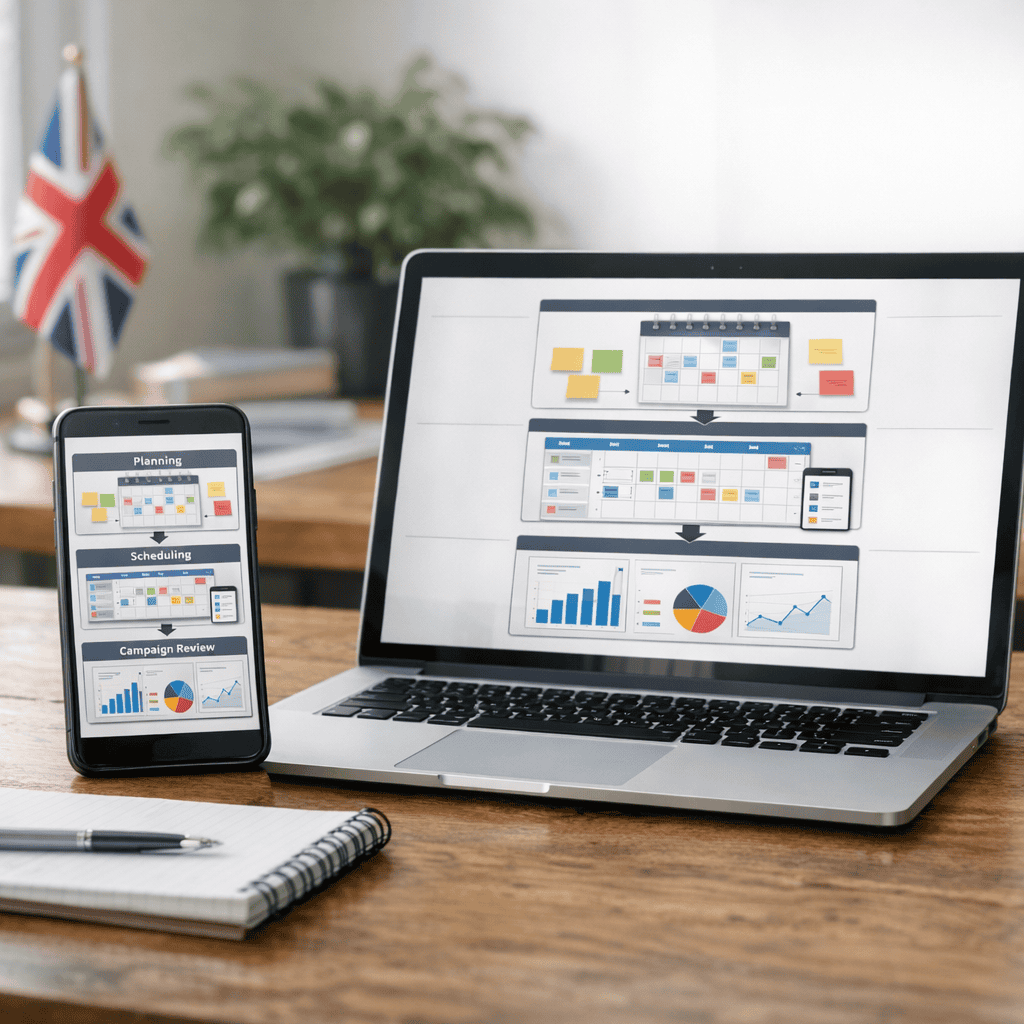
    consistent brand voice across all channels - Planning calendar

    How to define your brand voice clearly

    Identify your audience, values and positioning

    Before you can create brand voice guidelines, you need to understand what your voice should communicate.

    Start with your audience. Who are you trying to reach? A business selling to owner-managed SMEs in the UK will usually need a different tone of voice from one targeting procurement teams in large enterprises. Your audience affects how formal, detailed and direct your communication should be.

    Ask yourself:

    • What does our audience care about most?
    • What language do they use to describe their challenges?
    • How much marketing knowledge do they already have?
    • What level of detail helps them make decisions?
    • What style of communication will build confidence?

    Next, define your values. Not the generic list that sits on an internal slide deck, but the values that genuinely shape how you work and communicate. If your business values clarity, honesty and practical results, your messaging should reflect that. If you value creativity and bold thinking, your voice may be more energetic and provocative.

    Then look at your positioning. How do you want to be perceived in the market? Your voice should support that position.

    For example:

    • If you are a premium consultancy, your voice may be calm, authoritative and precise.
    • If you are a hands-on local service provider, your voice may be straightforward, reassuring and personable.
    • If you are a growth-focused agency, your voice may be confident, energetic and commercially sharp.

    Without this strategic foundation, brand voice guidelines often become vague and difficult to apply.

    Create simple brand voice guidelines your team can use

    Good brand voice guidelines should be practical. They need to help real people write better content, not sit unused in a folder.

    Keep them concise and usable. A strong starting point includes:

    A short brand voice statement

    This should summarise how your business sounds in one or two sentences. For example:

    “We communicate with clarity, confidence and warmth. Our messaging is practical, commercially focused and easy for busy decision-makers to understand.”

    Three to five voice traits

    Choose a small number of defining characteristics and explain each one. For example:

    Clear

    We avoid jargon, long-winded explanations and vague claims.

    Professional

    We sound credible and informed without becoming stiff or corporate.

    Approachable

    We write like real people and make complex topics easier to understand.

    Confident

    We state our value clearly and avoid hesitant or apologetic language.

    Examples of what to do and what to avoid

    This is one of the most useful parts of any guideline. Show the difference between on-brand and off-brand writing.

    For example:

    Do say:

    “We help businesses improve lead generation with focused digital marketing.”

    Do not say:

    “We leverage innovative digital ecosystems to optimise growth outcomes.”

    Preferred terminology

    List the words and phrases your business uses regularly, along with any terms you avoid. This is especially important for service descriptions, product names and recurring messages.

    Tone guidance by channel

    Explain how the voice should adapt across website copy, social media, email, ads and sales materials. This helps teams maintain brand consistency without sounding repetitive.

    Formatting and style notes

    Include practical details such as whether you use contractions, how formal your greetings should be, whether you write in first person plural and how you handle punctuation and capitalisation.

    The simpler and clearer your guidelines are, the more likely people are to use them.

    How to keep your messaging consistent across every channel

    Align website copy, social posts, email marketing and ads

    Once your voice is defined, the next challenge is applying it consistently. This is where many businesses struggle, especially if different people manage different channels.

    Start with your website. It should act as the central reference point for your messaging. Review your core pages, especially the homepage, service pages, about page and key landing pages. Make sure they reflect your current positioning and tone of voice. If your website copy is outdated or inconsistent, other channels will often drift too.

    Next, review your social media content. Does it sound like the same business as your website? Are your posts aligned with your positioning, or are they chasing trends that do not fit your brand? Social media should still feel human and timely, but it should not undermine the credibility built elsewhere.

    Then look at your email marketing. Check welcome emails, newsletters, nurture sequences and sales follow-ups. Email is one of the easiest places for inconsistent messaging to creep in because different campaigns are often written at different times by different people. Standardising tone, structure and key messages can make a big difference.

    Paid ads also need attention. Ad copy is short, but it still shapes perception. If your ads are overly aggressive, vague or off-brand, they can attract the wrong clicks and create a disconnect when people land on your site.

    Finally, review your sales materials. Proposals, brochures, presentations and case studies should all reflect the same voice and positioning. If your sales team uses language that differs from your marketing, prospects may receive mixed signals at a crucial stage.

    If you need help bringing your messaging together as part of a wider strategy, explore our Marketing Packages for practical support that keeps your brand voice consistent across all channels.

    Use templates, approvals and content checks to stay on brand

    Consistency becomes much easier when you build it into your process.

    Templates are a good place to start. Create approved structures for common content types such as service pages, email campaigns, social posts, proposals and case studies. Templates do not remove creativity. They provide a reliable framework that keeps messaging aligned.

    For example, a case study template might include:

    • The client challenge
    • The approach taken
    • The commercial outcome
    • A short quote
    • A clear closing statement linked to your service offer

    If every case study follows a similar structure and tone, your brand feels more coherent.

    Approvals also matter. Not every piece of content needs multiple sign-offs, but there should be clear ownership for quality and consistency. Someone should be responsible for checking whether content reflects the agreed brand voice guidelines.

    Content checklists can help here. A simple checklist might ask:

    • Does this sound like our brand?
    • Is the tone right for the audience and channel?
    • Are we using the correct terminology?
    • Is the message clear and commercially relevant?
    • Does this align with our website and wider positioning?

    Training is another practical step. If multiple people create content, do not assume they all interpret the brand voice in the same way. Walk them through examples. Explain the reasoning behind your tone of voice. Show how to adapt it across channels without losing consistency.

    This is particularly important when working with external copywriters, designers, agencies or freelance social media managers. The more context and examples you provide, the better the output will be.

    consistent brand voice across all channels - Checking laptop, tablet and mobile data

    Common brand voice mistakes and how to fix them

    When different teams create mixed messages

    One of the most common causes of inconsistency is fragmentation. Marketing writes one way, sales writes another, leadership communicates differently again and customer service develops its own style over time.

    This usually happens for understandable reasons. Teams have different priorities, deadlines and communication habits. But from the customer’s perspective, it creates a disjointed experience.

    A prospect might read a polished website, then receive a sales email that feels generic and rushed. Or they might see thoughtful LinkedIn content, then download a brochure full of jargon. These gaps weaken trust.

    To fix this, start by identifying where content is being created and by whom. Map the main customer touchpoints and note which teams own them. Then compare the messaging side by side.

    Look for differences in:

    • Level of formality
    • Use of jargon
    • Clarity of value proposition
    • Confidence of language
    • Personality and warmth
    • Terminology for services or products

    Once you can see the inconsistencies, bring the relevant teams together around one agreed set of brand voice guidelines. Make sure everyone understands not just the rules, but the commercial reason behind them. Consistent messaging is not about policing style for its own sake. It is about making the business easier to trust and easier to buy from.

    How to audit and improve your current content

    A brand voice audit does not need to be complicated, but it should be structured.

    Start by gathering examples from your main channels:

    • Homepage
    • Service pages
    • Recent blog posts
    • Social media posts
    • Email campaigns
    • Lead magnets
    • Sales decks
    • Proposals
    • Brochures
    • Automated emails

    Review them against your intended brand voice. Ask:

    • Does this content sound like the same business?
    • Is the tone of voice aligned across channels?
    • Are key messages repeated consistently?
    • Do we explain our value clearly?
    • Are there any phrases, claims or styles that feel off-brand?

    You may find that some channels are strong while others need work. That is normal. Prioritise the areas with the biggest commercial impact first, usually your website, sales materials and core email journeys.

    As you improve content, focus on substance as well as style. A consistent brand voice across all channels is not just about sounding similar. It is also about making sure your core messages are aligned. If one page says you are affordable and another positions you as premium, the issue is deeper than tone.

    A practical improvement plan might include:

    • Refreshing website copy to reflect current positioning
    • Updating email templates with a clearer tone of voice
    • Rewriting sales collateral to match website messaging
    • Creating a terminology list for services and offers
    • Building a content approval process
    • Training internal teams and external suppliers

    Reviewing content regularly is important too. Businesses evolve. New services are launched, audiences shift and teams change. Your brand voice guidelines should be stable, but they should also be reviewed occasionally to make sure they still reflect the business accurately.

    Conclusion

    Creating a consistent brand voice across all channels is one of the most practical ways to strengthen your marketing. It helps your business look more credible, sound more confident and communicate more clearly at every stage of the customer journey.

    For UK businesses, the benefits are commercial as well as creative. Better brand consistency can improve trust, support conversion, attract better-fit leads and make your marketing operation more efficient. It also gives your team a clearer framework for producing content that feels joined up and purposeful.

    The key steps are straightforward. Define your audience, values and positioning. Turn that into simple brand voice guidelines. Apply those guidelines across your website, social media, email, ads and sales materials. Then support the process with templates, checks and regular audits.

    If your messaging currently feels fragmented, now is the right time to fix it. A consistent brand voice across all channels can make your business easier to recognise, easier to remember and easier to choose.

    If you want expert support to sharpen your messaging and build a more joined-up marketing strategy, get in touch with Steve Welsh Marketing today. We can help you create clearer, more consistent communication that supports real business growth.

    Questions

    FAQ’s

    1. What does a consistent brand voice across all channels mean?

      It means your business sounds recognisable and aligned wherever customers meet you, including your website, social media, email, ads and sales materials. The wording can change by channel, but the personality, tone of voice and core messages should stay consistent.

    2. How do I create brand voice guidelines for my business?

      Start by defining your audience, values and positioning. Then document your tone of voice, key message examples, preferred terminology, words to avoid and guidance for each channel. Keep the guidelines simple enough for your team, freelancers or agency partners to use.

    3. Should my brand voice be identical on every channel?

      No. Your brand voice should be consistent, but your tone can flex slightly depending on the channel and situation. A proposal may need more detail than a social media post, but both should still sound like the same business.

    4. Which marketing channels should I check first?

      Start with the channels that most influence buying decisions, such as your website, service pages, email journeys, proposals and sales materials. Then review social media, ads, brochures and automated messages so the customer experience feels joined up.

    5. How can I keep my team and suppliers on brand?

      Use clear templates, content checklists, approval processes and examples of good writing. Make sure everyone understands the reason behind the brand voice, not just the wording rules. This helps keep messaging consistent without making content feel forced.

    6. When should I get help with brand voice and messaging?

      Get help if your marketing feels fragmented, different teams use different language, or your website, emails, and sales materials no longer reflect your current offer. Steve Welsh Marketing can support this as part of a wider marketing package focused on clearer, more consistent communication.

  • Social Media Advertising vs Organic Reach: What UK Businesses Need to Know

    Social Media Advertising vs Organic Reach: What UK Businesses Need to Know

    Quick answer:

    When comparing social media advertising vs organic reach, the right choice depends on your goal. Paid social media advertising is usually better when you need fast visibility, targeted traffic, leads or sales. Organic social media reach is better for building trust, showing expertise and staying visible over time. Most UK businesses should not treat it as an either-or decision. A practical social media marketing strategy often uses organic content to build credibility, then paid campaigns to reach specific audiences and drive measurable action. If the budget is limited, start with consistent organic activity, then use paid ads around clear offers, launches or lead generation goals.

    Intro:

    For many UK businesses, social media is no longer optional. It is a core part of how people discover brands, compare suppliers, check credibility and decide who to contact. The challenge is not whether to use social media, but how to use it well.

    That is where the debate around social media advertising vs organic reach becomes important. Should you invest in paid campaigns to get in front of the right people quickly, or focus on building visibility through regular content and community engagement over time?

    The honest answer is that both approaches have value, but they do very different jobs. Paid social media advertising can generate leads, traffic and sales at speed. Organic social media reach can help build trust, authority and familiarity. For most SMEs, the best option depends on budget, goals, timescales and how established the business already is online.

    In this guide, we will compare social media advertising vs organic reach in practical terms, looking at cost, speed, targeting, trust and long term value. If you run a UK business and want a clearer social media marketing strategy, this will help you decide where to focus.

    social media advertising vs organic reach - client checking website data

    What social media advertising and organic reach actually mean

    Before comparing performance, it helps to define the two terms properly. They are often discussed together, but they are not the same thing and should not be measured in the same way.

    A simple definition of paid social media advertising

    Paid social media advertising is when you pay a platform to show your content to a selected audience. This includes formats such as Facebook and Instagram ads, LinkedIn sponsored posts, lead generation ads, remarketing campaigns and boosted content.

    You are effectively buying reach, attention and clicks from a platform based on your chosen objective. That objective might be:

    • Website traffic
    • Lead generation
    • Product sales
    • Event sign ups
    • Brand awareness
    • Video views
    • App downloads

    The main advantage is control. You can decide who sees your ad based on factors such as:

    • Location
    • Age
    • Interests
    • Job title
    • Industry
    • Behaviour
    • Previous website visits
    • Existing customer lists

    For example, a Bristol based accountancy firm could run LinkedIn ads targeting finance directors at manufacturing companies in the South West. A local gym could use Facebook and Instagram ads to promote a January membership offer to people within a ten mile radius. A B2C ecommerce brand could retarget people who viewed products but did not buy.

    Paid social media advertising is designed to create a measurable outcome. You set a budget, monitor performance and optimise based on results.

    How organic reach works on platforms like Facebook, Instagram and LinkedIn

    Organic social media reach refers to the people who see your content without you paying to promote it. This includes posts published on your business page, updates shared by team members, comments, replies, stories and other unpaid activity.

    Organic social media reach depends on several factors:

    • How relevant the platform thinks your content is
    • How much engagement it receives
    • How active your audience is
    • How often you post
    • The strength of your existing following
    • The format of the content

    On LinkedIn, a useful insight post from a managing director may gain traction if it gets early comments and shares. On Instagram, a local café might build visibility through regular reels, stories and customer generated content. On Facebook, a community based business may get strong reach from local recommendations and event posts.

    Organic content is less predictable than paid advertising because you are relying on algorithms and audience behaviour. Reach can vary significantly from one post to the next. Even businesses with a decent following often find that only a small percentage of followers see each post.

    That said, organic activity plays a different role. It helps people understand who you are, what you know and whether your business feels credible. It is often the layer that supports conversion rather than the direct trigger for it.

    social media advertising vs organic reach - Client checking data reports

    Social media advertising vs organic reach: the key differences

    When comparing social media advertising vs organic reach, the biggest mistake is assuming they should deliver the same outcomes. They work in different ways and are useful at different stages of the customer journey.

    Speed, targeting and control

    If speed matters, paid social media advertising usually wins.

    A campaign can be launched quickly and start generating impressions, clicks and enquiries within days. This makes it useful for:

    • Time sensitive promotions
    • Seasonal campaigns
    • Event marketing
    • Lead generation
    • Product launches
    • Recruitment pushes

    Organic reach is slower. You need to build an audience, publish consistently and earn engagement over time. That can work well, but it is not ideal if you need leads this month.

    Targeting is another major difference.

    With paid campaigns, you can define the audience in detail. That means less wasted exposure and more relevance. For example:

    • A solicitor can target people in a specific region who are likely to need family law advice
    • A training provider can target HR managers in medium sized UK businesses
    • A retailer can retarget people who abandoned their basket

    Organic content has less precise targeting. You are largely posting to your existing followers and hoping the platform extends reach to similar users. This can still work, especially if your content is strong, but you have much less control.

    Paid social media advertising also gives you more control over timing, format and testing. You can run multiple versions of an ad, compare headlines, swap images and adjust spend based on performance. Organic posting is more flexible creatively, but less controllable in terms of who sees it and when.

    Cost, scalability and measurable results

    Organic social media reach is often described as free, but that is only partly true. You may not pay the platform directly, but content still costs time, planning and resource. Someone has to create posts, write captions, design visuals, respond to comments and track performance.

    For many SMEs, organic social media is not free at all. It is simply funded differently.

    Paid social media advertising has a direct media cost, but it can be easier to measure. You can usually track:

    • Cost per click
    • Cost per lead
    • Cost per purchase
    • Reach and impressions
    • Conversion rate
    • Return on ad spend
    • Social media ROI

    This makes paid campaigns attractive for businesses that need accountability and commercial clarity.

    Scalability is also stronger with paid activity. If a campaign is working, you can often increase budget and expand reach. Organic growth is harder to scale quickly because it depends on audience behaviour and platform algorithms.

    A simple comparison looks like this:

    Paid social media advertising:

    • Faster results
    • Better targeting
    • Easier to test and optimise
    • Clearer reporting
    • Requires ad budget
    • Can stop performing if spend stops

    Organic social media reach:

    • Slower to build
    • Less precise targeting
    • Stronger for trust and brand personality
    • Lower direct platform cost
    • Requires consistency and patience
    • Can create long term brand value

    For most businesses, the question is not which one is universally better. It is which one is better for your current objective.

    When organic reach is the right choice

    Organic social media still matters, especially for businesses that want to build a recognisable brand and stay visible between campaigns. It may not always drive immediate leads, but it can make your business easier to trust and easier to choose.

    Building trust, authority and community over time

    People often check a company’s social media before making contact. They want to see signs that the business is active, credible and relevant. A neglected profile can create doubt. A well managed one can strengthen confidence.

    Organic content is particularly useful for:

    • Demonstrating expertise
    • Showing recent activity
    • Answering common questions
    • Sharing customer stories
    • Highlighting team knowledge
    • Building familiarity with your brand

    For example, a mortgage broker might share short videos explaining rate changes, deposit myths and first time buyer steps. A digital agency might post practical tips, campaign insights and client wins. A local trades business might show before and after project photos, reviews and behind the scenes updates.

    None of this may generate a flood of direct enquiries overnight, but it helps future customers feel more confident when they do find you.

    Organic reach also supports authority. If your posts regularly educate and inform, your audience starts to associate your brand with useful expertise. That matters in sectors where trust is a major buying factor, such as legal, financial, healthcare, property and professional services.

    Best uses for content-led businesses and local brands

    Organic social media reach is often a good fit for businesses that naturally have useful, visual or community focused content to share.

    This includes:

    • Local hospitality businesses
    • Retailers
    • Fitness and wellbeing brands
    • Estate agents
    • Professional services firms
    • Personal brands and consultants
    • Education and training providers

    A local restaurant, for example, can use organic Instagram content to show new menu items, staff personality and customer atmosphere. A solicitor can use LinkedIn to comment on legal changes affecting businesses. A recruitment agency can share hiring advice, salary trends and interview tips.

    Organic activity also works well where repeat visibility matters. If someone is not ready to buy today, regular content keeps your business in mind until they are.

    That said, organic social media is not enough on its own for every business. If your audience is niche, your market is competitive or your sales targets are aggressive, relying only on unpaid reach can limit growth.

    social media advertising vs organic reach - Agency team reporting to client team

    When paid social media advertising makes more sense

    There are many situations where paid social media advertising is the more commercially sensible option. If you need momentum, targeting and measurable outcomes, paid campaigns are often the strongest route.

    Launching offers, generating leads and driving sales quickly

    Paid campaigns are especially useful when there is a clear commercial objective and a defined action you want people to take.

    This might include:

    • Booking a consultation
    • Downloading a guide
    • Requesting a quote
    • Buying a product
    • Registering for a webinar
    • Claiming a limited time offer

    For example, a UK training company launching a new leadership course could use LinkedIn ads to target HR decision makers and drive brochure downloads. A home improvement firm could run Facebook and Instagram ads promoting a seasonal offer on conservatories. A dental practice could advertise Invisalign consultations to local users within a set radius.

    In each case, paid social media advertising gives the business a way to reach likely buyers quickly and move them towards action.

    This is particularly valuable for SMEs that cannot wait months for organic traction. If your pipeline needs support now, paid social can help create demand faster than posting organically and hoping for reach.

    How paid campaigns help with audience targeting and retargeting

    One of the strongest arguments in favour of paid social media advertising is audience precision.

    Instead of broadcasting content widely, you can focus budget on people who are more likely to convert. That improves efficiency and can reduce wasted spend.

    Useful targeting options include:

    • Geographic targeting for local businesses
    • Demographic targeting for age and life stage
    • Interest targeting for consumer brands
    • Job role targeting for B2B campaigns
    • Lookalike audiences based on existing customers
    • Retargeting based on website visits or previous engagement

    Retargeting is especially powerful. Many people do not convert on first contact. They may visit your website, read a service page and leave. Paid social lets you reappear in front of them with a more relevant message.

    For example:

    • A visitor who viewed your pricing page could see a testimonial ad
    • Someone who downloaded a guide could be shown a consultation offer
    • A shopper who abandoned their basket could receive a product reminder

    This makes paid social media advertising highly effective as part of a wider conversion strategy.

    It also gives clearer insight into social media ROI. You can see what happened after someone clicked, which campaigns generated leads and where budget should be increased or reduced.

    social media advertising vs organic reach - Laptop showing various data points

    How to combine both for a stronger marketing strategy

    For most businesses, the best answer to social media advertising vs organic reach is not choosing one and ignoring the other. It is using both in a way that matches your goals.

    Organic and paid work best when they support each other.

    Using organic content to support paid campaigns

    Organic content can make paid campaigns more effective in several ways.

    First, it strengthens credibility. If someone clicks an ad and then checks your profile, they should see a business that looks active, professional and trustworthy. A strong organic presence helps validate the paid message.

    Second, organic content can help you identify what resonates. If certain topics, formats or messages perform well organically, they may also work well in paid campaigns.

    Third, organic content can warm up your audience before you ask for action. Someone who has seen your posts for weeks may be more likely to respond to an ad than someone encountering your brand for the first time.

    A practical approach might look like this:

    • Publish regular organic content that answers common customer questions
    • Share case studies, testimonials and useful insights
    • Use engagement data to spot strong themes
    • Turn your best performing ideas into paid campaigns
    • Retarget people who engaged with your content or visited your website

    This creates a more joined up social media marketing strategy rather than treating paid and organic as separate channels.

    Choosing the right mix for your budget and business goals

    The right balance depends on what your business needs most right now.

    If your priority is immediate lead generation:

    • Lean more heavily on paid social media advertising
    • Use organic content to support credibility and follow up

    If your priority is brand building and trust:

    • Invest more in consistent organic content
    • Use paid campaigns selectively to amplify key messages

    If you are launching a new service:

    • Use paid campaigns for reach and enquiries
    • Use organic posts to explain benefits, answer objections and show proof

    If you are a local business with limited budget:

    • Focus on strong organic activity first
    • Add paid campaigns around key offers, events or seasonal periods

    If you are in B2B and selling higher value services:

    • Use LinkedIn organic content to build authority
    • Use paid targeting and retargeting to generate qualified leads

    A simple decision framework is:

    1. Define the goal

    Do you want awareness, leads, sales, bookings or retention?

    1. Consider the timescale

    Do you need results this month, this quarter or over the next year?

    1. Assess your resources

    Do you have budget for ads, time for content creation or both?

    1. Review your audience

    Are they active on social media, and on which platforms?

    1. Measure what matters

    Track leads, conversions, engagement and social media ROI, not just likes

    This is where many businesses benefit from outside support. If you need help building the right mix of paid and organic activity, our Marketing Packages can give your business a practical starting point with support tailored to your goals.

    A structured plan can stop you wasting budget on random boosts or spending months on organic posting without a clear commercial purpose.

    Social media should support business growth, not just fill a content calendar.

    When looking at social media advertising vs organic reach, UK businesses should avoid treating it as a simple either or decision. Paid social media advertising is usually better for speed, targeting and measurable outcomes. Organic social media reach is usually better for trust, authority and long term brand value.

    If you need quick visibility, lead generation or sales, paid campaigns often make more sense. If you want to build credibility, stay visible and nurture your audience over time, organic content is essential. In most cases, the strongest results come from combining both in a focused, commercially sensible way.

    The key is to align your approach with your business goals, budget and stage of growth. A local business trying to fill appointments next month will need a different strategy from a consultancy building thought leadership over the next year. What matters is not following trends, but choosing the mix that moves your business forward.

    If you want a clearer plan for social media advertising vs organic reach and how it fits into your wider marketing, Steve Welsh Marketing can help you build a strategy that is practical, measurable and tailored to your business. Get in touch to discuss the right approach for your goals.

    If you need help building the right mix of paid and organic activity, our Marketing Packages can give your business a practical starting point with support tailored to your goals.

    Questions

    FAQs

    1. What is the main difference between social media advertising and organic reach?

      Social media advertising means paying platforms to show your content to a chosen audience. Organic reach means people see your posts without paid promotion. Paid activity gives more speed, targeting and control. Organic activity is better for trust, familiarity and long-term brand value.

    2. Can a UK business rely on organic social media alone?

      Some businesses can use organic social media effectively, especially if they have strong local, visual or educational content. However, organic reach can be unpredictable and slow. If you need regular leads, sales or campaign results, paid social media advertising is often needed alongside organic content.

    3. How much should I spend on paid social media advertising?

      How much should I spend on paid social media advertising?
      Start with a budget you can test properly without risking too much. The right amount depends on your audience, offer, platform and goal. Focus on measuring cost per lead, cost per sale or other meaningful outcomes rather than just reach or likes.

    4. When should I use Facebook and Instagram ads?

      Use Facebook and Instagram ads when you want to reach a defined audience quickly, promote an offer, generate enquiries, retarget website visitors or support a seasonal campaign. They are especially useful for local businesses, e-commerce brands, consumer services and visual products.

    5. How do paid and organic social media work together?

      Organic content helps people understand your business and builds credibility when they check your profile. Paid campaigns help you reach the right people faster and move them towards action. Together, they create a more balanced social media marketing strategy.

  • Digital Marketing ROI for Business Owners: How to Measure What Really Matters

    Digital Marketing ROI for Business Owners: How to Measure What Really Matters

    Quick answer:

    Digital marketing ROI for business owners is the return your business gets from money spent on online marketing. To measure it, compare the revenue or gross profit generated by a campaign with the full cost of running it, including ad spend, agency fees, software, content and staff time. The simplest calculation is: return minus marketing cost, divided by marketing cost, multiplied by 100. For a clearer picture, track enquiries, conversion rates, customer acquisition cost and lifetime value, not just traffic or likes. This helps you see which channels deserve more budget, which need improving and where your marketing plan should focus next.

    Intro:

    For many UK business owners, marketing can feel like a constant balancing act. You need enough activity to generate leads and sales, but you also need confidence that your budget is being spent wisely. That is where digital marketing ROI for business owners becomes so important.

    ROI, or return on investment, helps you understand whether your marketing is creating real commercial value. It moves the conversation away from vague ideas like visibility and awareness on their own, and towards measurable outcomes such as leads, enquiries, sales and profit. If you know how to measure marketing ROI properly, you can make better decisions, improve performance over time and stop wasting money on activities that look busy but do not deliver.

    In this guide, we will look at what digital marketing ROI really means, how to calculate it, which digital marketing performance metrics matter most, and what often gets in the way of accurate reporting. Most importantly, we will cover practical ways to improve digital marketing results so your marketing becomes a stronger driver of growth.

    digital marketing roi for business owners - Client meeting

    What digital marketing ROI means for business owners

    Digital marketing ROI is the value your business gets back from its marketing compared with what it spends. In simple terms, it answers a straightforward commercial question: for every pound invested in marketing, what did the business gain in return?

    That gain might be immediate revenue from online sales. It might be qualified leads for a service business. It might be booked consultations, phone calls, quote requests, or repeat purchases. The exact definition depends on your business model, but the principle is the same. Marketing should contribute to profitable growth, not just activity.

    For business owners, ROI is especially useful because it creates a clearer link between marketing and business performance. It helps you judge whether your website, SEO, paid ads, email campaigns, content and social media are pulling their weight.

    Why ROI matters more than vanity metrics

    A lot of marketing reports are full of numbers that look impressive but do not tell you much about commercial performance. Website visits, social media followers, impressions and likes can all have some value, but on their own, they do not prove that marketing is working.

    For example, a campaign might double your website traffic. That sounds positive. But if the extra visitors are not relevant, do not enquire and do not buy, then the increase in traffic has not improved your business. Equally, a social campaign might generate strong engagement but very few leads. Again, that may not justify the time and budget invested.

    ROI matters more because it focuses on outcomes. It encourages you to ask better questions, such as:

    • How many leads did this campaign generate?
    • What percentage of those leads became customers?
    • What was the average sale value?
    • How much profit did those sales produce?
    • How much did it cost to acquire each customer?

    These are the questions that matter when you are trying to grow a business sustainably. They help you move beyond surface-level reporting and assess return on investment in marketing in a way that supports sensible decisions.

    How ROI supports better budget decisions

    Most business owners do not have unlimited marketing budgets. Every pound has to work hard. Measuring ROI helps you decide where to invest more, where to cut back and where to test improvements.

    If one channel consistently produces qualified leads at a lower customer acquisition cost than another, that is useful information. If your SEO is generating steady inbound enquiries while paid ads are expensive and inconsistent, your budget may be better directed towards organic growth. If email marketing delivers repeat sales from existing customers at very low cost, that may deserve more attention than channels focused only on top-of-funnel awareness.

    ROI also helps you set realistic expectations. Some marketing activity delivers quickly, while some takes longer to mature. Paid search may produce leads within days. SEO and content marketing often take months to build momentum. By measuring properly, you can judge each channel on the right timescale rather than making rushed decisions based on incomplete data.

    How to calculate digital marketing ROI properly

    If you want digital marketing roi for business owners to be genuinely useful, the calculation needs to be grounded in real numbers. That means understanding both the returns generated and the full costs involved.

    The basic ROI formula explained

    The standard marketing ROI calculation is:

    ROI = (Return from marketing – Marketing cost) / Marketing cost x 100

    This gives you a percentage that shows how much return you generated relative to your spend.

    Here is a simple example.

    You spend £2,000 on a Google Ads campaign.
    That campaign generates £8,000 in revenue.
    Your ROI calculation is:

    (£8,000 – £2,000) / £2,000 x 100 = 300%

    That means the campaign generated a 300% return on your investment.

    This is a useful starting point, but business owners should be careful not to oversimplify. Revenue is not the same as profit. If your margins are tight, a campaign that looks strong on revenue may be less impressive once costs of fulfilment, delivery or labour are considered.

    For that reason, some businesses prefer to calculate marketing ROI based on gross profit rather than revenue. That can give a more realistic picture of commercial performance.

    For example:

    You spend £2,000 on marketing.
    It generates £8,000 in sales.
    Your gross profit on those sales is 50%, so gross profit is £4,000.
    Your ROI based on gross profit is:

    (£4,000 – £2,000) / £2,000 x 100 = 100%

    That is still positive, but it is a very different figure from 300%. For many service businesses and product-based businesses alike, this is a more useful way to measure return.

    Which costs and returns to include

    One of the biggest mistakes in how to measure marketing ROI is leaving out important costs. If you only count ad spend, your figures may look better than reality.

    Depending on your setup, marketing costs may include:

    • Ad spend
    • Agency or consultant fees
    • In-house marketing salaries or time allocation
    • Website development and landing page costs
    • Creative production such as design, photography or video
    • Email software and CRM tools
    • SEO tools and content creation costs
    • Call tracking or analytics platforms

    The return side also needs thought. In some businesses, the return is easy to measure because the sale happens online. In others, especially service-based businesses, the path is longer. A website lead may become a phone call, then a meeting, then a proposal, then a sale weeks later.

    In those cases, you need a practical way to connect marketing activity to outcomes. That may involve:

    • Tracking form submissions and phone calls
    • Recording lead source in your CRM
    • Monitoring which campaigns generate qualified opportunities
    • Calculating average lead-to-sale conversion rates
    • Using average customer value where exact figures are not available

    For example, if your website generated 40 leads from organic search in a quarter, and historically 25% of those leads become customers, you can estimate that SEO contributed 10 new customers. If your average first sale is £2,500, that suggests £25,000 in revenue influenced by SEO.

    It is not always perfect, but a sensible estimate is far better than no measurement at all.

    digital marketing roi for business owners - Consultant checking data and making notes

    The key metrics that show whether marketing is working

    ROI is the headline figure, but it is built from several underlying metrics. If you want to improve digital marketing results, you need to understand the numbers that influence ROI at each stage of the customer journey.

    Traffic, leads and conversion rate

    Traffic is often the first metric people look at, and it does matter. If nobody is visiting your website, your marketing has little chance of generating enquiries. But traffic only becomes commercially useful when it is relevant and converts.

    That is why you should look at traffic alongside lead generation and conversion rate.

    Useful questions include:

    • How many visitors are coming to the site?
    • Which channels are driving them there?
    • Which pages attract the most engaged traffic?
    • How many visitors turn into leads?
    • Which traffic sources convert best?

    A business with 1,000 highly relevant monthly visitors may outperform a business with 10,000 poorly targeted visitors. Quality matters more than volume.

    Conversion rate is especially important. This is the percentage of visitors who take a desired action, such as filling in a contact form, booking a call or making a purchase.

    For example:

    5,000 website visitors
    100 leads generated
    Conversion rate = 2%

    If you improve the website and landing pages so that 150 leads are generated from the same traffic, the conversion rate rises to 3%. That 1% increase can have a major impact on ROI without increasing your traffic budget.

    For UK business owners, this often highlights a key opportunity. Sometimes the issue is not that marketing is failing to attract attention. It is that the website, offer, messaging or enquiry process is not converting enough of that attention into commercial action.

    Customer acquisition cost and lifetime value

    Two of the most useful digital marketing performance metrics are customer acquisition cost and lifetime value.

    Customer acquisition cost, often shortened to CAC, tells you how much it costs to win a new customer.

    The formula is:

    Customer acquisition cost = Total marketing and sales cost / Number of new customers acquired

    If you spend £5,000 on marketing and sales activity in a month and gain 10 new customers, your CAC is £500.

    This figure is powerful because it helps you judge efficiency. If your average customer is worth £300, a £500 acquisition cost is clearly a problem. If your average customer is worth £5,000, it may be perfectly acceptable.

    That leads to lifetime value, or LTV. This is the total value a customer brings to your business over the full relationship, not just the first transaction.

    For example, a customer may spend:

    • £1,000 on the first project
    • £500 on follow-up work six months later
    • £1,500 on repeat work the following year

    Their lifetime value is £3,000.

    When you compare CAC with LTV, you get a much clearer picture of return on investment in marketing. A campaign that looks expensive based on first-sale revenue may actually be highly profitable when repeat business and retention are taken into account.

    This is particularly relevant for service businesses, B2B firms and any company with recurring revenue or strong repeat purchase behaviour. Looking only at the first conversion can undervalue your marketing significantly.

    digital marketing roi for business owners - Consultant checking trends

    Common reasons digital marketing ROI looks worse than it is

    Many business owners assume their marketing is underperforming when the real issue is poor measurement or an incomplete view of the customer journey. If your reported ROI looks disappointing, it is worth checking whether the numbers are telling the full story.

    Tracking gaps and attribution issues

    One of the biggest problems in digital marketing is attribution. In other words, which channel gets the credit for the sale?

    A customer might first discover your business through a blog post found on Google. A week later they click a remarketing ad. Then they return directly to the website and submit an enquiry form after searching your brand name. Which channel caused the conversion?

    If you rely on simplistic reporting, you may give all the credit to the final click and ignore the earlier touchpoints that helped create demand and trust.

    Tracking gaps can also distort performance. Common examples include:

    • Phone calls not being tracked properly
    • Offline sales not linked back to digital lead sources
    • Form submissions not recorded correctly
    • CRM systems not updated with lead source data
    • Cross-device journeys being missed
    • Long sales cycles making campaign impact harder to see

    If these issues exist, your marketing may be doing more than the reports suggest. This is why clean setup matters. Google Analytics, Search Console, ad platform reporting, CRM data and call tracking should work together as far as possible.

    Even if your setup is not perfect, improving tracking can quickly make your ROI picture more accurate and more useful.

    Weak offers, poor follow up and slow sales cycles

    Sometimes marketing generates interest, but the business does not convert that interest effectively. In that case, ROI can look weak even though the top-of-funnel activity is doing its job.

    For example, you may be driving relevant traffic and generating enquiries, but:

    • Your offer is unclear or not compelling
    • Your landing page does not build trust
    • Your contact form is too long
    • Your team takes too long to respond to leads
    • Sales follow-up is inconsistent
    • Quotes are not competitive or persuasive
    • The buying process is too slow or confusing

    In these situations, the issue is not just marketing. It is the wider lead handling and sales process.

    Slow sales cycles can also make ROI appear worse in the short term. A campaign may generate high-quality leads today, but if those leads take three to six months to convert, the immediate reporting may understate the eventual return.

    That is why business owners should look at leading indicators as well as final sales. If lead quality is strong, conversion rates are healthy and pipeline value is building, the marketing may be working even before all revenue has landed.

    digital marketing roi for business owners - CEO checking company ROI

    How to improve digital marketing ROI over time

    Improving ROI is rarely about one dramatic change. More often, it comes from making a series of practical improvements across targeting, messaging, conversion, tracking and budget allocation. The businesses that get the best results usually review performance regularly and refine what they do based on evidence.

    Focus on the highest performing channels

    Not every channel deserves equal investment. One of the fastest ways to improve digital marketing results is to identify which channels are producing the best commercial outcomes and prioritise them.

    Start by reviewing:

    • Which channels generate the most qualified leads
    • Which channels have the best conversion rate from lead to customer
    • Which channels deliver the lowest customer acquisition cost
    • Which channels attract the highest-value customers
    • Which channels contribute to repeat business or long-term value

    You may find that a smaller channel is quietly outperforming a larger one. For example, organic search might generate fewer leads than paid social, but if those leads are more qualified and close at a higher rate, SEO may be delivering better ROI overall.

    Likewise, email marketing to existing customers may produce some of the strongest returns in your business because the audience already knows and trusts you. That does not mean you stop investing in acquisition, but it does mean you should not overlook channels that drive efficient revenue.

    This process also helps you cut waste. If a channel has been running for months with weak lead quality, high acquisition costs and little sign of improvement, it may be time to reduce spend or rethink the strategy.

    Use a structured marketing plan and regular review

    Good ROI rarely happens by accident. It comes from having a clear plan, realistic targets and a regular review process.

    A structured marketing plan should define:

    • Your target audience
    • Your core offers and messages
    • The channels you will use
    • The goals for each channel
    • The metrics you will track
    • The budget available
    • The review points for optimisation

    Without this structure, marketing can become reactive. You try a bit of SEO, post on social media, run some ads, send occasional emails and hope something works. That approach usually makes ROI harder to measure and harder to improve.

    A better approach is to review performance monthly or quarterly and ask practical questions:

    • What generated the best leads?
    • What converted best?
    • Where did we lose people?
    • Which pages underperformed?
    • Which campaigns need refining?
    • What should we scale, pause or test next?

    This creates a cycle of continuous improvement. Over time, small gains in targeting, conversion rate, lead quality and follow-up can make a significant difference to overall return.

    If you want a more joined-up approach to planning, delivery and measurement, explore our Marketing Packages to see how we support UK businesses with practical marketing that is built around results.

    For many businesses, outside support is valuable because it brings consistency, clearer reporting and a more commercial perspective. Instead of treating marketing as a set of disconnected tasks, it becomes a managed growth activity with measurable objectives.

    Digital marketing roi for business owners is not about chasing perfect data or obsessing over every click. It is about understanding enough to make better decisions. When you know which activity drives leads, sales and profit, you can invest with more confidence and improve performance in a structured way.

    The key is to focus on what really matters. Look beyond vanity metrics. Track the numbers that connect marketing to commercial outcomes. Include the right costs. Consider customer acquisition cost and lifetime value. Fix tracking gaps where possible. Review your offers, website and follow-up process, not just your traffic. And keep refining based on evidence.

    If your current marketing feels busy but unclear, now is the time to change that. Steve Welsh Marketing helps UK businesses build practical, results-focused marketing that is easier to measure and improve. If you want a clearer view of what is working and a smarter plan for growth, get in touch to discuss how we can help.

    If you want a more joined-up approach to planning, delivery and measurement, explore our Marketing Packages to see how we support UK businesses with practical marketing that is built around results.

    Questions

    FAQs

    1. What is digital marketing ROI for business owners?

      Digital marketing ROI is the value your business gets back from online marketing compared with what it spends. It helps you judge whether your website, SEO, paid ads, email, content and social activity are contributing to leads, sales and profit.

    2. How do I calculate marketing ROI?

      Use this basic formula: ROI = (Return from marketing – Marketing cost) / Marketing cost x 100. For a more accurate view, include the full cost of the activity and consider using gross profit rather than revenue if your margins vary.

    3. Should I measure ROI using revenue or profit?

      Revenue is useful, but profit often gives a clearer picture. A campaign can generate strong sales but still deliver a weak return if fulfilment, labour, delivery or product costs are high. Many business owners should review both figures.

    4. Which digital marketing performance metrics matter most?

      The most useful metrics are qualified leads, conversion rate, customer acquisition cost, lifetime value, lead source, sales value and gross profit. Traffic, impressions and likes can help with context, but they do not prove commercial performance on their own.

    5. Why might my digital marketing ROI look lower than it really is?

      ROI can look lower when tracking is incomplete or the sales journey is not fully recorded. Common issues include untracked phone calls, offline sales not linked to digital sources, slow sales cycles, weak CRM data and final-click reporting that misses earlier touchpoints.

    6. How can I improve digital marketing ROI over time?

      Start by focusing the budget on the channels that generate the best quality leads and customers. Then improve your website conversion rate, offers, follow-up process and tracking. Review results monthly or quarterly so you can scale what works, pause what does not and test sensible improvements.

  • LinkedIn Marketing for Ayrshire B2B Companies: A Practical Guide to Generating Better Leads

    LinkedIn Marketing for Ayrshire B2B Companies: A Practical Guide to Generating Better Leads

    Quick answer:

    LinkedIn marketing for Ayrshire B2B companies works best when it is treated as a practical business development channel, not just a place to post updates. Start by making company and personal profiles clear, credible and focused on the buyers you want to reach. Then share useful content that answers real customer questions, shows expertise and reflects local or sector issues. Combine this with targeted networking, thoughtful engagement and simple follow-up when prospects show interest. For firms selling considered services or higher value solutions, LinkedIn can support visibility, trust and better lead quality when it is connected to a wider marketing plan, such as Steve Welsh Marketing’s Marketing Packages.

    Intro:

    For many local firms, LinkedIn is still underused. It is often treated as a place to post the occasional company update, share a job advert or connect with people after an event. In reality, it can be one of the most effective channels for building visibility, earning trust and creating better quality B2B leads.

    That is especially true for businesses selling considered services or higher value solutions across Ayrshire and beyond. Whether you run a consultancy in Kilmarnock, a manufacturing business in Irvine, a construction firm in Ayr or a professional services company serving clients across the west of Scotland, LinkedIn gives you a practical way to stay visible to decision-makers.

    The key is not simply being present. It is using LinkedIn with a clear commercial purpose. Good LinkedIn marketing for ayrshire b2b companies should help your business get found by the right people, show credibility, start relevant conversations and support the sales process over time.

    This guide explains how to approach LinkedIn in a way that is realistic, structured and focused on lead generation rather than empty activity.

    Linkedin marketing for Ayrshire - Client writing notes on Linkedin marketing

    Why LinkedIn matters for Ayrshire B2B companies

    LinkedIn works well for B2B because it sits close to how business buying decisions actually happen. Buyers research suppliers before making contact. They check websites, look at company pages, review personal profiles and pay attention to the content people share. They want reassurance that a business understands their sector, can solve their problem and is credible enough to trust.

    For Ayrshire businesses, LinkedIn can bridge the gap between local reputation and wider market reach. Many firms already do strong work and have good client relationships, but their visibility online does not reflect that. LinkedIn helps turn expertise, case studies and day-to-day insight into something prospects can see.

    It is also a useful platform for firms that rely on relationship-led sales. In many B2B sectors, buyers are not ready to enquire the first time they hear about you. They need repeated exposure. They need to see evidence. They need to feel familiar with your business before they engage. LinkedIn supports that process well.

    How LinkedIn supports local B2B visibility and trust

    Ayrshire B2B marketing often depends on a mix of local reputation, referrals and networking. Those still matter, but they are not always enough on their own. Buyers increasingly do their own research before speaking to suppliers, even when they have been referred.

    LinkedIn helps in several ways.

    First, it improves discoverability. A well-optimised company page and strong personal profiles make it easier for prospects to understand what you do, who you help and why they should take you seriously. If someone hears your company name at an event, through a referral or in a conversation, LinkedIn is often one of the first places they will look.

    Second, it reinforces credibility. Regular, relevant content shows that your business is active, informed and engaged in its market. This matters for service-led businesses where trust is a major factor in buying decisions.

    Third, it keeps you visible between conversations. Not every prospect is ready to buy immediately. LinkedIn content helps you stay in front of them in a non-intrusive way, which is valuable when sales cycles are longer.

    Fourth, it supports local and regional positioning. If your business wants to be known across Ayrshire, Glasgow, Lanarkshire or the wider UK, LinkedIn can help you build that presence consistently. You are not limited to whoever happens to know you already.

    For example, a local HR consultancy can use LinkedIn to comment on employment issues affecting SMEs. A manufacturing business can share process improvements, quality standards or project wins. A construction company can highlight completed work, safety practices and commercial expertise. A business advisory firm can publish practical insight on growth, finance or operations. Each of these builds trust before a sales conversation begins.

    Which types of Ayrshire businesses benefit most from LinkedIn

    LinkedIn is not equally important for every business, but it is particularly effective for companies where decisions involve expertise, trust and a clear commercial need.

    Professional services firms often benefit strongly. Accountants, solicitors, consultants, HR providers, IT support businesses and training companies can use LinkedIn to demonstrate knowledge and stay visible to decision-makers.

    Manufacturing businesses can also gain a lot from LinkedIn, especially where they serve other businesses, contractors, procurement teams or industry partners. Buyers want to see capability, reliability and evidence of delivery. LinkedIn gives manufacturers a platform to show this in a practical way.

    Construction and specialist trades businesses working in commercial markets can use LinkedIn to build relationships with developers, facilities managers, architects, surveyors and procurement contacts. This is especially useful where projects are won through reputation, tender opportunities or long-term relationships.

    Engineering, logistics, recruitment, software and business support firms are also well suited to LinkedIn because their buyers are often active on the platform and open to useful industry content.

    Even smaller businesses can do well. In fact, LinkedIn strategy for small businesses can be highly effective because owner-led content often feels more credible and more human than heavily branded corporate messaging. A managing director sharing useful insight from real client work can attract far more interest than a generic company update.

    Linkedin marketing for Ayrshire - Group of Ayreshire business owners discussing marketing

    What a strong LinkedIn marketing strategy should include

    A good LinkedIn presence is not built on random posting. It needs a clear strategy. That does not mean making it complicated. It means knowing who you want to reach, what you want them to understand about your business and how LinkedIn supports your wider marketing and sales activity.

    Strong linkedin marketing for ayrshire b2b companies usually includes four core elements. These are profile optimisation, content planning, audience engagement and lead follow-up. If one of these is missing, results tend to be weaker.

    You also need consistency. LinkedIn rarely delivers meaningful commercial value from one post or one burst of activity. It works best when your message is repeated clearly over time.

    Optimising company and personal profiles for enquiries

    Before investing time in content or outreach, make sure your LinkedIn presence is ready to convert interest into enquiries.

    Start with your company page. It should explain clearly what your business does, who you help and what outcomes you deliver. Avoid vague language. Prospects should be able to understand your offer quickly.

    Your company page should include:

    • A strong headline or strapline that explains your value
    • A concise about section focused on client problems and solutions
    • Clear service information
    • Relevant imagery and branding
    • A website link
    • Contact details where appropriate
    • Evidence such as case studies, testimonials, accreditations or project examples

    Then look at personal profiles, especially for directors, consultants and sales-facing team members. In B2B, people often buy from people before they buy from brands. A prospect may discover your company page, but they are very likely to click through to the profile of the person posting or commenting.

    A strong personal profile should:

    • State clearly what you do and who you help
    • Use a professional photo and banner image
    • Include a summary that speaks to buyer needs
    • Show relevant experience and credibility
    • Feature useful content or links
    • Make it easy for someone to understand the next step

    This matters because many LinkedIn leads do not begin with a form fill. They begin with a profile view. If your profile is weak, unclear or inactive, you lose momentum at the point where interest starts.

    For B2B lead generation on LinkedIn, profile clarity is one of the simplest improvements a business can make. It increases the chance that a prospect who sees your content or receives a connection request will take you seriously.

    Creating content that speaks to buyer problems and buying stages

    Content is where many businesses either overcomplicate LinkedIn or get it badly wrong. They post whatever comes to mind, share internal updates that matter only to staff, or publish generic industry commentary with no clear relevance to buyers.

    Effective LinkedIn content for business growth should be built around what your audience needs to know before they are ready to buy.

    A practical content plan should cover different stages of the buying journey.

    At the awareness stage, your content should help prospects recognise problems, risks or missed opportunities. This might include common mistakes, changes in regulation, market trends or operational issues affecting their sector.

    At the consideration stage, content should help buyers understand possible solutions and what good looks like. This could include process advice, comparisons, planning tips or examples of successful outcomes.

    At the decision stage, content should reduce uncertainty and support confidence. This is where case studies, client examples, testimonials, project stories and behind-the-scenes insight are useful.

    For Ayrshire B2B companies, content should also reflect local and sector-specific realities. A post about supply chain resilience may resonate with manufacturers. A post about tender readiness may be relevant to construction firms. A post about recruitment challenges may connect with growing professional services businesses.

    Useful content formats include:

    • Short insight posts
    • Client problem and solution examples
    • Frequently asked questions
    • Myth-busting posts
    • Commentary on sector changes
    • Lessons from projects
    • Simple how-to guidance
    • Team expertise posts
    • Short videos with practical advice

    The goal is not to go viral. The goal is to stay relevant to the right people.

    Linkedin marketing for Ayrshire - Client checking their Linkedin Feed

    How to generate leads from LinkedIn without wasting time

    One of the biggest frustrations with LinkedIn is that businesses often put in effort without seeing a clear return. Usually that happens because activity is not structured. Posting alone is rarely enough. Outreach without context feels cold. Networking without follow-up goes nowhere.

    Lead generation from LinkedIn works best when content, engagement and direct contact support each other.

    This is where many firms need a more disciplined process. You do not need to spend all day on the platform, but you do need to use it with intent.

    Using outreach, networking and engagement in a structured way

    A practical LinkedIn strategy for small businesses or growing B2B firms should include targeted networking. That means identifying the types of people you want to build relationships with and engaging with them consistently.

    Start by defining your ideal contacts. These may include managing directors, operations managers, procurement leads, commercial managers, finance directors or business owners depending on your offer.

    Then build a simple routine:

    • Connect with relevant people each week
    • Personalise connection requests where appropriate
    • Engage with their content
    • Comment usefully rather than superficially
    • Share your own relevant content consistently
    • Follow up when there is a genuine reason to do so

    This approach is far more effective than sending sales messages to strangers. It creates familiarity first.

    For example, if you are a consultancy serving manufacturing businesses in Ayrshire, you might connect with operations leaders, comment on posts about efficiency or growth, share your own insight on process improvement and then start conversations around specific challenges. That is a much stronger route than opening with a hard sell.

    Structured engagement also helps your content perform better. When your team comments on relevant industry posts and participates in useful discussions, your visibility increases beyond your own page.

    The key is to treat LinkedIn as a relationship-building channel with commercial intent, not as a broadcast platform or a database to spam.

    Turning profile visits and content views into sales conversations

    A lot of LinkedIn opportunity is lost because businesses do not know what to do when someone shows interest.

    If people are viewing your profile, liking posts, commenting occasionally or following your company page, that is a signal. It may not mean they are ready to buy today, but it does suggest awareness.

    You need a process for turning that interest into conversations.

    That might include:

    • Reviewing who has viewed key team profiles
    • Following up with warm contacts after meaningful engagement
    • Inviting relevant contacts to a call, event or resource
    • Sending a thoughtful message linked to a topic they engaged with
    • Using content as a reason to continue the conversation

    For example, if a commercial director from a local construction business has viewed your profile after reading several of your posts, that may justify a light-touch message. Something simple and relevant often works best. You might reference the topic they engaged with and ask whether it is an area they are currently reviewing.

    This is where B2B lead generation on LinkedIn becomes more effective. You are not guessing who might be interested. You are responding to visible signals.

    It also helps to connect LinkedIn activity with your wider sales process. If someone downloads a resource, visits your website or books a call after seeing your content, that should be tracked. LinkedIn should not sit in isolation from the rest of your marketing.

    Common LinkedIn mistakes Ayrshire B2B companies should avoid

    Many businesses fail on LinkedIn not because the platform does not work, but because their approach is too inconsistent, too generic or too disconnected from commercial goals.

    Avoiding a few common mistakes can make a significant difference.

    Posting inconsistently or without a clear message

    One of the most common issues in linkedin marketing for ayrshire b2b companies is inconsistency. Businesses post actively for a few weeks, then disappear for months. Or different team members post unrelated content with no shared direction.

    This weakens trust and makes it harder for prospects to understand what your business stands for.

    Consistency does not mean posting every day. It means showing up regularly with a clear message. If your audience sees useful insight from your business over time, they begin to associate you with expertise in that area.

    Another problem is unclear messaging. Many B2B businesses describe themselves in broad, generic terms. They talk about quality, service and commitment, but so does everyone else. Your LinkedIn content should make your expertise more specific.

    Instead of saying you help businesses grow, explain how. Instead of saying you deliver tailored solutions, show what problems you solve. Instead of posting generic company news, share insight that matters to buyers.

    A clear message should answer:

    • Who do you help?
    • What problems do you solve?
    • What outcomes do you deliver?
    • Why should someone trust you?

    If your content does not reinforce these points, it is unlikely to support lead generation effectively.

    Focusing on vanity metrics instead of commercial outcomes

    Likes, impressions and follower counts can be useful indicators, but they are not the main goal. Too many businesses judge LinkedIn success by visible engagement alone.

    A post with modest engagement can still be commercially valuable if it is seen by the right people. Equally, a post with lots of likes may produce no meaningful business outcome at all.

    The metrics that matter more include:

    • Relevant profile views
    • Connection growth among target buyers
    • Conversations started
    • Website visits from LinkedIn
    • Enquiries influenced by LinkedIn
    • Meetings booked
    • Sales opportunities created

    This is particularly important in Ayrshire B2B marketing, where target audiences may be relatively niche. If you sell specialist services to a small number of decision-makers, broad engagement is less important than reaching the right contacts consistently.

    A practical LinkedIn approach should therefore be measured against business development outcomes, not social media vanity.

    Linkedin marketing for Ayrshire - Marketer checking Linkedin comments

    When to get help with LinkedIn marketing

    There comes a point where many businesses recognise LinkedIn matters, but struggle to manage it properly. The issue is rarely a lack of willingness. More often, it is a lack of time, structure or confidence in what to say.

    That is where external support can make a real difference.

    Signs your team needs a clearer strategy or content plan

    You may need help with LinkedIn if any of the following sound familiar:

    • Your company page exists but is rarely updated
    • Directors know they should post but never get round to it
    • Your content feels inconsistent or too generic
    • You are visible online but not generating relevant enquiries
    • Your team is unsure how to use LinkedIn without sounding salesy
    • You are getting profile views and engagement but not turning them into conversations
    • LinkedIn activity is disconnected from your wider marketing

    These are common issues, especially in smaller businesses where marketing is one part of someone else’s role. Without a plan, LinkedIn becomes reactive. Posts are created at the last minute, messaging drifts and opportunities are missed.

    A clearer strategy can help you define your audience, sharpen your message, plan useful content and create a realistic routine for engagement and follow-up.

    That does not just improve visibility. It makes LinkedIn more commercially productive.

    How Steve Welsh Marketing can support LinkedIn and wider marketing packages

    LinkedIn works best when it is part of a joined-up marketing approach. It should support your positioning, content, lead generation and sales activity rather than operate as a standalone task.

    Steve Welsh Marketing helps B2B businesses build practical marketing systems that are focused on growth, not just activity. That includes helping firms clarify their message, improve visibility, create commercially useful content and connect channels like LinkedIn to wider lead generation goals.

    For Ayrshire businesses, that can be especially valuable. Many firms have strong expertise and a good reputation, but need support turning that into a more consistent and effective marketing presence.

    If you want a joined-up approach that goes beyond LinkedIn alone, explore our Marketing Packages to see how Steve Welsh Marketing supports B2B growth with practical, commercially focused marketing support.

    A good LinkedIn strategy should not feel like another burden on your team. With the right plan, it becomes a useful business development asset that supports trust, visibility and better quality enquiries over time.

    LinkedIn can be a powerful channel for Ayrshire B2B companies, but only when it is used with purpose. The businesses that get results are not necessarily the loudest or the most active. They are the ones that communicate clearly, show up consistently and connect their LinkedIn activity to real commercial goals.

    If your business wants to improve visibility, attract better prospects and generate more meaningful conversations, now is a good time to take LinkedIn more seriously.

    Steve Welsh Marketing can help you build a practical approach that fits your business, your audience and your growth goals. Get in touch to discuss how a clearer LinkedIn strategy and wider marketing support can help your business generate better leads.

    If you want a joined-up approach that goes beyond LinkedIn alone, explore our Marketing Packages to see how Steve Welsh Marketing supports B2B growth with practical, commercially focused marketing support.

    Questions

    FAQs

    1. How can LinkedIn marketing help Ayrshire B2B companies generate better leads?

      LinkedIn helps Ayrshire B2B companies generate better leads by improving visibility with relevant decision makers, reinforcing credibility and creating reasons for useful sales conversations. It works best when profiles, content, engagement and follow-up are planned together.

    2. What should an Ayrshire B2B company post on LinkedIn?

      Post content that helps buyers understand problems and possible solutions. Useful topics include client questions, sector issues, project lessons, case study examples, process advice and practical guidance. Avoid relying only on generic company news.

    3. Do small B2B businesses need both a company page and personal profiles?

      Yes. The company page should explain what the business does, who it helps and why it is credible. Personal profiles for directors and sales-facing team members are also important because prospects often check the people behind the business.

    4. How often should a B2B company post on LinkedIn?

      Consistency matters more than posting every day. A realistic routine with regular, useful posts, relevant comments, targeted connections, and sensible follow-up is usually more valuable than short bursts of activity followed by silence.

    5. When should a business get help with LinkedIn marketing?

      Consider getting help if your LinkedIn activity is inconsistent, your content feels too generic, your team is unsure what to say or engagement is not turning into conversations. External support can help connect LinkedIn to a wider marketing plan, including Marketing Packages.

  • Lead Magnet Ideas for Service Providers: Practical Ways to Generate Better Enquiries

    Lead Magnet Ideas for Service Providers: Practical Ways to Generate Better Enquiries

    Quick answer:

    Lead magnet ideas for service providers should be practical resources that solve a specific problem for the type of client you want to attract. Good options include checklists, templates, short guides, audits, quizzes and calculators. The best choice depends on your audience, sales cycle and service offer. A website conversion checklist, onboarding template or local SEO audit can give potential clients useful help while showing how your paid service fits. Keep the offer focused, easy to use and linked to a clear next step, such as an email follow-up, consultation or service enquiry. This helps turn interest into better-qualified enquiries, not just more contacts.

    Intro:

    If you want more enquiries from your website, social channels or email marketing, you need to give potential clients a good reason to take the first step. That is where strong lead magnet ideas for service providers can make a real difference.

    For many UK service businesses, the challenge is not just getting traffic. It is turning that traffic into genuine interest from the right people. A well-chosen lead magnet helps you do that by offering something useful in exchange for contact details. It builds trust, shows your expertise and starts the conversation before a sales call ever happens.

    The key is choosing lead magnets for service businesses that attract qualified prospects rather than freebie hunters. The best options solve a clear problem, fit naturally with your service and move people closer to becoming a client. In this guide, we will look at practical examples, how to choose the right format and how to make your offer convert.

    lead magnet ideas for service providers - Lead magnet to do list

    What a Lead Magnet Is and Why Service Providers Need One

    A lead magnet is a free resource, tool or offer that someone receives in exchange for their contact details, usually their email address. It gives people a low-commitment way to engage with your business before they are ready to enquire or buy.

    For service providers, that first step matters. Most people do not land on a website and immediately book a discovery call. They want reassurance first. They want to know you understand their problem, that you can communicate clearly and that your approach feels credible.

    That is why lead magnet ideas for service providers need to be practical and relevant. A generic ebook with broad advice rarely performs well. A focused resource that helps someone solve a specific issue is much more likely to generate interest and build trust.

    How lead magnets help turn website visitors into enquiries

    A lead magnet bridges the gap between awareness and action. Someone may find your website through search, read a blog post or click through from LinkedIn, but still not feel ready to get in touch. If all you offer is a contact form, many will leave and never return.

    A useful lead magnet changes that. It gives the visitor something valuable now, while giving you permission to continue the conversation later.

    For example:

    • A marketing consultant could offer a campaign planning template
    • An accountant could offer a tax deadline checklist for small businesses
    • A HR consultant could offer a new starter onboarding checklist
    • A web designer could offer a website conversion review checklist
    • A business coach could offer a goal-setting worksheet for the next quarter

    Each of these examples provides immediate value while also signalling the type of paid service behind it. That is what makes them effective for service provider lead generation. They do not just collect email addresses. They attract people with a relevant need.

    Lead magnets also help you segment interest. If someone downloads a pricing guide, they may be closer to buying than someone who downloads a general checklist. If someone completes an audit or calculator, they may be actively evaluating solutions. This gives you a stronger basis for follow-up.

    Why service businesses need a low-friction first step

    Service businesses often sell expertise, trust and outcomes rather than physical products. That means the buying decision usually takes longer. Prospects may need to compare options, get internal approval or simply feel more confident before reaching out.

    A lead magnet creates a low-friction first step because it asks for less commitment than a consultation or proposal request. It feels safer. The prospect gets something useful without pressure, and you begin building a relationship.

    This matters especially for:

    • Higher-value services with longer decision cycles
    • Businesses where trust is a major factor
    • Services that require education before purchase
    • Competitive sectors where buyers compare several providers
    • Businesses trying to improve email list building for service businesses

    In practice, a lead magnet can help warm up leads who are not ready today but may be ready in a few weeks or months. It also gives you a reason to follow up with relevant emails, case studies and offers rather than hoping they remember you later.

    lead magnet ideas for service providers - A group of marketers discussing results

    The Best Lead Magnet Ideas for Service Providers

    The best lead magnet ideas for service providers are specific, useful and closely linked to the service you want to sell. They should help your audience make progress on a real problem while naturally leading towards your paid offer.

    Below are some of the strongest formats for UK service businesses.

    Checklists, templates and guides that solve a specific problem

    These are often the easiest lead magnets to create and the most effective when done well. They work because they save time, reduce uncertainty and help people take action quickly.

    Checklists

    A checklist is simple, practical and easy to consume. It works well when your audience needs clarity around a process, standard or decision.

    Examples include:

    • A legal compliance checklist for employers
    • A local SEO checklist for small businesses
    • A pre-launch website checklist
    • A monthly bookkeeping checklist
    • A recruitment interview checklist

    The best checklists are short, focused and outcome-driven. They should not try to teach everything. They should help the reader avoid mistakes and feel more confident.

    Templates

    Templates are highly valuable because they remove effort. Instead of just telling people what to do, you give them a starting point they can use immediately.

    Examples include:

    • A social media content calendar template
    • A client onboarding email template
    • A proposal template for freelancers or agencies
    • A customer feedback survey template
    • A project brief template

    Templates are especially strong lead magnets for service businesses because they demonstrate practical expertise. They also position your paid service as the next logical step for people who want help implementing the process properly.

    Guides

    Guides can work well if they are tightly focused. The mistake many businesses make is producing a long, generic PDF that says very little. A better approach is to create a short guide that answers one pressing question clearly.

    Examples include:

    • A guide to preparing for a website redesign
    • A guide to choosing the right CRM for a small business
    • A guide to improving Google Business Profile visibility
    • A guide to planning your first email marketing campaign
    • A guide to hiring your first employee

    If you use a guide, make sure it includes practical steps, common pitfalls and a clear next step. The goal is not to impress with length. It is to help the reader move forward.

    Other useful free resource ideas for businesses in this category include worksheets, planners, scorecards and swipe files. These all work best when they are specific to a clear problem and audience.

    Quizzes, audits and calculators that qualify leads

    Interactive lead magnets can be especially powerful because they engage the user and help qualify interest at the same time. They often require a little more setup, but they can produce stronger leads.

    Quizzes

    A quiz can help prospects identify their current situation, spot gaps or understand what type of support they need.

    Examples include:

    • What is holding back your lead generation?
    • How ready is your business for SEO?
    • What type of marketing support does your business need?
    • Is your website helping or hurting conversions?

    A good quiz should be short, relevant and tied to a useful result. The outcome should lead naturally into your service. For example, if someone scores poorly on website conversion readiness, a web design or CRO service becomes highly relevant.

    Audits

    An audit is one of the strongest lead magnet ideas for service providers because it gives personalised value. It can be manual, semi-automated or fully automated depending on your business model.

    Examples include:

    • A free website homepage review
    • A LinkedIn profile audit
    • A Google Ads account health check
    • A brand messaging review
    • A local SEO visibility audit

    Audits work well because they show expertise in action. They also create a direct path to a paid service. If the audit reveals clear issues, the next step is obvious.

    The important thing is to define the scope. A free audit should be useful, but not so detailed that it becomes unpaid consulting. Keep it focused on diagnosis and priority actions.

    Calculators

    Calculators are excellent for businesses where numbers matter. They help prospects estimate costs, savings, return on investment or missed opportunities.

    Examples include:

    • A website traffic value calculator
    • A customer lifetime value calculator
    • A marketing budget calculator
    • A pricing estimator
    • A cost-of-doing-nothing calculator

    These tools can be strong for service provider lead generation because they make the problem more tangible. When someone sees the potential financial impact, they are more likely to take action.

    Interactive tools also tend to attract more engaged leads because users invest time in completing them. That often signals stronger intent than a simple PDF download.

    lead magnet ideas for service providers - Consultant working on a lead magnet

    How to Choose the Right Lead Magnet for Your Business

    Not every lead magnet will suit every service. The right choice depends on your audience, your offer, your sales process and your capacity to deliver and maintain the resource properly.

    A lead magnet should not be created in isolation. It should support your wider marketing and sales goals.

    Match the offer to your audience and sales cycle

    Start by asking what your ideal client is trying to solve before they are ready to buy. What questions do they ask? What mistakes do they make? What slows them down? What information would help them feel more confident?

    Your lead magnet should sit at that point.

    If your audience is early in the buying journey, a checklist or guide may work well. If they are further along, an audit or calculator may be more effective.

    Think about these factors:

    • Problem awareness
    • Urgency
    • Complexity
    • Buying intent

    For example, a business owner searching how to get more enquiries may respond well to a website conversion checklist or lead generation audit. Someone looking into long-term marketing support may prefer a planning template or strategy guide.

    The best lead magnets for service businesses align with the service you want to sell. If you offer SEO services, your lead magnet should not be a generic business growth guide. It should connect directly to SEO, visibility, traffic or conversion.

    That alignment improves lead quality and makes follow-up much easier.

    Choose a format you can create and maintain properly

    A lead magnet only works if it is genuinely useful and professionally presented. It does not need to be complicated, but it does need to be clear, accurate and up to date.

    Choose a format you can deliver well.

    A simple one-page checklist that solves a real problem is better than a 30-page guide full of vague advice. A short audit with clear insights is better than an overpromised tool that gives generic outputs.

    Ask yourself:

    • Can we create this to a high standard?
    • Can we keep it updated?
    • Can we deliver it consistently?
    • Can we follow up properly after someone downloads it?

    This matters because poor lead magnets can damage trust. If the resource feels rushed, outdated or too salesy, it can put prospects off rather than move them forward.

    For many service businesses, the best starting point is one of these:

    • A checklist tied to a common problem
    • A template linked to your process
    • A short guide answering a key question
    • A simple audit with defined scope

    Once that is working, you can expand into more advanced formats like quizzes or calculators.

    How to Make Your Lead Magnet Convert

    Having a good idea is only part of the job. To generate leads consistently, your offer needs to be positioned and delivered in a way that encourages action.

    Many businesses create a useful resource but fail to explain why it matters or what happens next. Conversion depends on clarity, relevance and follow-up.

    Write a clear promise and keep the content focused

    People do not download lead magnets because they like the format. They download them because they want a result.

    Your headline and supporting copy should make that result obvious.

    A strong promise usually includes:

    • What the resource is
    • Who it is for
    • What problem it helps solve
    • What benefit the user will get

    For example:

    • Download our website enquiry checklist for UK service businesses
    • Get a free client onboarding template to improve your first impression
    • Use our local SEO audit to spot quick wins for better visibility

    These are much stronger than vague titles like Business Growth Guide or Marketing Tips PDF.

    Once someone downloads the lead magnet, the content needs to deliver on the promise quickly. Keep it focused. Remove unnecessary filler. Make it easy to scan and use.

    A few practical tips:

    • Use plain language
    • Break content into steps or sections
    • Include examples where helpful
    • Highlight quick wins
    • End with a logical next step

    If your lead magnet is too broad, it becomes less useful. Specificity is what makes lead magnet ideas for service providers work.

    Use landing pages, forms and follow-up emails effectively

    The page where you promote your lead magnet matters almost as much as the lead magnet itself.

    A good landing page should include:

    • A clear headline
    • A short explanation of the benefit
    • Bullet points showing what is included
    • A simple form
    • A relevant image or preview if useful
    • Minimal distractions

    Keep forms short. In most cases, name and email address are enough. If you ask for too much too early, conversion rates often drop. If you need more qualification data, you can gather it later through follow-up.

    After the download, your email sequence is where many leads are won or lost.

    A simple follow-up flow might include:

    • Email 1: Deliver the resource and set expectations
    • Email 2: Share one practical tip related to the topic
    • Email 3: Show a case study or example result
    • Email 4: Invite the lead to take the next step

    That next step could be a call, audit, consultation or service page visit depending on your business.

    This is where email list building for service businesses becomes commercially valuable. You are not just collecting contacts. You are creating a system that nurtures interest and moves people towards an enquiry.

    lead magnet ideas for service providers - Analyst researching conversion data

    How to Promote Your Lead Magnet and Turn It Into Leads

    Even the best lead magnet will not perform if nobody sees it. Promotion should be built into your wider marketing activity so the offer appears in the places your audience already engages with you.

    The aim is not just visibility. It is to place the right offer in front of the right person at the right time.

    Add it to your website, blogs and social channels

    Your website should be the first place to promote your lead magnet. Add it where it naturally supports the user journey.

    Good locations include:

    • Homepage sections
    • Service pages
    • Relevant blog posts
    • Sidebar or in-content calls to action
    • Exit intent popups if used carefully
    • Thank you pages

    For example, if you publish a blog about improving website conversions, include a call to action for a website review checklist or audit. If you write about local SEO, offer a local visibility checklist.

    This relevance is important. Generic site-wide offers can work, but context-specific lead magnets usually perform better.

    Your blog content is especially useful for promoting lead magnets because it attracts people already searching for answers. If someone lands on an article related to their problem, a relevant free resource is a natural next step.

    Social channels can also support lead magnets well, especially LinkedIn for B2B service providers. You can promote the resource through:

    • Short educational posts
    • Carousel summaries
    • Problem-led posts with a call to action
    • Pinned posts
    • Profile links
    • Direct messages where appropriate and welcomed

    Email newsletters are another strong channel. If you already have a list, use it to promote new lead magnets and re-engage subscribers.

    You can also repurpose the lead magnet into multiple content formats. A checklist can become a blog post, a LinkedIn post series, a short video or an email sequence. This helps extend its reach without creating everything from scratch.

    Use it alongside wider marketing support and strategy

    A lead magnet works best when it is part of a joined-up marketing system. It should connect with your website, content, email marketing and sales process rather than sitting on its own.

    For example, a service business might use:

    • SEO to attract relevant traffic
    • Blog content to answer key questions
    • A lead magnet to capture interest
    • Email follow-up to build trust
    • A consultation or audit offer to convert leads

    This is why lead magnets for service businesses should be chosen strategically. They are not just content assets. They are conversion tools.

    If you want a wider strategy behind your lead generation, explore our Marketing Packages to see how we support service businesses with practical, results-focused marketing.

    That broader support can help with everything from choosing the right lead magnet to writing landing pages, improving website conversion paths and building follow-up campaigns that turn downloads into real opportunities.

    Without that wider strategy, many businesses end up with a lead magnet that gets some downloads but very few meaningful enquiries. The issue is usually not the idea itself. It is the lack of alignment around traffic, messaging, targeting and next steps.

    To turn a lead magnet into leads, make sure you are measuring:

    • Landing page conversion rate
    • Traffic sources
    • Download volume
    • Email open and click rates
    • Enquiry rate from leads
    • Lead quality

    This data helps you improve performance over time. You may find that one lead magnet attracts more volume while another brings in better-fit prospects. Both insights are useful.

    The most effective service provider lead generation approach is often a mix of visibility, value and follow-up. A lead magnet supports all three when it is planned properly.

    A good lead magnet does not need to be flashy. It needs to be useful, relevant and connected to a clear next step. For UK service businesses, that often means practical tools like checklists, templates, audits and calculators that solve a real problem and demonstrate expertise.

    If you are thinking about lead magnet ideas for service providers, start with your audience and the questions they ask before they enquire. Choose a format that fits your service, create something genuinely helpful and build a simple journey around it. That is how you attract better leads, build trust and generate more valuable conversations.

    If you want help creating lead magnets that support real business growth rather than just list size, Steve Welsh Marketing can help you build a practical strategy that turns interest into enquiries. Get in touch to discuss the right approach for your service business.

    If you want a wider strategy behind your lead generation, explore our Marketing Packages to see how we support service businesses with practical, results-focused marketing.

    Questions

    FAQs

    1. What is a good lead magnet for a service provider?

      A good lead magnet for a service provider is a focused resource that helps a potential client solve a specific problem before they are ready to enquire. Strong examples include checklists, templates, short guides, audits, quizzes and calculators that connect clearly to your paid service.

    2. Which lead magnets work best for UK service businesses?

      The best lead magnets for UK service businesses are usually practical and easy to use. A website enquiry checklist, local SEO audit, onboarding template, pricing calculator or planning guide can work well if it matches a real client need and leads naturally to the next step.

    3. How do I choose the right lead magnet for my service?

      Start with the questions your ideal clients ask before they buy. Choose a format that helps them make progress and also fits your sales process. Early-stage prospects may prefer a checklist or guide, while more ready buyers may respond better to an audit or calculator.

    4. How should I promote a lead magnet?

      Promote your lead magnet where it supports the user journey. Add it to relevant service pages, blog posts, your homepage, email newsletters and social posts. The offer should appear next to content that relates closely to the problem it helps solve.

    5. What should happen after someone downloads a lead magnet?

      After someone downloads a lead magnet, send the resource promptly and follow up with useful emails. Share practical advice, examples or case studies, then invite them to take a clear next step, such as booking a call, requesting an audit or viewing a relevant service page.

    6. Can lead magnets support wider marketing packages?

      Yes. Lead magnets work best when they are part of a wider marketing system that includes website content, SEO, landing pages, email follow up and a clear sales process. This helps turn downloads into better quality enquiries rather than building a list with no next step.

  • How to Build an Automated Sales Funnel for Small Business Growth

    How to Build an Automated Sales Funnel for Small Business Growth

    Quick answer:

    An automated sales funnel for a small business is a structured way to attract leads, capture their details, follow up automatically and guide them towards a clear next step, such as booking a call or requesting a quote. It helps reduce manual chasing, improves response times and keeps prospects engaged while they decide. The best approach is to start simple: choose one audience, one offer and one conversion goal. Then build a focused landing page, connect it to your CRM or email platform, and create a useful email nurture sequence. Over time, measure enquiries, bookings and sales so you can improve the funnel based on real performance.

    Intro:

    For many small businesses, growth is limited by time rather than demand. There are only so many hours in the day to answer enquiries, chase leads, send follow-up emails and move prospects towards a sale. That is where an automated sales funnel for small business growth becomes so valuable.

    A well-built funnel helps you attract the right people, guide them through a clear buying journey and follow up consistently without relying on manual effort every time. Instead of losing leads because you were busy, forgot to reply or had no structured process in place, automation keeps your marketing moving in the background.

    This does not mean removing the human element. It means using systems to handle repetitive tasks so you can focus on sales conversations, service delivery and strategic decisions. For UK business owners who want more leads, better conversion rates and less admin, a practical sales funnel strategy can make a real difference.

    In this guide, you will learn what an automated sales funnel is, how it works, the stages involved, the tools you may need and the common mistakes to avoid. The aim is to help you create a small business sales funnel that is simple, effective and commercially useful.

    automated sales funnel for small business - 2

    What an automated sales funnel is and why small businesses need one

    An automated sales funnel is a structured process that moves potential customers from first contact to purchase using a combination of content, landing pages, email follow-up, lead capture and automated actions. Rather than relying on ad hoc marketing, it gives you a repeatable system for lead generation and lead nurturing.

    For a small business, this can be especially powerful because it reduces the need to manually manage every enquiry. It also improves consistency. Every lead receives the right message at the right stage, whether they come through your website, social media, paid ads or referrals.

    A good funnel is not about pushing people into a sale. It is about helping them make a decision by giving them relevant information, building trust and making the next step clear.

    How a sales funnel works from first enquiry to purchase

    At a basic level, a sales funnel has several stages.

    First, you attract attention. This might happen through search engine optimisation, Google Ads, social media content, a downloadable guide, a webinar, a free consultation or a useful blog post.

    Next, you capture the lead. Instead of hoping someone remembers your business later, you give them a reason to share their details. That might be a quote request, a booking form, a downloadable checklist or a free audit.

    Once they are in your system, the nurture stage begins. This is where an email nurture sequence often plays a key role. You send a series of useful, relevant messages that answer common questions, explain your offer, address objections and build confidence.

    Then comes the conversion stage. This is where the prospect is encouraged to take a clear action such as booking a call, requesting a proposal, making a purchase or signing up for a service.

    After the sale, the funnel can continue. You can automate onboarding, ask for reviews, encourage repeat purchases and introduce related services.

    For example, a local accountancy firm might use a lead generation funnel offering a free tax checklist for small business owners. Once someone downloads it, they receive a sequence of emails covering tax deadlines, common mistakes and practical tips. The final emails invite them to book a consultation. That is a simple but effective automated process.

    Why automation saves time and improves lead follow-up

    One of the biggest problems in small business marketing is inconsistent follow-up. Leads come in, but responses are delayed. Prospects show interest, but no one checks back in. Opportunities are lost not because the service is poor, but because the process is weak.

    Marketing automation for small business solves this by making follow-up immediate and reliable. When someone fills in a form, they can receive a confirmation email straight away. A day later, they can receive useful information. A few days after that, they can be invited to take the next step.

    This matters because timing affects conversion rate. If a prospect is interested today, waiting a week to respond can mean losing them to a competitor. Automation helps you stay visible while interest is still high.

    It also saves time by reducing repetitive tasks. Instead of writing the same email over and over, you create it once. Instead of manually moving contacts between spreadsheets, your CRM can track progress automatically. Instead of relying on memory, your system handles reminders and triggers.

    For a small team, that efficiency can have a direct commercial impact.

    automated sales funnel for small business - 3

    The core stages of an automated sales funnel

    Every automated sales funnel for small business use should be built around a clear customer journey. While the details vary by sector, most funnels include two core functions: attracting the right leads and nurturing them until they are ready to buy.

    If either part is weak, the funnel underperforms. You can drive traffic all day, but if the offer is poor or the follow-up is weak, conversions will stay low. Equally, strong emails will not help if the wrong people are entering the funnel in the first place.

    Attracting the right leads with content and offers

    The first stage is attraction. This is where you bring relevant people into your world. The key word is relevant. More traffic is not always better if it is the wrong audience.

    Start by identifying who you want to reach. Are you targeting local service clients, ecommerce buyers, B2B decision-makers or homeowners looking for a quote? Your messaging, channels and offer should match that audience.

    Then create an entry point that gives people a reason to engage. Common examples include:

    • Free consultations
    • Downloadable guides
    • Price calculators
    • Case studies
    • Email newsletters
    • Free audits
    • Product demos
    • Limited-time offers

    For a trades business, the offer might be a free home survey. For a consultant, it could be a downloadable planning guide. For a software company, it might be a demo request.

    The content around this offer matters too. Blog posts, service pages, social content and ads should all lead naturally towards the next step. If your website gets traffic but gives visitors no clear action to take, you are missing opportunities.

    A strong lead generation funnel usually includes:

    • A specific audience
    • A clear problem
    • A relevant offer
    • A simple landing page
    • A short form
    • A clear call to action

    The simpler you make this stage, the more likely people are to convert.

    Nurturing prospects until they are ready to buy

    Not every lead is ready to purchase immediately. In fact, many are still researching, comparing options or trying to understand what they need. That is why lead nurturing is such an important part of a small business sales funnel.

    This stage is about building trust and moving people closer to a decision. A well-planned email nurture sequence can do this effectively without requiring constant manual input.

    For example, a five-email sequence might look like this:

    • Email 1: Deliver the promised resource or confirm the enquiry
    • Email 2: Share a useful tip or insight related to their problem
    • Email 3: Explain your approach and what makes your business different
    • Email 4: Provide proof such as testimonials, reviews or case studies
    • Email 5: Invite them to book a call, request a quote or make a purchase

    This sequence should feel helpful rather than pushy. The goal is to answer questions, reduce uncertainty and keep your business front of mind.

    Segmentation can improve results further. If someone downloaded a guide on one service, they should receive follow-up related to that service, not generic messages about everything you offer. The more relevant the communication, the stronger the conversion rate tends to be.

    automated sales funnel for small business - 4

    How to build an automated sales funnel for small business step by step

    Building a funnel does not need to be complicated. In fact, the best systems for small businesses are often the simplest. A focused funnel with one offer, one audience and one clear next step will usually outperform a messy setup trying to do too much.

    If you are wondering how to build an automated sales funnel for small business growth, start with the basics and get them working before adding complexity.

    Choose one clear offer and one conversion goal

    The first step is to decide exactly what the funnel is meant to achieve. Too many businesses try to send people in multiple directions at once. They ask visitors to call, email, download, follow on social media and browse five services all on the same page. That creates confusion.

    Instead, choose one offer and one conversion goal.

    Your offer could be:

    • A free consultation
    • A quote request
    • A downloadable guide
    • A product trial
    • A booked demo
    • A low-cost introductory service

    Your conversion goal should be the single action you want the prospect to take next.

    For example:

    • Book a discovery call
    • Request a quote
    • Download a guide
    • Start a free trial
    • Buy a starter package

    Once that is clear, build the funnel around it. Every page, email and message should support that one goal.

    It also helps to define the audience and the problem. A stronger example is:

    Helping local business owners improve website leads with a free website review

    That is much more effective than:

    Learn more about our marketing services

    Specificity improves response.

    Set up email sequences, landing pages and follow-up actions

    Once your offer and goal are clear, the next step is to build the assets and automation.

    Start with a landing page. This should include:

    • A clear headline
    • A short explanation of the benefit
    • A simple form
    • A strong call to action
    • Trust signals such as testimonials or credentials

    Keep distractions low. If the page is designed to get a consultation booking, do not overload it with unrelated links.

    Next, connect the form to your email platform or CRM. When someone completes the form, trigger an immediate response. This could be:

    • A thank-you email
    • A booking confirmation
    • Delivery of a downloadable resource
    • A notification to your sales team
    • A task created in your CRM

    Then create your follow-up sequence. This should reflect the buyer journey. If someone requested a quote, your follow-up may focus on reassurance, process and proof. If they downloaded a guide, your follow-up may be more educational before moving towards a sales conversation.

    You can also add actions such as:

    • Tagging contacts based on interest
    • Sending reminders if someone does not book
    • Alerting your team when a lead reaches a certain score
    • Moving contacts into a different sequence based on behaviour

    For example, if someone clicks a pricing link in an email, that may indicate stronger buying intent. Your system could then trigger a more direct follow-up.

    The key is to automate what is repetitive while keeping the experience relevant and useful.

    Tools and systems that make automation manageable

    You do not need an enterprise-level setup to create an effective automated sales funnel for small business use. Many small businesses can achieve excellent results with a few well-chosen tools connected properly.

    The right setup depends on your budget, technical confidence and sales process. The aim is not to collect software. It is to create a system that is easy to manage and supports growth.

    CRM, email marketing and landing page tools to consider

    Most funnels rely on three core types of tools.

    First, a CRM. This helps you track leads, record interactions, and manage pipeline stages. Popular options include HubSpot, Pipedrive, Zoho CRM and Capsule. A CRM is especially useful if your sales process involves calls, proposals or multiple touchpoints.

    Second, an email marketing platform. This is where your automated email nurture sequence lives. Tools such as Mailchimp, ActiveCampaign, MailerLite and HubSpot can handle forms, automations and segmentation. The best choice depends on how advanced you need the automation to be.

    Third, a landing page or website tool. This may be built into your website platform or handled through software such as Leadpages, Unbounce or your CRM system. The important thing is that you can create focused pages with clear calls to action and track conversions.

    You may also use:

    • Calendar booking tools such as Calendly
    • Form builders
    • Live chat tools
    • Analytics platforms
    • Call tracking software
    • Payment systems for direct purchases

    For many UK small businesses, a practical starting stack might be:

    • A WordPress website
    • A CRM for lead management
    • An email platform for automation
    • A booking tool for consultations
    • Google Analytics for measurement

    That is more than enough to build a solid sales funnel strategy.

    How to keep the system simple and cost effective

    One of the biggest mistakes small businesses make is overcomplicating automation. They sign up for multiple platforms, build too many sequences and create a system no one has time to maintain.

    A better approach is to keep things lean.

    Start with one funnel for one service or offer. Get that working before expanding.

    Use tools that integrate easily. If your CRM, forms and email platform work together smoothly, you reduce admin and errors.

    Avoid unnecessary features. If you do not need advanced lead scoring or multi-branch automations yet, do not pay for them.

    Document your process. Even a simple note showing what happens when a lead comes in can save confusion later.

    Review costs regularly. Some tools become expensive as your contact list grows. Make sure the return justifies the spend.

    Most importantly, focus on outcomes rather than software. A simple funnel that consistently generates qualified leads is far more valuable than a complex setup that no one understands.

    If you want help planning and implementing a practical automated sales funnel for small business growth, our Marketing Packages can provide the strategy, content and support to make it work.

    automated sales funnel for small business - 5

    Common mistakes to avoid and how to improve results

    Even a well-intentioned funnel can underperform if the fundamentals are weak. The good news is that most issues are fixable. By spotting common mistakes early, you can improve lead quality, increase conversion rate and get more value from your marketing automation for small business efforts.

    Why weak messaging and poor segmentation reduce conversions

    A funnel is only as strong as its message. If your landing page is vague, your emails are generic or your offer is unclear, prospects will not move forward.

    Weak messaging often sounds like this:

    • We help businesses grow
    • Get in touch to learn more
    • We offer tailored solutions for every need

    These statements are broad and forgettable. They do not explain who you help, what problem you solve or why someone should act now.

    Stronger messaging is more specific:

    • Book a free 20-minute website lead review for your local service business
    • Download our checklist for improving ecommerce conversion rate
    • Get a fixed-price marketing plan for your SME

    Specificity improves clarity, and clarity improves action.

    Poor segmentation is another common issue. If every lead receives the same follow-up regardless of their interest, source or stage, your communication becomes less relevant. Someone who requested pricing should not receive the same emails as someone who downloaded a beginner guide.

    Segmentation does not need to be complex. You can start by grouping leads based on:

    • Service interest
    • Lead source
    • Location
    • Stage in the buying journey
    • Level of engagement

    This allows you to tailor your follow-up and improve lead nurturing.

    How to test, measure and refine your funnel over time

    No funnel is perfect from day one. The best results come from testing, measuring and improving over time.

    Start by tracking the key numbers:

    • Landing page conversion rate
    • Cost per lead
    • Email open rate
    • Email click-through rate
    • Booking rate
    • Sales conversion rate
    • Average lead response time
    • Revenue generated from the funnel

    These metrics show where the bottlenecks are. For example:

    • If traffic is high but form submissions are low, the landing page or offer may need work.
    • If leads are coming in but not booking calls, the follow-up sequence may be too weak.
    • If calls are happening but sales are low, the issue may be with qualification, pricing or the sales conversation.

    Then test one variable at a time. You might try:

    • A different headline
    • A shorter form
    • A stronger call to action
    • A new subject line
    • A revised email sequence
    • A different offer
    • More social proof on the page

    Small changes can have a meaningful impact.

    It is also worth reviewing lead quality, not just lead volume. A funnel that generates fewer but better-qualified leads may be more profitable than one producing lots of weak enquiries.

    Ask practical questions:

    • Are the right people entering the funnel?
    • Are they understanding the offer?
    • Are they getting enough information to make a decision?
    • Is the next step obvious?
    • Are we following up quickly enough?

    This ongoing refinement is what turns a basic funnel into a reliable growth system.

    An automated sales funnel for small business success is not about replacing relationships with software. It is about creating a structured, efficient process that helps the right prospects move towards a decision with less friction and less manual effort.

    When done well, it can improve lead generation, strengthen follow-up, increase conversion rate and free up valuable time. For small businesses, that means more consistent growth without needing to add unnecessary workload.

    The most effective approach is usually the simplest. Start with one clear offer, one audience and one conversion goal. Build a focused landing page, create a useful email nurture sequence, connect your tools and measure what happens. Then improve it over time.

    If your current lead process feels inconsistent, slow or too dependent on manual chasing, now is the right time to fix it. A practical automated sales funnel for small business growth can help you turn interest into enquiries and enquiries into sales more reliably.

    If you want help planning and implementing a practical automated sales funnel for small business growth, our Marketing Packages can provide the strategy, content and support to make it work.

    FAQs

    1. What is an automated sales funnel for a small business?

      An automated sales funnel for small business is a planned process that attracts potential customers, captures their details, sends timely follow-up messages and guides them towards a purchase or enquiry.

    2. How many emails should an email nurture sequence include?

      A simple email nurture sequence can start with five emails: confirmation or resource delivery, useful advice, an explanation of your approach, proof such as reviews or case studies, and a clear invitation to take the next step.

    3. What should I offer to capture leads?

      Choose an offer that is useful and relevant to your audience, such as a free consultation, downloadable guide, quote request, audit, demo or checklist. The offer should connect directly to the service you want to sell.

    4. Do I need expensive software to build a sales funnel?

      No. Many small businesses can start with a website or landing page, an email marketing platform, a CRM and a booking tool. The system should be simple, affordable and easy to manage.

    5. How do I know if my sales funnel is working?

      Track practical measures such as landing page conversion rate, cost per lead, email clicks, booking rate, sales conversion rate and revenue. These figures show where the funnel is performing well and where it needs improvement.

    6. When should I get help with my automated sales funnel?

      It is sensible to get help if leads are being missed, follow-up is inconsistent, your tools are not connected properly or you are unsure how to turn website traffic into enquiries and sales.

  • How to Improve Email Deliverability: 10 Practical Ways to Reach More Inboxes

    How to Improve Email Deliverability: 10 Practical Ways to Reach More Inboxes

    Originally published: 4 July 2024
    Last updated: May 2026

    Quick answer:

    To improve email deliverability, start by making sure your sending domain is trusted, your list is healthy, and your emails are genuinely useful. Set up SPF, DKIM and DMARC correctly, remove invalid or inactive contacts, avoid purchased lists and segment subscribers so each message feels relevant. Write clear subject lines, use balanced email templates, include a proper unsubscribe link and monitor bounces, spam complaints, opens and clicks. If results keep declining, review your broader email strategy rather than changing only designs. Steve Welsh Marketing helps UK businesses connect deliverability, content, and campaign planning through a joined-up marketing approach.

    Intro:

    If you want to know how to improve email deliverability, the good news is that most problems can be fixed with a few practical changes. Better deliverability means more of your emails land in the inbox instead of the spam folder or promotions tab. That leads to more opens, more clicks, more enquiries and better return from your email marketing.

    For UK businesses, email is still one of the most cost-effective ways to stay in touch with prospects and customers. But even strong campaigns can underperform if your emails are not reaching the right place. You might have a good offer, a well-written message and a solid list, yet still see weak results because mailbox providers do not fully trust your sending setup or your audience is no longer engaged.

    This guide explains how to improve email deliverability in a practical, business-focused way. It covers the technical basics, list quality, content choices and the ongoing checks that help you improve inbox placement over time.

    How to improve email deliverability - Email analytics on screen

    What Email Deliverability Means and Why It Matters

    Email deliverability is the ability of your emails to reach subscribers’ inboxes successfully. It is different from delivery rate alone. A message can be marked as delivered by your platform but still end up in spam, promotions or another filtered folder where it gets ignored.

    Deliverability depends on a mix of factors. These include your sender reputation, your domain setup, your list quality, your content and how people interact with your emails. Mailbox providers such as Gmail, Outlook and Yahoo use these signals to decide whether your messages deserve inbox placement.

    If your deliverability is poor, every part of your email marketing becomes less effective. Your open rates drop, click rates fall and conversions suffer. You may think your campaign needs a better design or a stronger offer when the real issue is that too many emails are not being seen.

    For businesses that rely on email for lead nurturing, repeat sales, appointment reminders or customer retention, this matters a great deal. Improving deliverability is not just a technical task. It is a direct way to improve marketing performance.

    How inbox placement affects opens, clicks and conversions

    Inbox placement has a clear impact on results. If your email lands in the main inbox, it has a much better chance of being opened and acted on. If it lands in spam, it is unlikely to be seen at all. Even if it lands in promotions, visibility can be lower depending on the subscriber’s habits.

    This creates a chain reaction. Better inbox placement usually leads to:

    • Higher open rates because more people actually see the email
    • Higher click rates because engaged readers are more likely to take action
    • More conversions because your message reaches the right audience at the right time
    • Stronger sender reputation because positive engagement signals build trust

    Poor inbox placement creates the opposite effect. Fewer opens and clicks tell mailbox providers that your emails may not be wanted, which can make future campaigns even harder to deliver well.

    For example, if a UK service business sends a monthly email newsletter to 5,000 contacts and 20 per cent of those emails start landing in spam, that is 1,000 fewer opportunities to generate traffic, enquiries or bookings. Over time, that can become a serious commercial issue.
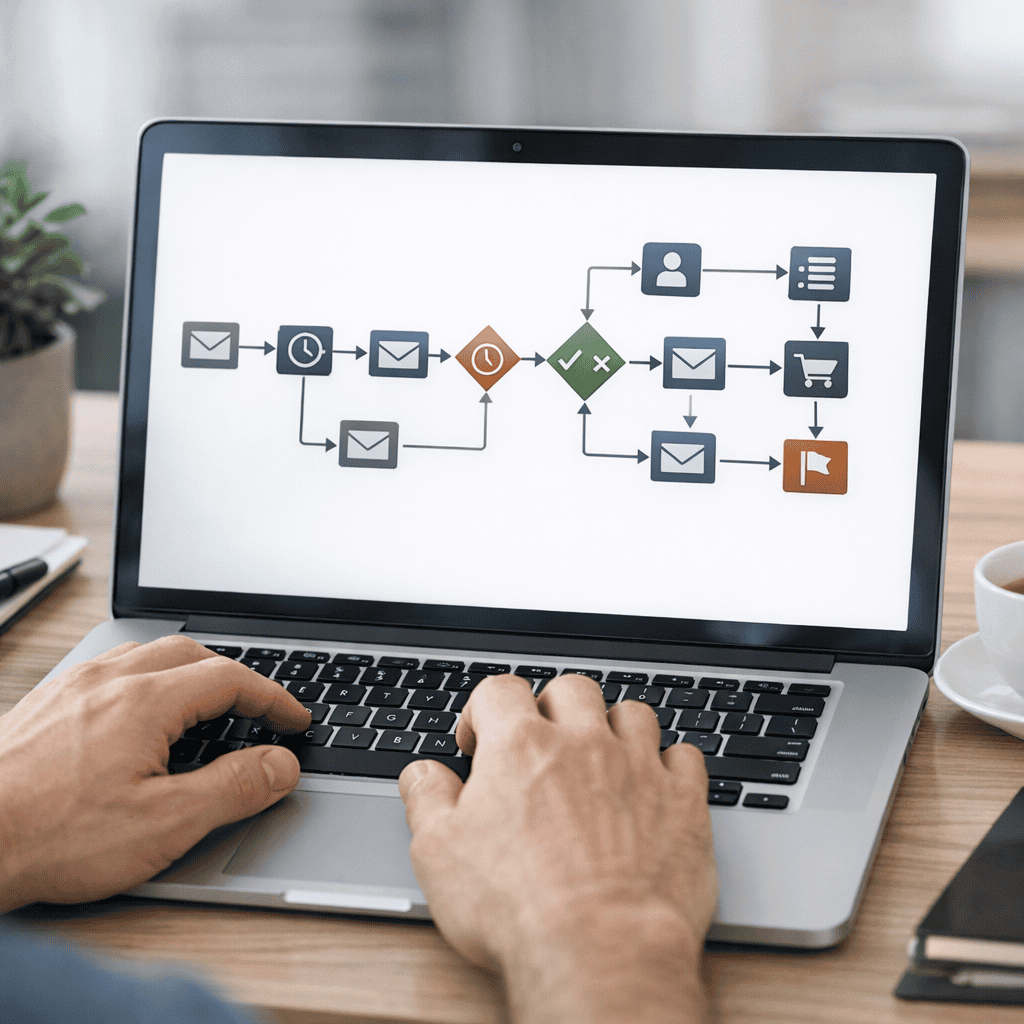
    Common reasons emails end up in spam or promotions

    There is rarely one single reason for poor deliverability. More often, it is a combination of issues. Common causes include:

    • Missing or incorrect email authentication records such as SPF, DKIM and DMARC
    • A weak sender reputation caused by low engagement, spam complaints or high bounce rates
    • Sending to old, inactive or purchased lists
    • Using misleading subject lines or spam-heavy wording
    • Including too many links, too many images or poor formatting
    • Sudden spikes in sending volume from a domain that has not been warmed up properly
    • Low engagement over time, which signals that subscribers are not interested
    • Inconsistent sending patterns that make your activity look suspicious

    The promotions tab is not the same as spam, but many of the same content and formatting signals can influence where your email appears. Highly promotional language, image-heavy layouts and multiple sales links can all increase the chance of being filtered away from the main inbox.

    How to improve email deliverability - Agency presenting analytics

    Set Up the Technical Foundations Correctly

    If you are serious about learning how to improve email deliverability, start with the technical foundations. These settings help prove that your emails are legitimate and that your domain can be trusted.

    Without proper setup, even well-written campaigns sent to a good list can struggle. The technical side does not need to be overwhelming, but it does need to be correct.

    Why SPF, DKIM and DMARC matter for sender trust

    SPF, DKIM and DMARC are core parts of email authentication. They tell receiving servers that your emails are genuinely coming from your domain and have not been tampered with.

    SPF stands for Sender Policy Framework. It lists which mail servers are allowed to send emails on behalf of your domain. If your email platform is not included in your SPF record, mailbox providers may treat your messages with suspicion.

    DKIM stands for DomainKeys Identified Mail. It adds a digital signature to your emails so receiving servers can verify that the message has not been altered in transit. This supports trust and helps protect your brand.

    DMARC stands for Domain-based Message Authentication, Reporting and Conformance. It builds on SPF and DKIM by telling mailbox providers what to do if an email fails authentication checks. It also gives you reporting, which can help you spot misuse of your domain.

    Together, these records improve sender trust. They reduce the risk of spoofing and phishing, and they make it easier for mailbox providers to recognise your emails as legitimate.

    For many businesses, these records are either missing, incomplete or set up incorrectly. That can quietly damage deliverability for months. If you are unsure, ask your web developer, IT provider or marketing partner to review your DNS settings and confirm that your email platform is properly authenticated.

    How domain reputation and authentication work together

    Authentication is essential, but it is only part of the picture. Your domain reputation also matters. This is the overall trust score that mailbox providers associate with your sending domain based on your behaviour over time.

    A strong domain reputation is built through:

    • Consistent sending patterns
    • Low bounce rates
    • Low spam complaint rates
    • Good engagement from recipients
    • Proper authentication
    • Relevant content

    A weak domain reputation can develop if you send to poor-quality lists, generate complaints, or send large volumes with little engagement. Once reputation drops, inbox placement becomes harder.

    Think of authentication as proving your identity, while domain reputation reflects your track record. You need both. A properly authenticated domain with poor sending habits can still end up in spam. Equally, good content sent from an unauthenticated domain may not be trusted.

    If you are changing email platforms or starting to send larger campaign volumes, take care not to damage your reputation. Warm up your domain gradually, send first to your most engaged subscribers and monitor results closely.

    Clean and Segment Your Email List

    List quality is one of the biggest factors in email deliverability. A smaller, healthier list will usually outperform a larger list full of inactive or poor-quality contacts.

    Many businesses focus too much on list size and not enough on list condition. But mailbox providers care about how recipients respond. If too many people ignore, delete or complain about your emails, your sender reputation suffers.

    How to remove inactive contacts and reduce bounce rates

    List hygiene means keeping your database clean, accurate and engaged. This is one of the most effective email deliverability tips because it improves both technical performance and audience response.

    Start by identifying contacts who have not opened or clicked your emails for a long time. The exact timeframe depends on your sales cycle, but many businesses review inactivity at 90, 180 or 365 days.

    You can then:

    • Run a re-engagement campaign to ask whether they still want to hear from you
    • Remove or suppress contacts who remain inactive
    • Delete invalid or duplicate email addresses
    • Use double opt-in for new subscribers where appropriate
    • Avoid purchased lists entirely

    High bounce rates are a warning sign. Hard bounces usually mean the address is invalid and should be removed immediately. Soft bounces may be temporary, but repeated soft bounces should also be reviewed.

    Cleaning your list helps improve inbox placement because it reduces negative signals. It also saves money if your email platform charges based on contact volume.

    For example, if a retailer has 12,000 subscribers but 3,000 have not engaged in over a year, continuing to email them can drag down campaign performance. Removing or suppressing those contacts may reduce list size, but it often improves open rates, click rates and deliverability overall.

    Why segmentation improves engagement and deliverability

    Segmentation means dividing your list into smaller groups based on relevant criteria such as interests, purchase history, location, behaviour or stage in the buying journey.

    This matters because relevance drives engagement. And engagement helps deliverability.

    If you send the same generic message to everyone, many recipients will ignore it. If you send more targeted emails, people are more likely to open, click and respond. Those positive signals tell mailbox providers that your emails are wanted.

    Useful segmentation ideas for UK businesses include:

    • New leads versus existing customers
    • Past purchasers versus non-buyers
    • Service interest categories
    • Geographic regions
    • High-engagement subscribers versus low-engagement subscribers
    • Event attendees or webinar sign-ups

    You do not need a highly complex setup to see benefits. Even basic segmentation can improve results. A local B2B company, for instance, might send one email series to new enquiries and another to existing clients. That simple split can lead to stronger engagement and fewer unsubscribes.

    Segmentation also supports better timing and frequency. Some groups may welcome weekly updates, while others only need monthly contact. Matching your approach to audience expectations reduces the risk of fatigue and spam complaints.

    How to improve email deliverability - Laptop with data

    Write Emails That Encourage Engagement

    Content plays a major role in deliverability. Mailbox providers look at how people interact with your emails, and your content influences those interactions.

    The goal is not to game filters. It is to send useful, relevant emails that people want to open and read. That is one of the most sustainable ways to improve inbox placement.

    Subject lines, preview text and content that avoid spam triggers

    Subject lines are often the first thing recipients see, so they have a direct impact on opens. Poor subject lines can reduce engagement and make your emails look untrustworthy.

    Good subject lines are:

    • Clear
    • Relevant
    • Specific
    • Honest

    Matched to the content of the email

    Avoid exaggerated claims, misleading urgency and spam-heavy language. Phrases like “Act now”, “Guaranteed income”, “Free money” or excessive use of capitals and punctuation can raise red flags. One exclamation mark may be fine. Five usually are not.

    Preview text matters too. It should support the subject line and give a genuine reason to open. If your preview text is missing or poorly formatted, you lose a valuable opportunity to improve engagement.

    Inside the email, focus on clarity and value. Write for real people, not algorithms. Keep your message easy to scan, with a clear purpose and a clear call to action.


    Useful content approaches include:

    • Sharing practical advice
    • Highlighting a relevant offer
    • Providing updates customers actually care about
    • Answering common questions
    • Linking to helpful resources

    If every email is a hard sell, engagement may decline. A better approach is to balance promotional messages with genuinely useful content that builds trust.

    How to balance images, links and plain text for better results

    Email design affects both user experience and deliverability. Over-designed emails with too many images and links can look overly promotional and may be filtered more aggressively.

    A balanced email usually performs better. That means:

    • Using a sensible amount of text
    • Including images that support the message rather than replace it
    • Avoiding image-only emails
    • Keeping the number of links reasonable
    • Making sure the email is mobile-friendly
    • Including a plain text version

    Image-only emails are a common mistake. Some businesses create a beautiful graphic and send it as the whole message. The problem is that mailbox providers and accessibility tools cannot always interpret it properly, and recipients may not load images by default.

    Too many links can also be an issue, especially if they point to different domains or use URL shorteners. Keep your links focused and relevant. If you want one main action, make that obvious rather than surrounding it with distractions.

    Formatting matters as well. Use a recognisable sender name, a legitimate reply-to address and a clear footer with your business details and unsubscribe link. These are basic email marketing best practices, but they also support trust.

    If your campaigns regularly land in the email spam folder, review your templates. Strip back anything unnecessary and test simpler versions. In many cases, cleaner emails perform better.

    How to improve email deliverability - Client checking data dashboard

    Monitor Performance and Improve Over Time

    Deliverability is not something you fix once and forget. Mailbox provider standards change, audience behaviour changes and your own sending patterns evolve. Ongoing monitoring helps you spot issues early and improve steadily.

    If you want to know how to improve email deliverability long term, this is where consistency matters most.

    Key deliverability metrics to track in your email platform

    Most email platforms provide useful data, but many businesses only look at opens and clicks. Those are important, but they are not the full picture.

    Key metrics to monitor include:

    • Delivery rate
    • Bounce rate
    • Hard bounces and soft bounces
    • Open rate
    • Click-through rate
    • Click-to-open rate
    • Unsubscribe rate
    • Spam complaint rate
    • Conversion rate
    • List growth rate
    • Engagement by segment

    Watch for trends rather than isolated numbers. A single campaign may underperform for many reasons, but a pattern of rising bounces or falling opens may point to a deliverability issue.

    Spam complaints deserve particular attention. Even a small number can damage sender reputation if your volume is low. Make it easy for people to unsubscribe rather than forcing them to mark your emails as spam.

    It is also useful to compare performance across segments and campaign types. If one audience consistently engages well and another does not, that tells you where to focus your improvements.

    For businesses sending regular campaigns, a monthly review is a sensible minimum. For higher-volume senders, weekly checks may be more appropriate.

    When to review your strategy or get expert support

    Sometimes small adjustments are enough. At other times, poor deliverability points to a wider strategy issue. If your emails are consistently underperforming despite good offers and decent content, it may be time to review the bigger picture.

    You should consider a deeper review if:

    • Open rates have dropped sharply without a clear reason
    • Spam complaints are rising
    • Bounce rates are consistently high
    • A new platform migration has affected performance
    • Your domain authentication is unclear or incomplete
    • You are sending more frequently but seeing weaker results
    • Your list has grown quickly and quality may have slipped

    Expert support can help you identify what is really going on. That may include technical checks, list audits, content reviews, segmentation planning and campaign strategy.

    If you want a wider strategy that supports email performance, lead generation and campaign planning, explore our Marketing Packages for a joined-up approach: https://stevewelshmarketing.com/services/marketing-packages/

    This kind of joined-up support is often what turns email from a frustrating channel into a reliable source of leads and sales. Deliverability improves fastest when the technical setup, content, audience targeting and wider marketing plan all work together.

    Improving email deliverability is not about chasing tricks. It is about building trust with mailbox providers and with your audience. When you send relevant emails from a properly configured domain to an engaged list, better inbox placement usually follows.

    To recap, the most effective ways to improve email deliverability are to:

    • Set up SPF, DKIM and DMARC correctly
    • Protect and build your domain reputation
    • Clean your list regularly
    • Remove inactive and invalid contacts
    • Segment your audience for relevance
    • Write clear, useful emails that encourage engagement
    • Avoid spam-heavy formatting and language
    • Monitor key metrics and act on warning signs
    • Review your wider strategy when results stall

    These steps are practical, commercially useful and achievable for most businesses. You do not need to become deeply technical, but you do need to be consistent.

    If your email campaigns are not reaching enough inboxes, now is the time to fix it. Steve Welsh Marketing can help you improve performance with a smarter, more joined-up approach to email and digital marketing. Get in touch to discuss your goals and build a strategy that delivers better results.

    If you want a wider strategy that supports email performance, lead generation and campaign planning, explore our Marketing Packages for a joined-up approach.

    Questions


    FAQs

    1. What is the first thing to check if my emails are going to spam?

      Start with email authentication and list quality. Check that SPF, DKIM and DMARC are set up correctly, then review bounce rates, inactive contacts and spam complaints. If these basics are weak, design changes alone are unlikely to fix inbox placement.

    2. Do SPF, DKIM and DMARC improve email deliverability?

      Yes. SPF, DKIM and DMARC help mailbox providers verify that your emails are genuinely sent from your domain and have not been altered. They do not guarantee inbox placement, but they are important foundations for sender trust and domain reputation.

    3. How often should I clean my email list?

      Most UK businesses should review list quality at least every few months, or more often if they send frequently. Remove hard bounces quickly, review repeated soft bounces and consider suppressing contacts who have not opened or clicked for a long time.

    4. Can email content affect inbox placement?

      Yes. Misleading subject lines, excessive sales language, image-only emails, too many links and poor formatting can increase the chance of filtering. Clear, relevant emails with useful content and a focused call to action are more likely to encourage positive engagement.

    5. How can segmentation help deliverability?

      Segmentation helps you send more relevant messages to different groups, such as new leads, existing customers or people interested in a specific service. Better relevance can improve opens, clicks and replies, which are positive engagement signals for mailbox providers.

    6. Can a marketing package help with email deliverability?

      Yes, if deliverability is linked to wider marketing activity. A joined-up marketing package can review technical setup, list quality, segmentation, email content and campaign planning so your email marketing works better alongside lead generation and customer retention.

  • 10 Proven Effective Email Marketing Strategies to Boost Your Sales

    10 Proven Effective Email Marketing Strategies to Boost Your Sales

    Originally published: 27 June 2024
    Last updated: May 2026

    Quick answer:

    Effective email marketing strategies focus on sending relevant, timely messages to people who have chosen to hear from your business. For UK businesses, that means building a clean permission-based list, segmenting contacts by behaviour or interest, writing clear subject lines, using mobile-friendly layouts and giving each email one obvious next step. Automation can then support welcome emails, abandoned cart reminders and follow-ups after enquiries or downloads. The aim is not to send more emails, but to improve quality, trust and timing so more subscribers open, click and buy. Steve Welsh Marketing can help connect email activity with wider lead generation and Marketing Packages when needed.

    Intro:

    Email remains one of the most reliable ways for UK businesses to generate leads, nurture prospects and drive repeat sales. While social platforms, paid ads and search all have their place, email gives you direct access to people who have already shown interest in your business. That makes it one of the most commercially valuable channels available.

    The challenge is that simply sending more emails does not produce better results. Businesses see stronger returns when they use effective email marketing strategies built around relevance, timing and clear commercial goals. The best campaigns do not just fill inboxes. They move people closer to a purchase.

    If you want better open rates, more clicks and a stronger email conversion rate, the answer is not guesswork. It is a structured email campaign strategy based on list quality, segmentation, automation and testing. In this guide, we will look at practical email marketing tips that UK businesses can apply to improve performance and increase sales.

    Effective email marketing strategies - Consultant checking email analytics

    Why effective email marketing strategies still drive sales

    Email marketing has been around for years, but it continues to perform because it supports the full buying journey. It can introduce your business, build trust, answer objections, promote offers and bring previous customers back. Few channels can do all of that so efficiently.

    For many businesses, email is not just a support channel. It is a sales channel in its own right. When used properly, it helps you stay visible without relying entirely on rising ad costs or unpredictable platform changes.

    How email supports lead nurturing and repeat purchases

    Most people do not buy the first time they visit your website. They compare options, look for reassurance and often need several touchpoints before making a decision. Email helps you stay in front of them during that process.

    A strong lead nurturing sequence can educate prospects, explain your offer and build confidence over time. For example, a service business might send a welcome email, then follow up with a case study, a useful guide and finally an invitation to book a call. Each message has a purpose and helps move the lead forward.

    Email is also highly effective for repeat purchases. If someone has already bought from you, they are far more likely to buy again than a completely cold prospect. This is where effective email marketing strategies can have a major impact on revenue.

    Examples include:

    • A retailer sending product recommendations based on previous orders
    • A consultant following up with existing clients about related services
    • A training provider promoting advanced courses to past attendees
    • A subscription business reminding customers to renew before expiry

    These campaigns work because they are relevant. They are based on what the customer has already done, not what you hope they might do.

    Why email often outperforms other channels on ROI

    Email often delivers a stronger return on investment than many other forms of digital marketing because the costs are relatively low and the targeting can be highly precise. Once someone joins your list, you can continue communicating with them without paying for every click.

    That does not mean email works automatically. Poor targeting, weak messaging and inconsistent sending can all reduce results. But when your list is healthy and your campaigns are well planned, email can produce sales at a lower cost than many paid channels.

    It also gives you more control. You own your email list. You are not relying on an algorithm to decide whether your audience sees your message. That makes email a valuable long term asset for any UK business that wants more predictable lead generation and sales.

    Effective email marketing strategies - Agency meeting discussing open rates

    Build a stronger email list before you send

    A successful campaign starts long before the first email goes out. If your list is weak, unengaged or poorly targeted, even the best creative will struggle. One of the most overlooked email marketing tips is to improve list quality before focusing on campaign volume.

    A smaller list of genuinely interested contacts is usually far more valuable than a large list of people who barely remember signing up.

    Use sign-up forms, lead magnets and website pop-ups properly

    Your website should actively support list growth. Too many businesses hide their sign-up form in the footer and then wonder why nobody subscribes. If email is important to your sales process, your list building needs to be visible and intentional.

    Good options include:

    • A homepage sign-up section with a clear benefit
    • Pop-ups triggered by time on page or exit intent
    • Embedded forms on blog posts and service pages
    • Dedicated landing pages for downloadable resources
    • Checkout opt-ins for future offers and updates

    The key is to give people a reason to subscribe. Generic wording such as “Join our newsletter” is rarely compelling. A stronger offer might be:

    • Get practical marketing tips for growing your business
    • Download our guide to improving lead generation
    • Receive exclusive offers and product updates
    • Get monthly insights to help increase enquiries and sales

    Lead magnets can work especially well when they match your audience’s needs. For example, a B2B business might offer a checklist, pricing guide or industry report. An ecommerce brand might offer a first order discount or early access to new products.

    Make sure the sign-up process is simple. Ask only for the information you need. In many cases, a first name and email address are enough to get started. Too many fields can reduce conversion rates.

    Focus on permission-based list growth and quality over quantity

    Permission matters. Buying email lists or adding people without clear consent is not only poor practice, it damages campaign performance. Low engagement, spam complaints and poor sender reputation can all follow.

    For UK businesses, permission-based email marketing is also important from a compliance perspective. Contacts should understand what they are signing up for and how their data will be used. Clear consent builds trust and improves long term results.

    Quality should always come before quantity. A list full of engaged prospects and customers gives you:

    • Better open rates
    • Higher click-through rates
    • More accurate reporting
    • Lower unsubscribe rates
    • Stronger email conversion rate

    It is also worth cleaning your list regularly. Remove inactive contacts, correct obvious errors and monitor engagement over time. If someone has not opened or clicked in months, consider a re-engagement campaign. If they still do not respond, it may be better to suppress them from future sends.

    A clean list improves deliverability and gives you a more realistic view of what your email campaign strategy is achieving.

    Segment your audience for more relevant campaigns

    One of the biggest reasons email campaigns underperform is that businesses send the same message to everyone. That approach ignores the fact that different contacts are at different stages, have different interests and respond to different offers.

    Email segmentation helps you send more relevant messages, which usually leads to better engagement and more sales. It is one of the most effective email marketing strategies because it improves both customer experience and commercial performance.

    Group contacts by behaviour, purchase history and interests

    Segmentation does not need to be complicated to be effective. Start with the data you already have and build from there.

    Useful ways to segment your audience include:

    • New subscribers
    • Existing customers
    • Repeat buyers
    • Inactive contacts
    • Leads who downloaded a specific resource
    • People who clicked on a certain product or service
    • Customers by order value
    • Contacts by sector, location or service interest

    Behavioural data is especially useful. If someone has viewed a service page multiple times, clicked on a pricing email or abandoned a basket, that tells you something important about their intent.

    Purchase history is another strong segmentation tool. A customer who bought one product may be interested in a related item, an upgrade or a replenishment reminder. A client who used one service may be open to another if the timing is right.

    Interests can be gathered through sign-up forms, preference centres or observed behaviour. Even simple categories can improve relevance significantly.

    Tailor offers and messaging to each segment

    Once you have segments in place, the next step is to tailor your messaging. This is where many businesses miss the opportunity. They create segments but still send broadly similar emails to each group.

    Your content should reflect what matters to that audience.

    For example:

    • New subscribers may need an introduction to your business and proof that you can help
    • Warm leads may need case studies, FAQs and a clear next step
    • Existing customers may respond better to loyalty offers or complementary services
    • Inactive contacts may need a stronger incentive or a re-engagement message

    The same applies to offers. A first time buyer discount may work for new subscribers, but it is unlikely to be the best message for a loyal customer. Likewise, a high level strategic service pitch may not suit someone who has only just discovered your business.

    Segmentation also helps with timing. A follow-up email sent shortly after a key action is often more effective than a general campaign sent days later. Relevance plus timing is a powerful combination.

    If your business wants stronger results from email segmentation, start with a few meaningful groups rather than trying to build dozens at once. Even basic segmentation can make a noticeable difference to opens, clicks and conversions.

    Effective email marketing strategies - Email campaign offer

    Improve open rates and click-through rates

    If people do not open your emails, they cannot buy from them. If they open but do not click, your message is not moving them forward. Improving these two areas is essential if you want your email campaign strategy to produce more sales.

    Open rates and click-through rates are influenced by several factors, including list quality, timing, relevance and design. Small improvements across each area can create a significant uplift in results.

    Write subject lines and preview text that earn attention

    Your subject line is the first hurdle. It needs to stand out in a crowded inbox without sounding vague, misleading or overly promotional.

    Strong subject lines tend to be:

    • Clear rather than clever
    • Specific rather than generic
    • Relevant to the recipient
    • Focused on value or curiosity
    • Short enough to display well on mobile

    Examples include:

    • 5 ways to improve your lead generation this month
    • Still thinking about [service]? Here is what to know
    • Your exclusive offer ends tomorrow
    • How to reduce abandoned baskets
    • A quick guide to better email results

    Preview text matters too. It supports the subject line and gives the reader another reason to open. Instead of letting the first line of body copy appear by default, write preview text intentionally.

    For example:

    Subject line: Improve your next email campaign

    Preview text: Practical changes that can increase opens, clicks and sales

    Avoid overusing capital letters, excessive punctuation or spammy phrases. These can reduce trust and may affect deliverability.

    Personalisation can help, but only when it adds value. Using a first name is not enough on its own. A more effective approach is personalising based on behaviour or interest, such as referencing a viewed product or downloaded guide.

    Use clear calls to action and mobile-friendly email design

    Once someone opens your email, the content needs to guide them towards a clear next step. Too many emails fail because they try to do too much or bury the call to action.

    Every email should have one main objective. That could be:

    • Book a consultation
    • View a product
    • Download a guide
    • Read a case study
    • Redeem an offer

    Your call to action should be easy to spot and easy to understand. Phrases such as “Learn more” can work, but more specific wording often performs better. For example:

    • Book your free call
    • View the full range
    • Download the guide
    • Claim your offer
    • See how it works

    Design also plays a major role. Most emails are opened on mobile devices, so your layout must be easy to read on smaller screens. That means:

    • Short paragraphs
    • Clear headings
    • Plenty of white space
    • Buttons large enough to tap
    • Images that support the message rather than distract from it

    Do not overload the email with too many links or competing messages. If the reader has too many choices, they may take none.

    It is also worth checking that the landing page matches the email. If the email promises a specific offer or solution, the click should take the reader directly to the relevant page. Friction after the click can quickly reduce your email conversion rate.

    Use automation and testing to increase conversions

    Manual campaigns are useful, but automation allows you to scale communication without losing relevance. It helps you send the right message at the right time based on what the contact does.

    Combined with regular testing, email automation can improve consistency, save time and increase conversions. For businesses that want better results without constantly reinventing each campaign, this is one of the most valuable areas to develop.

    Effective email marketing strategies - Email marketing planning map

    Set up welcome, abandoned cart and follow-up sequences

    Automated sequences work best when they are tied to clear commercial moments in the customer journey.

    A welcome sequence is often the first place to start. When someone joins your list, they are at peak interest. A good welcome series can introduce your brand, set expectations and guide the subscriber towards a first conversion.

    A simple welcome sequence might include:

    • Email 1: Thank them for subscribing and deliver the promised resource or offer
    • Email 2: Explain how you help customers and what makes your business different
    • Email 3: Share proof such as testimonials, results or case studies
    • Email 4: Invite them to take the next step, such as booking a call or making a purchase

    Abandoned cart emails are another high value automation for ecommerce businesses. If someone adds products to their basket but does not complete the purchase, a timely reminder can recover lost revenue. These emails often perform well because the intent is already there.

    A typical abandoned cart sequence could include:

    • A reminder shortly after abandonment
    • A second email highlighting benefits or answering objections
    • A final message with urgency or a limited incentive if appropriate

    Follow-up sequences are useful for service businesses too. If someone downloads a guide, attends a webinar or enquires through your website, automation can keep the conversation moving. Instead of relying on one generic response, you can send a sequence that educates and qualifies the lead.

    Test send times, content and offers to refine performance

    Even strong campaigns can usually be improved. Testing helps you move beyond assumptions and make decisions based on evidence.

    Areas worth testing include:

    • Subject lines
    • Preview text
    • Send times and days
    • Call to action wording
    • Email length
    • Image use
    • Offer type
    • Button placement
    • Personalisation approach

    For example, one audience may respond better to a concise email with a direct offer, while another may need more context and proof before clicking. A B2B audience may engage more during working hours, while a consumer audience may open more often in the evening.

    Test one variable at a time where possible. If you change everything at once, it becomes difficult to understand what caused the result.

    Look beyond opens and clicks alone. The real goal is conversion. A subject line that boosts opens but attracts the wrong audience may not improve sales. Focus on the full path from open to click to action.

    Review your data regularly and use it to refine future campaigns. Over time, these small improvements can have a major impact on revenue.

    If you want a joined-up approach that supports email, content and wider lead generation, explore our Marketing Packages for a strategy built around your business goals.

    Effective email marketing strategies are not about sending more messages. They are about sending better ones. When you build a high quality list, use email segmentation, improve your creative, apply email automation and test what matters, email becomes a powerful sales tool rather than just another marketing task.

    For UK businesses, the opportunity is clear. Email can help you nurture leads, increase repeat purchases and improve your overall email conversion rate without the rising costs associated with many other channels. The businesses that get the best results are the ones that treat email as a strategic part of their marketing, not an afterthought.

    If your current campaigns are underperforming, start with the basics. Improve list quality. Segment your audience. Tighten your subject lines. Simplify your calls to action. Build automations around key customer actions. Then test and refine.

    These effective email marketing strategies can help you generate more value from the audience you already have and turn more interest into sales. If you want expert support building an email strategy that fits your wider marketing goals, get in touch with Steve Welsh Marketing today.

    If you want a joined-up approach that supports email, content and wider lead generation, explore our Marketing Packages for a strategy built around your business goals.

    Questions

    FAQs

    1. What makes an email marketing strategy effective?

      An effective email marketing strategy links list quality, segmentation, timing, content and clear calls to action to a commercial goal. Instead of emailing everyone with the same message, it sends useful, relevant content based on where each contact is in the buying journey.

    2. How often should a UK business send marketing emails?

      There is no fixed schedule that suits every business. Start with a frequency you can sustain, and that matches audience expectations, such as weekly, fortnightly or monthly. Monitor opens, clicks, unsubscribes and sales. If engagement drops, review relevance and timing before increasing volume.

    3. What is email segmentation, and why does it matter?

      Email segmentation is grouping contacts by factors such as new subscribers, existing customers, interests, behaviour or purchase history. It matters because each group can receive messages and offers that better match their needs, which can improve engagement and conversion.

    4. Which email automations should I set up first?

      Start with automations tied to clear customer actions. A welcome sequence for new subscribers, abandoned cart reminders for ecommerce, and follow-up emails after enquiries or downloads are often practical first steps because they support moments of active interest.

    5. How can I improve my email conversion rate?

      Use a clean list, relevant segments, clear subject lines, concise copy, one main call to action and a landing page that matches the email. Test one change at a time so you can see what improves clicks, enquiries or purchases.

    6. When should I consider a Marketing Package for email marketing?

      Consider a Marketing Package if your campaigns lack structure, your list is not segmented, automations are missing or your email is not connected to wider marketing goals. A joined-up package can help align email with content, lead generation and sales activity.

  • A Beginner’s Guide to Developing a Digital Marketing Plan That Works

    A Beginner’s Guide to Developing a Digital Marketing Plan That Works

    Originally published: 20 June 2024
    Last updated: May 2026

    Quick answer:

    Developing a digital marketing plan means turning your business goals into a clear set of marketing actions. Start by defining what you want to achieve, such as more qualified enquiries, online sales or repeat customers. Then identify your target audience, choose the channels they use, plan useful content, set a realistic budget and decide how success will be measured. A good plan should help you prioritise effort, avoid wasted activity and review results regularly. For many UK SMEs, this also means choosing a manageable delivery model, such as internal resource, agency support or structured marketing packages that keep activity focused and accountable.

    Intro:

    Developing a digital marketing plan is one of the most important steps a business can take if it wants to grow consistently, attract the right customers and make better use of its marketing budget.

    Many UK businesses are active online, but activity alone does not create results. Posting on social media without a purpose, running ads without a clear target or publishing website content without a plan often leads to wasted time and disappointing returns. A proper plan gives your marketing direction. It connects your business goals to the channels, messages and actions most likely to deliver measurable outcomes.

    For small and medium-sized businesses in particular, a practical digital marketing strategy can make the difference between sporadic marketing and a reliable lead generation system. It helps you decide what to prioritise, where to invest and how to measure whether your efforts are working.

    This guide explains how to approach developing a digital marketing plan in a way that is realistic, commercially useful and tailored to UK businesses. It covers the key planning steps, from setting objectives and defining your target audience to choosing channels, creating content, managing budget and tracking performance.

    Developing a Digital Marketing Plan - creating a road map

    What a digital marketing plan should achieve

    A digital marketing plan should do more than list a few tactics. It should give your business a clear route from where you are now to where you want to be. That means identifying your commercial goals, understanding your audience, selecting the right channels and setting out how you will measure success.

    A good plan should answer practical questions such as:

    • Who are we trying to reach?
    • What do we want them to do?
    • Which digital channels are most likely to influence them?
    • What content and campaigns do we need?
    • How much can we invest?
    • How will we know if it is working?

    Without these answers, marketing often becomes reactive. Businesses jump from one idea to the next, following trends rather than strategy. A plan creates focus and helps you make decisions based on business priorities rather than guesswork.

    How a plan supports business growth and lead generation

    At its core, digital marketing should support growth. That might mean generating more enquiries, increasing online sales, improving customer retention or building awareness in a new market. Your plan should link directly to those outcomes.

    For example, if your business relies on inbound leads, your digital marketing plan might focus on improving search visibility, creating useful website content and using paid search to capture high-intent traffic. If repeat business is a priority, email marketing and customer nurturing may play a larger role. If you are launching a new service, your plan may need a stronger awareness campaign supported by social media and paid promotion.

    A structured plan also helps improve lead quality. It is not just about generating more traffic. It is about attracting people who are more likely to buy. That means aligning your messaging, offers and channels with the needs of your ideal customers.

    When done properly, a plan can help your business:

    • Increase qualified website traffic
    • Generate more consistent leads
    • Shorten the sales cycle
    • Improve conversion rates
    • Use budget more efficiently
    • Build stronger brand visibility in your market

    These are commercial outcomes, not vanity metrics. That is why planning matters.

    Why clear objectives matter before choosing channels

    One of the most common mistakes in digital marketing is choosing channels before setting objectives. Businesses often ask whether they should invest in SEO, Google Ads, LinkedIn or email marketing without first deciding what they want those channels to achieve.

    Your marketing objectives should come first because they shape everything else. If your goal is immediate lead generation, paid search may deserve priority. If your goal is long-term visibility and authority, SEO and content marketing may be more important. If you want to improve retention, email automation could be a better investment than social media.

    Clear objectives also help you avoid spreading your efforts too thinly. Most SMEs do not have the time or budget to do everything at once. A plan helps you focus on the channels and activities that are most likely to move the business forward.

    Before selecting tactics, define what success looks like. That could include:

    • A set number of monthly enquiries
    • Growth in organic traffic from relevant searches
    • More booked consultations
    • Higher conversion rates on key landing pages
    • Increased repeat purchases from existing customers

    Once your objectives are clear, channel decisions become much easier and far more effective.

    Developing a Digital Marketing Plan - Agency team working on planning

    Define your audience and marketing goals

    A successful digital marketing strategy starts with a clear understanding of who you want to reach and what you want your marketing to achieve. If your audience definition is vague, your messaging will be vague too. If your goals are unclear, your campaigns will lack direction.

    This stage is about building a practical picture of your ideal customer and setting marketing objectives that support your wider business priorities.

    Building a simple customer profile for UK buyers

    You do not need a complicated persona document to improve your marketing. What you do need is a useful customer profile that helps you understand how your audience thinks, searches and buys.

    Start with the basics:

    • Who are your best customers?
    • What sectors or customer types are most profitable?
    • What problems are they trying to solve?
    • What questions do they ask before buying?
    • What concerns or objections do they have?
    • How do they usually find suppliers or service providers?
    • What influences their decision making?

    For UK businesses, it is also worth considering regional factors, industry language and local buying behaviour. A customer in London may search differently from one in Glasgow or Manchester. A B2B buyer in a regulated sector may need more reassurance and detail than a consumer making a quick online purchase.

    A simple customer profile might include:

    • Job title or buyer type
    • Business size or household profile
    • Main challenge or need
    • Buying triggers
    • Common objections
    • Preferred channels
    • Typical decision timescale

    This information helps you shape your website content, ad messaging, email campaigns and calls to action. It also helps you choose the right tone. Some audiences respond to technical detail and evidence. Others want clarity, speed and simplicity.

    If you already have customers, use real data. Speak to your sales team. Review enquiry forms. Look at search terms in Google Search Console. Check analytics to see which pages attract and convert visitors. Good audience insight often comes from information you already have.

    Setting SMART goals that match your sales priorities

    Once you know who you are targeting, the next step is to set goals that are specific enough to guide action. SMART goals are useful here because they encourage clarity. Your goals should be specific, measurable, achievable, relevant and time-bound.

    Instead of saying, “We want more website traffic,” a stronger goal would be, “Increase organic traffic to service pages by 25 per cent over the next six months.”

    Instead of saying, “We want more leads,” a better objective might be, “Generate 20 qualified enquiries per month through paid search and landing page optimisation by the end of Q3.”

    The key is to connect marketing objectives to sales priorities. Ask yourself:

    • Do we need more leads?
    • Do we need better quality leads?
    • Do we need to improve conversion from existing traffic?
    • Do we need to increase repeat business?
    • Do we need to enter a new market or promote a new service?

    Your answers will shape your plan.

    Examples of useful marketing objectives include:

    • Increase enquiries from a target service by 30 per cent in six months
    • Improve conversion rate on a key landing page from 2 per cent to 4 per cent
    • Grow email list sign-ups by 500 subscribers in one quarter
    • Reduce cost per lead from paid campaigns by 20 per cent
    • Achieve first-page rankings for selected commercial search terms within nine months

    These goals give your marketing focus and make it easier to measure marketing performance over time.

    Choose the right digital channels for your business

    Not every digital channel will be right for your business. The best mix depends on your audience, your goals, your budget and the way people buy from you.

    A common mistake is trying to be everywhere at once. In reality, most businesses get better results by doing fewer things more consistently. Developing a digital marketing plan means choosing channels based on commercial value, not popularity.

    When to use SEO, paid ads, email and social media

    Each channel has strengths, and each works best in different situations.

    SEO

    Search engine optimisation is valuable when your audience is actively searching for the products or services you offer. It is especially effective for businesses that want long-term visibility, lower reliance on paid traffic and a stronger online presence in search results.

    SEO is a good fit if:

    • Your customers use Google to research suppliers
    • You want to attract high-intent traffic
    • You have services that can be supported by useful website content
    • You are willing to invest over time rather than expect instant results

    Paid ads

    Paid search and paid social can generate faster visibility and leads. They are useful when you need immediate traffic, want to test offers quickly or need to support a time-sensitive campaign.

    Paid ads are a good fit if:

    • You need leads in the short term
    • You have a clear offer and landing page
    • Your margins support ad spend
    • You want to target specific locations, audiences or search terms

    Email marketing

    Email remains one of the most effective channels for nurturing leads and encouraging repeat business. It works particularly well when you already have a customer database or can generate sign-ups through your website.

    Email is a good fit if:

    • You want to stay in touch with prospects
    • Your sales cycle is longer and requires follow-up
    • You want to improve retention and repeat purchases
    • You have useful content, offers or updates to share

    Social media

    Social media can support awareness, engagement and trust, but it is not equally valuable for every business. It tends to work best when your audience is active on specific platforms and when you can produce content consistently.

    Social media is a good fit if:

    • Your audience spends time on relevant platforms
    • Your brand benefits from visibility and regular communication
    • You can create content that informs, reassures or showcases your work
    • You want to support other channels with remarketing and engagement

    The right channel mix often includes a combination of these, but the balance should reflect your priorities.

    How to match channels to budget, audience and buying cycle

    To choose wisely, think about three things together: budget, audience behaviour and buying cycle.

    Budget

    Some channels require more upfront investment than others. Paid ads can drive quick traffic, but costs can rise quickly if campaigns are not managed well. SEO and content marketing often take longer to produce results, but they can become more cost-effective over time. Email marketing is usually relatively affordable, especially if you already have a list.

    Audience behaviour

    Where does your target audience go when they are researching a solution? Do they search Google? Read industry articles? Spend time on LinkedIn? Respond to email offers? Your plan should reflect actual behaviour, not assumptions.

    Buying cycle

    If your service involves a long decision-making process, your marketing needs to support multiple stages. A prospect may first discover your business through search, then read your content, then join your email list, then book a call weeks later. In that case, your plan should include awareness, consideration and conversion activity.

    For shorter buying cycles, direct-response channels may be more effective. For longer cycles, content and nurturing become more important.

    A practical approach is to prioritise one or two core channels, then support them with one or two secondary channels. For example:

    • SEO plus content for long-term lead generation
    • Google Ads for immediate enquiries
    • Email for nurturing and follow-up
    • LinkedIn for B2B visibility and remarketing

    This creates a more manageable and effective digital marketing strategy.

    Developing a Digital Marketing Plan - Marketing calendar planning

    Plan your content, budget and delivery schedule

    Once you know your goals, audience and channels, you need a delivery plan. This is where many businesses lose momentum. They know what they should do, but they do not have a realistic system for doing it consistently.

    Your plan should set out what content you will create, how much you will spend and who will be responsible for delivery.

    Creating a content marketing plan that supports your goals

    A content marketing plan should support the customer journey, not just fill a blog page or social feed. Every piece of content should have a purpose.

    Start by identifying the key topics your audience cares about. These usually fall into a few categories:

    • Problems they are trying to solve
    • Questions they ask before buying
    • Concerns they need addressed
    • Evidence they need to trust you
    • Information that helps them compare options

    Then map content to your goals and channels.

    For example:

    If your goal is SEO growth, create service pages, blog articles and location content around relevant search terms.

    If your goal is lead generation, create landing pages, downloadable guides or case studies that support conversion.

    If your goal is nurturing, create email sequences, FAQs and educational content that helps prospects move closer to a decision.

    If your goal is retention, create customer updates, how-to content and value-led email campaigns.

    A practical content plan might include:

    • Monthly blog articles targeting relevant search intent
    • Quarterly case studies showing results and credibility
    • Weekly email content for lead nurturing
    • Regular social posts that support visibility and website traffic
    • Updated service pages aligned with key offers

    The best content is specific, useful and commercially relevant. It should answer real questions, reflect your expertise and guide readers towards the next step.

    Setting a realistic budget and timeline for consistent activity

    A plan only works if it is realistic. That means setting a budget and timeline your business can actually maintain.

    Your budget should reflect your goals, competitiveness and internal capacity. If you are in a crowded market and want fast results, a very small budget may not be enough. If you have limited funds, you may need to focus on fewer channels and build gradually.

    When budgeting, consider:

    • Strategy and planning time
    • Website updates or landing page creation
    • Content writing and design
    • SEO work
    • Paid ad spend
    • Email platform costs
    • Reporting and analysis
    • Agency or freelance support

    It is also important to think beyond monthly spend. Some activities, such as SEO and content, need time to build momentum. Paid campaigns may need testing before they become efficient. A realistic timeline helps you avoid judging performance too early.

    For many SMEs, a 90-day plan is a good starting point. It gives enough time to launch activity, gather data and make informed adjustments. Within that period, define:

    • What will be delivered each month
    • Who is responsible
    • What budget is allocated
    • What results are expected
    • How performance will be reviewed

    If your team lacks the time or expertise to manage this consistently, external support can be a sensible option. If you want expert support to turn your plan into action, our structured marketing packages can help you build and deliver a strategy that fits your business goals.

    Developing a Digital Marketing Plan - UK analytics per area

    Measure results and improve your plan over time

    No plan should be static. Digital marketing works best when it is reviewed, refined and improved based on real performance data. The aim is not to set a plan once and leave it untouched. The aim is to create a framework that helps you learn what works and make better decisions over time.

    This is where many businesses gain a competitive advantage. They do not just run campaigns. They measure marketing performance carefully and use the insight to improve results.

    The key metrics to track in a digital marketing plan

    The right metrics depend on your goals, but they should always relate to business outcomes. Avoid focusing only on surface-level numbers such as likes or impressions unless they directly support a wider objective.

    Useful metrics often include:

    Website traffic

    Track overall traffic, but also look at source, landing pages and relevance. More traffic is only useful if it comes from the right audience.

    Organic search visibility

    Monitor rankings, impressions and clicks for important search terms. This helps you assess SEO progress.

    Conversion rate

    Measure how many visitors complete a desired action, such as submitting an enquiry form, booking a call or making a purchase.

    Lead volume

    Track how many leads your marketing generates each month and which channels produce them.

    Lead quality

    Not all leads are equal. Review whether enquiries are relevant, sales-ready and commercially worthwhile.

    Cost per lead

    For paid campaigns, this is essential. It helps you understand whether your spend is efficient.

    Email performance

    Monitor open rates, click-through rates and conversions from email campaigns.

    Engagement metrics

    For content and social media, look at time on page, click-throughs, shares and assisted conversions where relevant.

    Revenue or pipeline impact

    Where possible, connect marketing activity to sales outcomes. This gives the clearest view of return on investment.

    Choose a manageable set of metrics and review them regularly. Too many data points can create confusion. Focus on the numbers that help you make decisions.

    How to review performance and refine your approach

    A good review process turns data into action. Set a regular schedule, monthly for most businesses, to assess what is happening and why.

    Ask questions such as:

    • Which channels are generating the best leads?
    • Which pages or campaigns are converting well?
    • Where are we losing potential customers?
    • Are we attracting the right audience?
    • Is our budget being used effectively?
    • What should we test or improve next?

    Then use the answers to refine your plan.

    Examples of practical improvements include:

    • Adjusting ad targeting to reduce wasted spend
    • Improving landing page copy to increase conversions
    • Creating more content around topics that drive qualified traffic
    • Pausing low-performing social activity
    • Strengthening email follow-up for warm leads
    • Reallocating budget towards higher-performing channels

    This ongoing process is what makes developing a digital marketing plan so valuable. It gives you a structure for improvement rather than a one-off document that sits unused.

    It is also important to review your plan against wider business changes. If your priorities shift, your marketing should shift too. A new service launch, a change in sales targets or a move into a new region may all require updates to your strategy.

    Developing a digital marketing plan is not about creating a perfect document. It is about building a practical system that helps your business market more effectively, spend more wisely and generate better results over time.

    For UK businesses, the most effective plans are usually the simplest. They start with clear business goals, define the right target audience, focus on the most relevant channels and set realistic expectations for delivery and measurement. They avoid unnecessary complexity and concentrate on what will actually move the business forward.

    If your current marketing feels reactive, inconsistent or difficult to measure, now is the right time to put a proper plan in place. With the right structure, your digital marketing can become more focused, more accountable and far more effective.

    If you want a clearer strategy and expert support to deliver it, Steve Welsh Marketing can help. Explore our marketing packages and find a practical, results-focused approach built around your business goals.

    If you want expert support to turn your plan into action, our structured marketing packages can help you build and deliver a strategy that fits your business goals.

    Questions

    FAQs

    1. What should be included in a digital marketing plan?

      A practical digital marketing plan should include your business goals, target audience, key messages, chosen channels, content activity, budget, delivery schedule and performance measures. It should explain what you are trying to achieve, who you want to reach and how you will know whether the work is effective.

    2. How do I choose the right digital marketing channels?

      Choose channels by matching your objectives, audience behaviour, budget and buying cycle. SEO and content are useful when people search before buying. Paid ads can support faster visibility. Email helps with nurturing and retention. Social media is most useful when your audience is active on the platforms you can manage consistently.

    3. What budget do I need for a digital marketing plan?

      There is no single budget that suits every business. Your budget should reflect your goals, market competitiveness, channel choices and internal capacity. If resources are limited, focus on the channels most likely to support sales priorities, then review performance before increasing spend.

    4. How often should I review my digital marketing plan?

      Most businesses should review performance monthly and revisit the wider plan every quarter. This gives enough time to gather useful data, compare results against objectives and adjust activity, budget or messaging before poor performance continues for too long.

    5. When should I consider a marketing package?

      A marketing package can make sense when you need a clear strategy and consistent delivery but do not have the time, skills or capacity in house. It can help organise planning, content, SEO, paid activity and reporting around your goals, provided the package fits your priorities and budget.