
Originally published: 22 October 2024
Last updated: May 2026
Quick answer:
A Google Business Profile is the listing that appears in Google Search and Google Maps when people look for your business, services, or local providers. To make it work well, keep every detail accurate, choose the most relevant categories, add clear services, upload genuine photos, collect and respond to reviews, and keep posts and opening hours up to date. This helps Google understand what you do and helps customers decide whether to contact you. For UK businesses, an optimised profile supports local SEO, improves Google Maps visibility, and can turn high-intent local searches into calls, website visits, direction requests, and enquiries.
Intro:
If you want to be found by local customers, your Google Business Profile needs to work hard for your business. It is often the first thing people see when they search for your company name, your services, or businesses like yours in a specific area. Before they visit your website, call your office, or request a quote, they are likely to judge your business based on what appears in Google Search and Google Maps.
That makes your Google Business Profile far more than a simple directory listing. It is a key part of your local SEO, your online reputation, and your lead generation. A well-optimised profile can help you appear more prominently in local results, attract more relevant enquiries, and give potential customers confidence that your business is active, credible, and easy to deal with.
For UK businesses, this matters across almost every sector. Whether you run a service business, a retail shop, a consultancy, a trades company, a healthcare practice, or a multi-location brand, your Google Business Profile can influence visibility, clicks, calls, and conversions.
In this guide, we will cover what a Google Business Profile is, why it matters, how to optimise it properly, what content and activity improve performance, which mistakes to avoid, and how it fits into a wider local SEO strategy.

What a Google Business Profile is and why it matters
A Google Business Profile is the business listing that appears in Google Search and Google Maps when people search for a company, a service, or a local category. It typically includes your business name, address, phone number, website, opening hours, reviews, photos, services, and other useful details.
It is designed to help users make quick decisions. If someone searches for a local accountant, dentist, plumber, solicitor, café, or marketing agency, Google may show a map pack with several business profiles. Those listings often receive a large share of attention because they are visible before many standard website results.
For that reason, your Google Business Profile is one of the most important local visibility assets you have.
How Google Business Profile supports local search visibility
Google uses a range of signals to decide which businesses to show in local results. While the exact algorithm is not public, Google Business Profile ranking factors generally relate to relevance, distance, and prominence.
Relevance means how closely your profile matches what the user is searching for. If your categories, services, business description, and website content clearly align with the search, you are more likely to appear.
Distance refers to how close your business is to the searcher or the location included in the search query.
Prominence reflects how established and trusted your business appears online. Reviews, website authority, local mentions, and profile activity can all contribute.
A properly managed Google Business Profile helps with all three. It gives Google clearer information about what you do, where you operate, and why your business deserves visibility. It also improves your Google Maps visibility, which is especially important for businesses targeting customers in specific towns, cities, or service areas.
When your profile is complete and active, it can support:
- More appearances in local map results
- Better visibility for branded and non-branded searches
- More website clicks, phone calls, and direction requests
- Stronger trust signals before a customer contacts you
- Improved local SEO performance alongside your website
Why UK businesses should treat it as a core marketing asset
Many businesses still treat their Google Business Profile as something to set up once and forget. That is a missed opportunity.
Your profile is often one of the highest-visibility pieces of digital real estate you own. It can influence first impressions more quickly than your website because users can see your reviews, photos, business details, and recent updates immediately.
For UK businesses, this is particularly valuable in competitive local markets where customers compare several providers before making contact. A strong profile can help you stand out even if your website is not yet ranking at the top organically.
It is also commercially useful because it supports intent-driven traffic. People using local search are often close to taking action. They may be ready to call, book, visit, or request a quote. That means your Google Business Profile can generate leads from people who are already actively looking.
If you rely on local customers, location-based searches, or trust-led buying decisions, your Google Business Profile should be treated as a core marketing asset, not an afterthought.

H2: How to optimise your Google Business Profile properly
Google Business Profile optimisation is about making your listing as accurate, complete, relevant, and trustworthy as possible. It is not about stuffing keywords into every field. It is about helping Google understand your business and helping customers choose you with confidence.
A strong profile combines complete information, the right categories, useful service details, quality images, regular updates, and active review management.
Completing every key profile field for stronger relevance
The first step is to complete every relevant field properly. Incomplete profiles send weak signals to both Google and potential customers.
Start with the basics:
Business name
Use your real trading name only. Do not add extra keywords or locations unless they are genuinely part of your business name. Keyword stuffing here can lead to suspensions or reduced trust.
Business category
Your primary category is one of the strongest relevance signals in your profile. Choose the most accurate main category for your core service.
Address or service area
If customers visit your premises, use your full business address exactly as it appears elsewhere online. If you are a service area business, define the areas you cover clearly and accurately.
Phone number
Use a local or main business number that is monitored consistently. Make sure it matches your website and other listings.
Website URL
Link to the most relevant page, usually your homepage or a location-specific page if appropriate.
Opening hours
Keep these accurate, including bank holiday and seasonal changes where possible. Incorrect hours create frustration and can lead to poor reviews.
Business description
Write a clear, natural description of what your business does, who you help, and where you operate. Focus on clarity and relevance rather than keyword repetition.
Attributes
Add relevant attributes such as accessibility features, appointment options, payment methods, or service-specific details where available.
Services and products
Use these sections to explain what you offer in practical terms. This helps users understand your business and can strengthen relevance for related searches.
The goal is to remove uncertainty. A customer should be able to view your profile and quickly understand what you do, where you are, whether you are open, and how to contact you.
Choosing the right categories, services and business details
Category selection is one of the most important parts of Google Business Profile SEO. Your primary category should reflect your main commercial focus. Secondary categories should support that focus without diluting it.
For example, if you are a family solicitor, your primary category should not be simply legal services if solicitor is available and more accurate. If you are a kitchen fitter, choose the category that best reflects that service rather than a broad home improvement label if a more precise option exists.
Be selective. Adding loosely related categories can confuse relevance rather than improve it.
The same applies to services. List your key services in a way that reflects how customers search and how you sell. If you are an accountant, separate bookkeeping, tax returns, payroll, and year-end accounts if those are distinct services. If you are a digital agency, list SEO, PPC, web design, and Google Business Profile optimisation only if you genuinely provide them.
Business details should also support consistency. Your name, address, and phone number should match your website and major citations as closely as possible. Small variations may not cause major issues, but consistent information helps Google trust your data and helps users avoid confusion.
If you want a more detailed service-led approach, see our Google Business Profile Optimisation page for support with setup, management and ongoing improvements.

Content and activity that improve performance
A complete profile is the foundation, but ongoing activity can improve engagement and strengthen trust. Google wants to show businesses that appear active, helpful, and relevant. Customers do too.
That does not mean posting for the sake of it. It means using content and profile features in a way that supports decision-making.
Using photos, posts and updates to build trust
Photos are one of the most underused parts of a Google Business Profile. Yet they can have a strong impact on trust and conversion.
For a UK business, useful photo types may include:
- Exterior shots so customers can recognise your premises
- Interior photos that show professionalism and atmosphere
- Team photos that make the business feel more credible and approachable
- Product images or completed project examples
- Before and after images where relevant
- Branded vehicles, equipment, or workspace photos
- Images of your process, not just the final result
Use high-quality, current images. Avoid stock photography where possible. Real photos help customers feel they are dealing with a genuine, established business.
Google Posts can also support visibility and engagement. While they may not directly transform rankings on their own, they help keep your profile fresh and give users more reasons to engage.
Useful post ideas include:
- New service announcements
- Seasonal offers
- Case studies or recent project highlights
- Event participation
- Business updates such as changed hours or new team members
- Helpful tips related to your service
Keep posts concise and practical. Focus on what matters to the customer. Include a clear call to action where relevant, such as learn more, call now, or book an appointment.
Regular updates also signal that your business is active. A neglected profile with old photos and no recent activity can make users question whether the business is still operating properly.
How reviews, questions and answers influence engagement
Reviews are one of the most powerful parts of your Google Business Profile. They influence click-through rates, trust, conversion, and local SEO signals.
A strong review profile does not just mean a high average rating. It also means:
- A steady flow of recent reviews
- Detailed comments that mention your services and customer experience
- Responses from the business
- A balanced, authentic review history
Encourage reviews from genuine customers as part of your normal process. Ask at the right time, usually after a successful job, completed purchase, or positive service interaction. Make it easy by sharing your review link directly.
Do not offer incentives that breach Google guidelines, and do not use fake reviews. Short-term gains are not worth the long-term risk.
Responding to reviews matters too. Thank customers for positive feedback and reply professionally to negative reviews. A thoughtful response can show prospective customers that you care about service and handle issues well.
The questions and answers section is another useful but often neglected area. People may ask about parking, service areas, turnaround times, booking requirements, or product availability. Monitor this section and answer clearly. If common questions arise repeatedly, use them to improve your profile content and website FAQs.
Together, reviews and Q&A improve engagement by making your profile more informative, trustworthy, and conversion-friendly.
Common Google Business Profile mistakes to avoid
Even businesses with strong services can undermine their local visibility through avoidable profile mistakes. Google Business Profile optimisation is not just about what you add. It is also about what you stop doing.
Inconsistent business information and weak category choices
One of the most common problems is inconsistent business information across the web. If your address, phone number, or business name varies between your profile, website, and other directories, it can weaken trust signals and confuse users.
This often happens after a rebrand, office move, phone number change, or website update. Businesses update one platform but forget the others.
Review your core business details regularly and keep them aligned across:
- Your Google Business Profile
- Your website
- Major directories
- Social media profiles
- Industry listings
Another common issue is weak category selection. Choosing categories that are too broad, too vague, or not commercially aligned can reduce your relevance for the searches that matter most.
For example, a specialist service business that uses a generic category may struggle to appear for specific local searches, even if it is highly qualified. The right category choices help Google understand your niche and match you to better-intent users.
Ignoring reviews, duplicate listings and outdated details
Ignoring reviews is a major mistake. If your profile has unanswered negative reviews or no business responses at all, it can make your company appear disengaged. Review management should be part of your routine, not something you only address when there is a problem.
Duplicate listings are another issue. These can split reviews, confuse Google, and create inconsistent signals. If multiple profiles exist for the same business location, you may need to request removal, merge duplicates, or claim and manage them properly.
Outdated details are equally damaging. Common examples include:
- Old opening hours
- Former addresses
- Inactive phone numbers
- Services you no longer offer
- Out-of-date photos
- Broken website links
These issues hurt user experience and can directly cost you leads. If a customer calls the wrong number or visits during incorrect opening hours, that is not just an SEO problem. It is a commercial problem.
A good rule is to review your Google Business Profile monthly and after any significant business change.
How Google Business Profile fits into your wider local SEO strategy
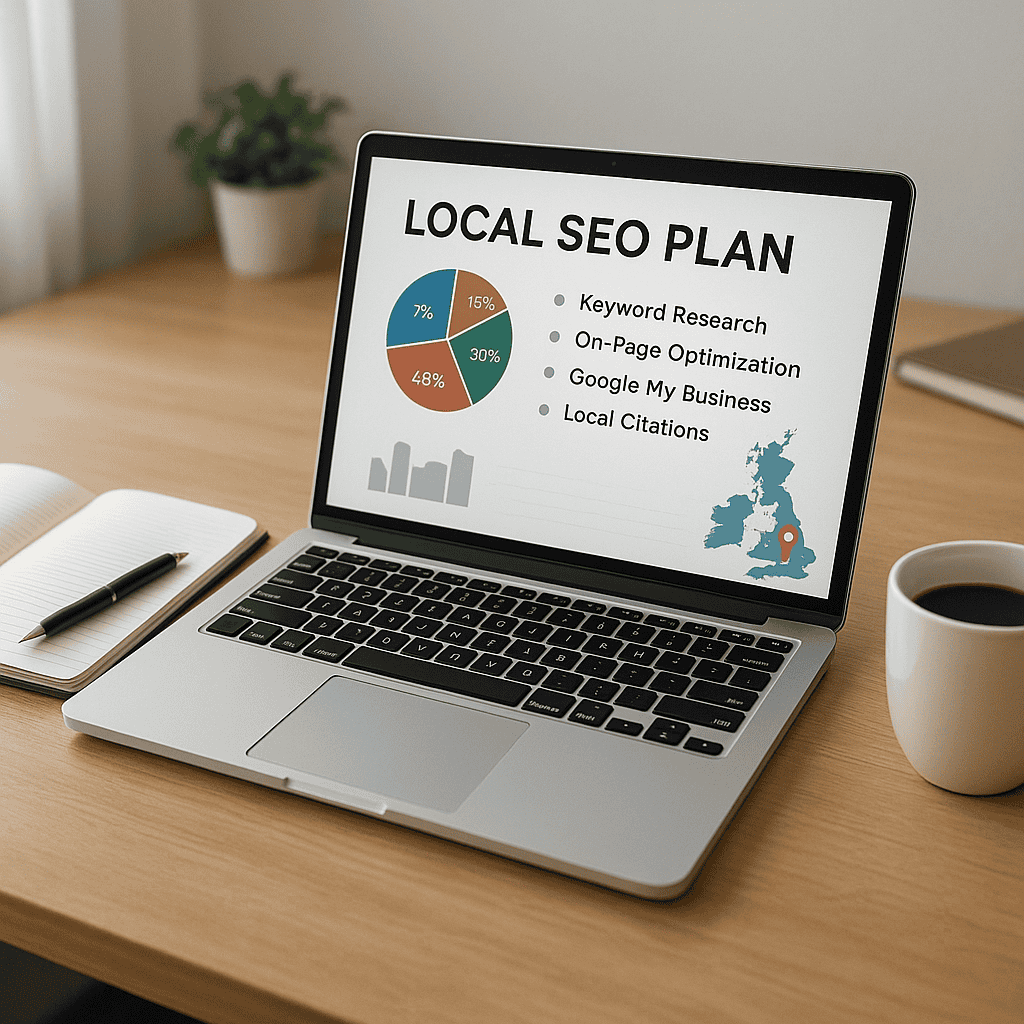
Your Google Business Profile is powerful, but it works best as part of a broader local SEO strategy. It should not sit in isolation from your website, your content, your reviews, and your local authority signals.
When these elements support each other, your visibility becomes stronger and more sustainable.
Connecting your profile with your website and location pages
Your website and your Google Business Profile should reinforce the same local relevance signals.
If your profile says you offer specific services in a certain area, your website should back that up with clear service pages, location pages where appropriate, and consistent contact information.
This means:
- Your business name, address, and phone number should match
- Your website should clearly state your services and target locations
- Location pages should provide useful local information, not thin duplicate content
- Your contact page should be easy to find and accurate
- Schema markup and embedded maps can support local clarity where relevant
- Reviews, case studies, and testimonials on your site should align with your local positioning
For multi-location businesses, each location should ideally have its own profile and corresponding website page. This helps Google connect each branch with the right local searches and gives users a better experience.
Local SEO also extends beyond your own assets. Citations, backlinks from relevant local websites, local PR, and community involvement can all support prominence. Google looks for evidence that your business is real, active, and recognised in its area.
A strong Google Business Profile can improve your local presence, but it performs best when supported by a technically sound website and a clear local content strategy.
When to invest in professional Google Business Profile support
Some businesses can manage their profile in-house, especially if they have a single location, a clear service offering, and someone responsible for marketing. But many businesses benefit from professional support when the stakes are higher or the profile is underperforming.
You may want expert help if:
- You are not appearing in local map results for important searches
- Your profile has been suspended or verification has become difficult
- You have duplicate listings or inconsistent business information
- You operate in a competitive local market
- You have multiple locations to manage
- Your reviews are weak or unmanaged
- Your website and profile are not aligned
- You want better reporting and a clearer return from local SEO
Professional support can help with setup, optimisation, category strategy, service structuring, review processes, content planning, issue resolution, and ongoing performance improvements.
It can also save time. Many businesses know their profile matters but do not have the internal resource to manage it properly. In those cases, outsourcing can be more efficient and more commercially effective than leaving opportunities untapped.
A good Google Business Profile strategy should not just aim for more views. It should aim for more qualified enquiries, better conversion rates, and stronger local market presence.
Your Google Business Profile is one of the most important tools available for improving local visibility in the UK. It helps customers find you, assess your credibility, and take action quickly. When it is fully optimised and actively managed, it can support stronger local SEO, better Google Maps visibility, and more valuable enquiries.
The businesses that get the best results are usually the ones that treat their profile as an ongoing marketing asset. They keep information accurate, choose categories carefully, add useful services, publish fresh content, gather reviews consistently, and connect the profile to a wider local SEO strategy.
If your profile is incomplete, outdated, or simply not delivering the visibility it should, now is the time to improve it. And if you want expert help to get better results from your Google Business Profile, Steve Welsh Marketing can support you with practical, results-focused optimisation tailored to your business and location. Get in touch to discuss how to turn your profile into a stronger source of local leads.
Questions
FAQs
-
What is a Google Business Profile?
A Google Business Profile is the listing that appears for your business in Google Search and Google Maps. It can show your address, phone number, website, opening hours, reviews, photos, services, posts, and other useful details that help local customers decide whether to contact you.
-
How do I optimise my Google Business Profile?
Start by completing every relevant field accurately, including your business name, category, address or service area, phone number, website, opening hours, description, services, attributes, and photos. Then keep the profile active with updates, review responses, and accurate information whenever your business changes.
-
Does a Google Business Profile help local SEO?
Yes, it can support local SEO by helping Google understand what your business does, where you operate, and how relevant you are to local searches. It works best when your profile, website, reviews, citations, and location information are consistent and well-managed.
-
How often should I update my Google Business Profile?
Review your Google Business Profile at least monthly and whenever anything changes, such as opening hours, services, photos, phone numbers, locations, or seasonal information. Regular updates help customers get accurate information and show that your business is active.
-
What are the most common Google Business Profile mistakes?
Common mistakes include using the wrong categories, adding keywords to the business name, leaving old opening hours in place, ignoring reviews, having duplicate listings, using poor-quality photos, and showing business details that do not match your website or other listings.
-
When should I get professional help with my Google Business Profile?
Consider professional support if your profile is not appearing for important local searches, you have duplicate listings, your reviews are unmanaged, your details are inconsistent, or you manage multiple locations. Steve Welsh Marketing can help with setup, optimisation, issue resolution, and ongoing improvements.

Steve Welsh is a digital marketing consultant and founder of Steve Welsh Marketing, helping businesses improve search visibility, attract better leads, and grow through practical, results-focused marketing.
More about Steve →