
Originally published: 11 September 2025
Last updated: May 2026
Quick answer:
The main SEO mistakes businesses make in Kilmarnock are targeting broad keywords, neglecting on-page SEO, ignoring local signals, leaving content thin or outdated, missing technical issues, failing to measure results and treating SEO as a one-off task. To fix them, focus on service and location keywords, improve title tags and headings, keep your Google Business Profile accurate, refresh key pages, check mobile speed and tracking, and review performance regularly. Good website SEO should make it easier for local customers to find, trust and contact your business when they are ready to enquire.
Intro:
If your business relies on local enquiries, referrals and website leads, search visibility matters. Yet many firms still make avoidable SEO errors that hold back rankings, traffic and conversions. When people search for services in Ayrshire, they usually want a business nearby, one they can trust, and one they can contact quickly. If your website does not support that journey, you can lose enquiries to competitors who are simply easier to find.
The most common SEO Mistakes Businesses Make in Kilmarnock are not always dramatic. In many cases, they are small issues that build up over time. A poorly written page title, weak local signals, outdated service pages or the wrong keyword targeting can all reduce your visibility in Google. The result is fewer clicks, fewer calls and fewer opportunities to win work.
This guide looks at seven practical mistakes local businesses make and, more importantly, how to fix them. The focus is on actions that improve local SEO Kilmarnock performance, strengthen website SEO and support better commercial results.

Why SEO mistakes matter for Kilmarnock businesses
SEO is not just about rankings for the sake of it. For local service businesses, it affects whether the right people can find you when they are ready to act. If someone searches for an accountant, solicitor, plumber, builder, dentist or marketing agency in Kilmarnock, your online presence needs to show relevance, trust and location clearly.
When that does not happen, Google has less reason to show your business prominently. Even if your service is strong and your reputation is good offline, poor SEO can stop that from translating into online leads.
How poor SEO affects local visibility and enquiries
Most local searches are commercially driven. People are not browsing casually. They are comparing providers, checking reviews, looking at service pages and deciding who to contact. If your website is missing key information or your local SEO signals are weak, you may not appear in the searches that matter most.
This can affect your business in several ways:
- Lower visibility in local search results
- Fewer clicks from people searching for your services in Kilmarnock
- Reduced trust if your listings, reviews or business details look inconsistent
- Poorer conversion rates if pages are unclear or outdated
- Lost leads to competitors with stronger Google Business Profile optimisation and better website SEO
For example, a local electrician may rank for broad terms like “electrical services”, but if they do not have pages targeting Kilmarnock and nearby areas, they may miss searches such as “emergency electrician Kilmarnock” or “rewiring company in Kilmarnock”. Those searches often come from people who are much closer to making contact.
Why small issues can limit growth over time
One of the biggest problems with SEO is that weak performance often develops quietly. A business may still get some traffic, some referrals and the occasional lead from Google, so the underlying issues go unnoticed. But over time, those issues reduce your ability to compete.
A page with a weak title tag may never rank as well as it should. A service page that has not been updated in three years may slowly lose relevance. A missing internal link can stop authority flowing to important pages. Inconsistent business details across directories can weaken local trust signals.
None of these problems looks major in isolation. Together, they can seriously affect search engine rankings and lead generation. That is why a proper SEO audit is often the best starting point. It helps identify the friction points that are stopping your site from performing as well as it could.

Mistake 1: Targeting the wrong keywords
Many businesses assume that more search volume means better opportunity. In practice, broad keywords often bring the wrong visitors or put you in competition with national brands and directories. For local firms, relevance and intent matter far more.
Why broad keywords miss local intent
A Kilmarnock business does not need to rank nationally for every service term. It needs to appear for searches that reflect what local buyers actually type into Google. That often includes service plus location combinations, problem-based searches and urgent intent phrases.
For example:
“accountant Kilmarnock”
“family solicitor Kilmarnock”
“boiler repair Kilmarnock”
“website designer Ayrshire”
“marketing agency Kilmarnock”
If your site focuses only on broad phrases like “accounting services” or “legal advice”, you may attract less qualified traffic or struggle to rank at all. Broad terms are often too vague and do not reflect local buying intent.
Another common issue is targeting keywords that sound professional internally but are not how customers search. A business may describe itself using industry language, while potential clients use simpler, more direct terms. SEO works best when your content matches the language of your audience.
How to choose search terms that match buyer intent
Start by thinking about what your ideal customer is trying to achieve. Are they looking for a local provider, comparing options, or ready to request a quote? Your keyword targeting should reflect that stage.
A practical approach includes:
- Identifying core services and pairing them with Kilmarnock or nearby locations
- Using phrases that show commercial intent, such as “quote”, “near me”, “repair”, “cost” or “specialist”
- Reviewing Google Search Console data to see what your site already appears for
- Checking competitor service pages to understand local search patterns
- Creating dedicated pages where there is a clear service and location opportunity
For example, a roofing company might benefit from pages around roof repairs, flat roofing, guttering and emergency callouts, each written with local relevance. A solicitor might need separate pages for conveyancing, family law and wills, rather than one generic services page.
The key is to target terms that bring the right visitors, not just more visitors.
Mistake 2: Ignoring on-page SEO basics
On-page SEO is still one of the most controllable parts of your website. Yet many businesses overlook the basics. Pages are published with weak titles, unclear headings, duplicate content or no obvious structure. These issues make it harder for Google to understand the page and harder for users to take action.
Title tags, headings and meta descriptions
Your title tag is one of the strongest on-page signals. It tells search engines and users what the page is about. If it is too vague, too long or missing your target service and location, you reduce your chance of ranking well and earning clicks.
A strong title tag for a local service page might include:
- Primary service
- Location
- Brand name where appropriate
For example:
Kitchen Fitter in Kilmarnock | Bespoke Kitchens | Business Name
Headings matter too. Each page should have one clear H1 that reflects the main topic, followed by logical subheadings that break the content into useful sections. This helps both readability and relevance.
Meta descriptions do not directly improve rankings, but they do influence click-through rate. A good meta description should explain what the page offers, who it is for and why someone should click. If your search listing looks weak, even a good ranking may not generate traffic.
Common mistakes include:
- Using the same title tag across multiple pages
- Leaving auto-generated meta descriptions in place
- Stuffing headings with awkward keywords
- Writing titles that say little more than “Home” or “Services”
Content structure and internal linking mistakes
A page can have the right keyword but still perform poorly if the content is hard to follow. Dense blocks of text, vague service descriptions and missing calls to action all reduce effectiveness.
Good structure improves both SEO and conversion. That means:
- Clear opening paragraphs that explain the service
- Subheadings that answer common questions
- Location references where relevant and natural
- Trust signals such as experience, reviews or case examples
- Strong calls to action that encourage contact
Internal linking is another area many businesses neglect. If your pages do not link to each other properly, search engines may struggle to understand which pages matter most. Users may also miss useful next steps.
For example, a homepage should link to key service pages. Blog posts should link to relevant services. Service pages should support each other where there is a logical connection. If you want a more joined-up approach, it is worth taking steps to improve your website SEO with a strategy that supports rankings, local visibility and lead generation.
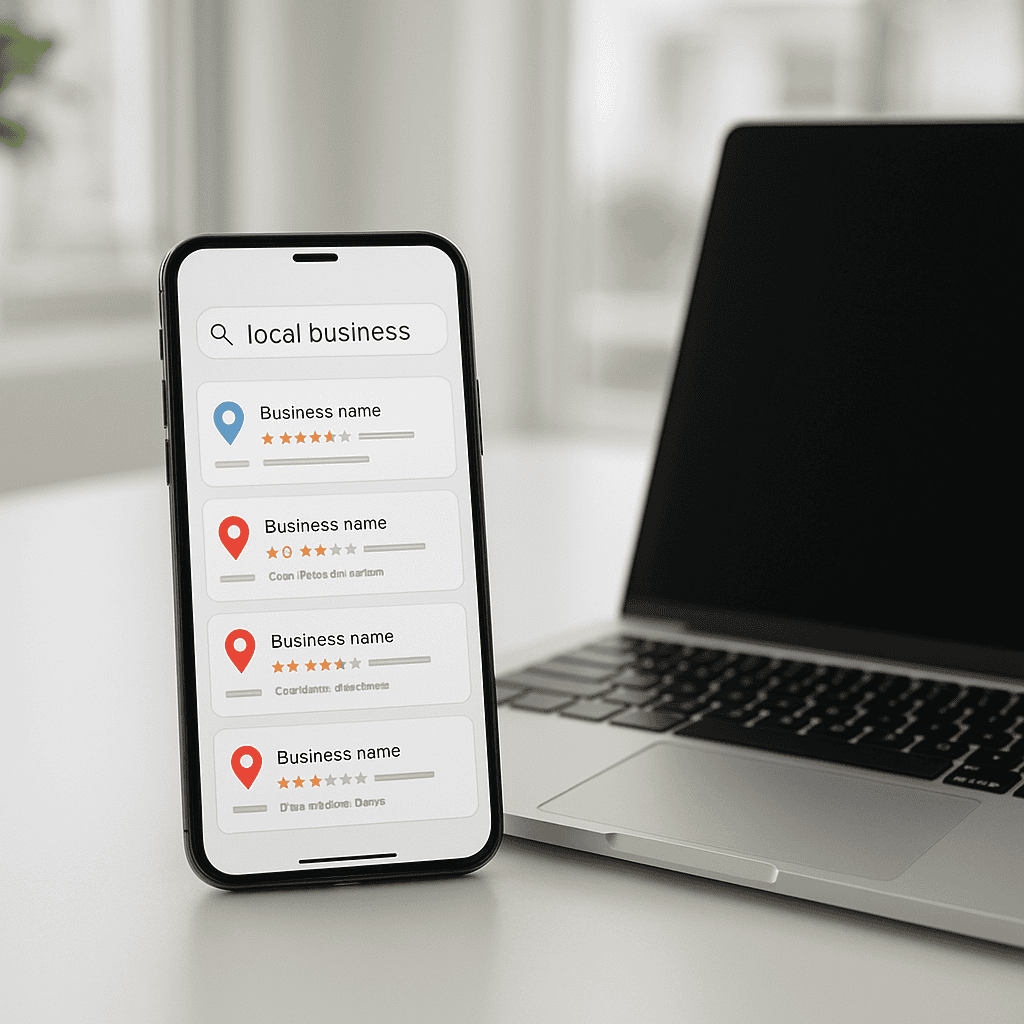
Mistake 3: Neglecting local SEO signals
For businesses serving Kilmarnock and the surrounding areas, local SEO is essential. Google wants clear evidence that your business is real, relevant and active in the area. If those signals are weak, your visibility in local results can suffer, even if your website content is decent.
Google Business Profile and location pages
Your Google Business Profile is one of the most important local SEO assets you have. It influences whether you appear in map results and local packs, and it often shapes first impressions before someone even visits your website.
Common issues include:
- Incomplete business information
- Wrong categories
- Few or no recent photos
- No regular updates
- Weak or missing service descriptions
- No review strategy
Poor Google Business Profile optimisation can limit your local reach. Make sure your business name, address, phone number, opening hours and website link are accurate. Choose the most relevant primary category and add supporting categories where appropriate. Upload real photos of your premises, team or completed work. Use posts and updates where relevant.
Location pages also matter, especially if you serve multiple towns around Kilmarnock. But they need to be useful, not copied and pasted. A proper location page should explain what you offer in that area, mention relevant services, include local proof where possible and make it easy to enquire.
A poor location page is just a duplicate page with a town name swapped in. A strong one reflects real service coverage and local intent.
Reviews, citations and NAP consistency
Reviews are not just about reputation. They also support local SEO. A steady flow of genuine reviews on Google can improve trust and strengthen your local presence. They also influence whether someone chooses your business over another.
Encourage reviews from satisfied customers and make it easy for them. Ask at the right time, send a direct link and respond professionally to feedback. A business with recent, relevant reviews often stands out more than one with an outdated profile.
Citations are mentions of your business details on directories and other websites. These help reinforce your legitimacy, but only if the information is consistent. Your name, address and phone number, often referred to as NAP, should match across your website, Google Business Profile and key directories.
Problems arise when businesses move premises, change phone numbers or use different versions of their business name in different places. These inconsistencies can weaken trust signals and confuse both users and search engines.
A local SEO Kilmarnock strategy should include regular checks on your listings, review profile and location signals. This is often where smaller businesses can make quick gains.
Mistake 4: Publishing thin or outdated content
Many websites have pages that exist only because someone thought they should. They are short, generic and offer little value. Others may once have been useful but are now out of date, with old service details, broken links or irrelevant references. Thin or stale content rarely performs well.
Why weak content fails to rank or convert
Google wants to rank pages that satisfy search intent. If your page says very little, does not answer key questions or looks neglected, it is less likely to rank strongly. Even if it does attract visitors, it may not convert them.
Thin content often includes:
- Very short service pages with no detail
- Generic copy that could apply to any business in any town
- No explanation of process, pricing, outcomes or experience
- No local relevance
- No trust signals or calls to action
Imagine a Kilmarnock joiner with a page titled “Joinery Services” containing two short paragraphs and a phone number. Compare that with a competitor page that explains the types of work offered, the areas covered, examples of recent jobs, expected timescales and how to request a quote. The second page is more useful to users and more likely to perform well.
Outdated content creates a different problem. It can damage trust. If a page mentions old team members, expired offers or services you no longer provide, visitors may question whether the business is active and reliable.
How to refresh pages for better performance
Content refreshes are often one of the fastest ways to improve SEO without building new pages from scratch. Start by reviewing your existing service pages and blog posts. Look for pages with traffic but low conversions, pages ranking on page two or three, and pages that no longer reflect your current offer.
Useful updates may include:
- Expanding service descriptions with more practical detail
- Adding local references and examples
- Refreshing titles and headings
- Improving calls to action
- Including FAQs based on real customer questions
- Updating testimonials, accreditations or case studies
- Fixing broken links and outdated information
- Strengthening internal links to related services
This is also where a proper SEO audit can help. It shows which pages are underperforming, which keywords they rank for, and where improvements are likely to have the biggest impact.
Mistake 5: Overlooking technical SEO issues
Not all SEO problems are visible on the page. Technical issues can quietly damage performance behind the scenes. If your site is slow, difficult to crawl, poorly structured on mobile or full of broken elements, rankings and conversions can suffer.
A common problem for local businesses is assuming that because a website looks fine, it must be fine for SEO. In reality, technical weaknesses often sit unnoticed for months.
Typical issues include:
- Slow page speed, especially on mobile
- Broken links or missing pages
- Poor mobile usability
- Duplicate pages or indexing problems
- Missing image optimisation
- Confusing site structure
- Insecure pages or mixed content warnings
For a local service business, mobile performance is particularly important. Many people search on their phones when they need a quick answer or want to contact a provider. If your site loads slowly, buttons are hard to tap or forms do not work properly, users may leave immediately.
Technical SEO does not need to be overcomplicated, but it does need regular attention. At minimum, businesses should check that key pages are indexed, the site works well on mobile, page speed is reasonable and there are no major crawl errors. These basics support stronger search engine rankings and a better user experience.
Mistake 6: Failing to measure what SEO is actually doing
Some businesses invest in SEO but do not track the outcomes properly. Others assume that if they are getting more traffic, the strategy is working. Traffic alone is not enough. What matters is whether SEO is generating relevant visits, enquiries and sales opportunities.
Without measurement, it is hard to know which pages are performing, which keywords are driving leads, or where the biggest opportunities sit.
Useful metrics include:
- Organic traffic to key service pages
- Rankings for local commercial keywords
- Google Business Profile visibility and actions
- Contact form submissions and phone calls from organic visitors
- Conversion rates by landing page
- Engagement signals such as time on page and bounce rate
- Search Console query data
For example, a page might attract steady traffic but produce no enquiries because it targets informational searches rather than buyer intent. Another page might have modest traffic but generate strong leads because it matches a high-intent local search. If you only look at traffic totals, you miss the commercial picture.
This is why reporting should focus on business outcomes, not vanity metrics. SEO should support visibility, enquiries and revenue, not just graphs.
Mistake 7: Treating SEO as a one-off task
One of the most damaging assumptions is that SEO can be done once and then left alone. A site gets launched, a few keywords are added, and the business expects results to continue indefinitely. In reality, SEO is ongoing.
Search results change. Competitors improve. Customer behaviour shifts. Google updates how it evaluates content and local relevance. If your website stands still, it usually loses ground.
An effective SEO approach involves regular review and improvement. That might include:
- Updating service pages
- Publishing useful supporting content
- Monitoring rankings and local visibility
- Improving internal links
- Building review signals
- Refining conversion paths
- Fixing technical issues as they appear
- Reviewing keyword opportunities based on real search data
For Kilmarnock businesses, this matters because local competition is rarely static. Another firm may improve its Google Business Profile, add stronger service pages or invest in better local content. If you do nothing, your visibility can slip even if your business itself is performing well.
The best results usually come from steady, focused work over time rather than one-off fixes.

SEO Mistakes Businesses Make in Kilmarnock can be fixed with the right strategy
The good news is that most SEO Mistakes Businesses Make in Kilmarnock are fixable. In many cases, the problems are not about doing something advanced. They are about getting the fundamentals right and applying them consistently.
If your business is targeting the wrong keywords, neglecting on-page basics, missing local SEO signals or relying on thin content, there is a clear path forward. Start with the areas that affect visibility and enquiries most directly. Improve your service pages. Strengthen your Google Business Profile optimisation. Review your internal links. Refresh outdated content. Check your technical setup. Measure what matters.
SEO should help your business get found by the right people at the right time. It should support trust, improve local visibility and generate more qualified leads from search.
If you want a more effective and commercially focused approach, now is a good time to review your current performance and fix the issues holding you back. To build a stronger long-term strategy, take the next step to improve your website SEO and turn more local searches into real business enquiries.
Questions
FAQs
-
What are the most common SEO mistakes businesses make in Kilmarnock?
The most common mistakes are targeting broad keywords, neglecting on-page SEO basics, ignoring local SEO signals, publishing thin or outdated content, overlooking technical issues, failing to measure results and treating SEO as a one-off task.
-
How do I know if my business is making SEO mistakes in Kilmarnock?
Signs include low visibility for local service searches, few organic enquiries, outdated service pages, inconsistent business details, slow mobile pages or rankings that have dropped. A practical SEO audit can show which pages, keywords and technical issues need attention first.
-
Which SEO mistake should a local business fix first?
Start with the issue closest to enquiries. For many Kilmarnock businesses, that means improving key service pages, title tags, headings, calls to action, and Google Business Profile details before moving on to wider content or technical work.
-
Why is Google Business Profile optimisation important for local SEO in Kilmarnock?
Your Google Business Profile helps customers find your business in map results and local searches. Accurate details, relevant categories, recent photos, service information and genuine reviews can support trust and make it easier for people to contact you.
-
Is thin content a problem if my website already explains my services?
It can be if the page is too vague, short or outdated. Strong service pages should explain what you offer, where you work, common customer questions, trust signals and the next step for someone who wants to enquire.
-
How often should I review my website SEO?
Review important pages, rankings, Google Business Profile performance and technical issues regularly, rather than waiting until enquiries drop. A quarterly check is a sensible minimum for many local businesses, with more frequent reviews if search is a key lead source.

Steve Welsh is a digital marketing consultant and founder of Steve Welsh Marketing, helping businesses improve search visibility, attract better leads, and grow through practical, results-focused marketing.
More about Steve →