Steve Welsh MarketingKilmarnock · Ayrshire · UKCall NowBook a free call

Category: Marketing Strategy Posts

  • How to Start Using Paid Advertising: A Practical Guide for UK Businesses

    How to Start Using Paid Advertising: A Practical Guide for UK Businesses

    Originally published: 26 September 2020
    Last updated: April 2026

    Quick answer:

    To start using paid advertising, begin with one clear business goal, such as more enquiries, online sales or booked consultations. Choose the channel that best matches buyer intent: Google Ads for people actively searching, Meta Ads for visual offers and awareness, or LinkedIn Ads for higher value B2B audiences. Set a test budget you can afford to learn from, define your ideal customer and send traffic to a focused landing page that matches the ad. Track calls, forms, purchases and lead quality from day one. Review the data regularly, pause what is wasting spend and improve the ads, targeting and landing page before scaling.

    Intro:

    If you want faster visibility, more enquiries and a clearer route to measurable growth, learning how to start using paid advertising is a sensible next step. For many UK businesses, paid advertising offers a practical way to reach the right audience without waiting months for organic channels to build momentum.

    That does not mean throwing money at ads and hoping for the best. The businesses that get strong results from paid media usually start with a clear offer, realistic goals and a simple plan for testing and improvement. Whether you are a local service business, an e-commerce brand or a B2B company looking for better quality leads, the basics matter.

    This guide explains how to start using paid advertising in a way that is commercially sensible, beginner friendly and suited to UK businesses. We will cover the main channels, how to choose where to spend, how to set budgets and targeting, what makes an ad convert, and how to measure whether your campaigns are actually working.

    Start Using Paid Advertising - Consultant showing the advert data to clients

    What Paid Advertising Is and Why It Matters

    Paid advertising is any form of promotion where you pay to place your message in front of a chosen audience. In digital marketing, that usually means platforms such as Google Ads, Meta Ads and LinkedIn Ads. You set a budget, define who you want to reach, create your ads and pay for clicks, impressions, leads or conversions depending on the campaign type.

    For businesses that are new to paid advertising for beginners, the appeal is simple. You can reach potential customers quickly, control your spend and measure results in far more detail than with many traditional channels.

    How paid advertising differs from organic marketing

    Organic marketing includes activity such as SEO, content marketing, unpaid social media and email list growth. These channels can be highly effective, but they often take time to build. A blog post may need months to rank. A social media account may need consistent posting before it generates meaningful engagement. SEO can deliver excellent long term value, but it is not always the fastest route to leads.

    Paid advertising works differently. It gives you immediate access to visibility. If someone searches for a service you offer and your Google ad appears at the top of the results, you can start receiving clicks the same day your campaign goes live. If you run a targeted social media campaign, you can put your offer in front of a specific demographic within hours.

    That speed is one of the main reasons businesses start using paid advertising. It is especially useful when you are launching a new service, entering a new market, promoting a time sensitive offer or trying to generate leads more predictably.

    The trade off is that paid traffic stops when your budget stops. Organic channels can continue bringing in traffic over time, while paid media requires ongoing investment. In practice, the strongest marketing strategies often combine both. Paid advertising can generate short term demand while SEO, content and brand building support longer term growth.

    Why UK businesses use paid ads to generate leads and sales

    Digital advertising for UK businesses is popular because it can be targeted, measurable and commercially flexible. A local business can target a specific radius around its office. A national ecommerce brand can advertise across the UK. A B2B company can target decision makers by job title, sector and company size.

    Businesses typically use paid ads for one or more of the following reasons:

    Generate leads quickly

    If you need more enquiries for services such as accountancy, legal support, home improvements, recruitment or consultancy, paid ads can help put your business in front of people actively looking for help.

    Increase online sales

    For ecommerce businesses, paid advertising can drive traffic to product pages, support promotions and recover abandoned carts through remarketing.

    Test offers and messaging

    Paid media strategy is useful for testing what resonates. You can compare headlines, images, calls to action and landing pages to see what drives the best response.

    Support business growth

    If you are expanding into a new location, launching a new service or trying to increase market share, paid advertising can help you build awareness and demand faster than relying on organic channels alone.

    Improve lead quality

    With the right targeting and landing pages, paid campaigns can attract more relevant prospects and reduce wasted time on poor fit enquiries.

    For UK businesses, another advantage is control. You can start with a modest budget, monitor performance closely and scale what works.

    Choose the Right Paid Advertising Channels

    One of the biggest mistakes beginners make is trying to advertise everywhere at once. If you are learning how to start using paid advertising, focus on the channels most likely to reach your ideal customer at the right stage of their buying journey.

    Different platforms suit different goals. The best choice depends on your audience, your offer, your budget and how people typically buy from you.

    Google Ads, Meta Ads and LinkedIn Ads explained

    Google Ads for small business is often the first place to start, especially if people already search for what you sell. Google Ads allows you to appear in search results when users type in relevant terms. This is intent driven advertising. Someone searching for “emergency plumber in Glasgow” or “HR consultant for small business” is already showing demand. That makes Google particularly strong for lead generation and direct response.

    Google Ads can also include display advertising, YouTube ads and remarketing, but search campaigns are usually the most straightforward starting point for service based businesses.

    Meta Ads covers Facebook and Instagram. These platforms are often effective for social media advertising where visual content, audience targeting and brand awareness matter. Meta is useful for ecommerce, lifestyle brands, events, local promotions and services with strong visual appeal. It can also work for lead generation, especially if the offer is compelling and the targeting is well defined.

    The key difference is intent. On Meta, users are not usually searching for your service at that moment. You are interrupting their feed, so your creative and offer need to work harder to capture attention.

    LinkedIn Ads is often best suited to B2B businesses with higher value services, longer sales cycles or niche professional audiences. If you want to target managing directors, HR leaders, marketing managers or operations teams in specific sectors, LinkedIn can be powerful. However, it is usually more expensive per click or lead than Google or Meta, so it tends to work best when customer value justifies the spend.

    Other channels may also be relevant, such as Microsoft Ads, TikTok Ads or industry specific platforms, but for most beginners, Google, Meta and LinkedIn are the main starting points.

    How to match the channel to your audience and offer

    To choose the right platform, ask a few practical questions.

    Are people actively searching for your service?

    If yes, Google Ads is often the strongest option. This is especially true for local services, urgent needs and high intent B2B searches.

    Does your product or service benefit from visual presentation?

    If yes, Meta may be a better fit. Fashion, interiors, beauty, hospitality, fitness and food brands often perform well with strong imagery or video.

    Are you selling to businesses, decision makers or niche professional roles?

    If yes, LinkedIn may be worth testing, particularly for high value B2B offers.

    Is your offer simple and easy to understand quickly?

    Social platforms tend to work better when the value proposition is clear and immediate. If your service is complex, the ad and landing page need to do more educational work.

    What is your average customer value?

    Higher value services can usually support higher acquisition costs. If your average sale is low, you need a channel and campaign structure that can deliver efficient conversions.

    For example, a local accountant offering tax return support may start with Google Ads because people search directly for that service. A wedding venue may use Meta to showcase imagery and generate enquiries. A software consultancy targeting operations directors may test LinkedIn alongside Google search campaigns.

    Start Using Paid Advertising - Agency discussing advert responses with the client team

    Set Clear Goals, Budget and Targeting

    Before you launch anything, you need to decide what success looks like. A common reason paid campaigns underperform is that businesses go live without clear goals, weak targeting or unrealistic expectations.

    If you want to start using paid advertising effectively, begin with the commercial basics.

    What to decide before you launch your first campaign

    First, define your objective. Do you want phone calls, form submissions, product purchases, brochure downloads, booked consultations or brand awareness? Your campaign setup should reflect that goal.

    Second, identify your ideal customer. Think about who they are, what problem they are trying to solve, what might stop them from buying and what message is most likely to persuade them.

    Third, clarify your offer. Ads perform better when the offer is specific. “Free consultation”, “same day quote”, “book a demo”, “20 per cent off first order” or “download the guide” are all clearer than vague promises.

    Fourth, make sure your website or landing page is ready. Sending paid traffic to a weak page is one of the fastest ways to waste budget. Your page should match the ad, explain the value clearly and make it easy to take the next step.

    Fifth, set up tracking. At minimum, you should be able to measure key actions such as calls, form submissions, purchases or booked appointments. Without tracking, you cannot judge whether your spend is producing a return.

    Finally, decide how leads will be handled. If your campaign generates enquiries but nobody follows up quickly, performance will suffer. Paid advertising is not just about clicks. It depends on the whole sales process.

    How to choose a sensible starting budget and audience

    A sensible starting budget depends on your market, your platform and your goals. There is no universal number, but there are some practical principles.

    Start with a test budget you can afford to learn from. Too little budget can make it hard to gather enough data, but too much too soon can be risky if the campaign is not set up properly. For many small businesses, a monthly test budget in the low hundreds to low thousands can be enough to assess early performance, depending on the channel and competitiveness.

    Google Ads for small business often requires enough budget to generate a meaningful number of clicks in your target market. If relevant keywords are expensive, a very low budget may not tell you much. In that case, narrowing your location, focusing on high intent keywords or reducing campaign scope can help.

    On Meta, budget needs vary based on audience size and campaign objective. A broad awareness campaign may spend differently from a lead generation campaign. Start focused rather than trying to reach everyone.

    Targeting should be specific enough to reduce waste but not so narrow that delivery becomes difficult. For local businesses, location targeting is essential. For B2B campaigns, job titles, industries and company size may matter. For ecommerce, interests, behaviours and remarketing audiences can be useful.

    As a beginner, avoid overcomplicating things. Start with one clear audience, one strong offer and one platform. Once you have baseline data, you can expand.

    Start Using Paid Advertising - Consultant creating advert images

    Create Ads That Convert

    Starting paid campaigns is one thing. Getting them to convert is another. Good performance usually comes from the combination of ad copy, creative, audience targeting and landing page experience.

    If you are trying to start using paid advertising successfully, focus less on clever wording and more on clarity, relevance and action.

    Writing effective ad copy and choosing strong visuals

    Strong ad copy speaks directly to the audience’s need. It should make clear what you offer, who it is for and why someone should click now.

    Good ad copy often includes:

    • A clear benefit
    • A specific problem solved
    • A reason to trust you
    • A direct call to action

    For example, instead of saying “Professional marketing support for growing businesses”, you might say “Generate more qualified leads with targeted Google Ads management for UK service businesses. Book a free consultation.”

    That is more specific, more relevant and more actionable.

    For Google search ads, focus on matching the user’s intent. Include the service they are searching for, highlight a key benefit and use extensions where possible, such as callouts, site links and phone numbers.

    For social media advertising, visuals matter just as much as copy. Use clean, professional images or short videos that support the message. Avoid cluttered graphics or generic stock imagery if possible. The visual should stop the scroll and reinforce the offer.

    If you are promoting a service, consider using:

    • A clear branded graphic with a strong offer
    • A short video explaining the benefit
    • A client result or testimonial visual
    • A simple image that shows the outcome of your service

    Always test variations. Small changes to headlines, images or calls to action can make a significant difference.

    Landing pages, calls to action and conversion basics

    Even the best ad will struggle if the landing page is poor. One of the most common mistakes in paid advertising for beginners is sending traffic to a homepage that is too broad, too busy or not aligned with the ad.

    A good landing page should:

    • Match the message in the ad
    • Explain the offer quickly
    • Build trust with proof points
    • Remove distractions
    • Make the next step obvious

    If your ad promotes a free consultation for payroll support, the landing page should focus on that exact offer, not your entire business. Include a clear headline, a short explanation of the benefit, a simple form or phone number, and trust signals such as reviews, accreditations or client logos.

    Calls to action should be direct and easy to understand. Examples include:

    • Book your free consultation
    • Request a quote
    • Download the guide
    • Start your free trial
    • Speak to an expert

    Conversion basics also include page speed, mobile usability and form design. If your page loads slowly, looks poor on mobile or asks for too much information, conversion rates will suffer.

    For lead generation, keep forms simple. Ask only for the details you genuinely need. For ecommerce, make the path to purchase as smooth as possible.

    Start Using Paid Advertising - Client checking monthly reporting

    Measure Results and Improve Performance

    Paid advertising should never be a set and forget activity. Once campaigns are live, the real work begins. Measuring performance helps you understand what is working, what is wasting budget and where to improve.

    If you want to start using paid advertising with confidence, get comfortable with reviewing data regularly and making practical adjustments.

    Key metrics to track from day one

    The right metrics depend on your objective, but most businesses should track a core set from the start.

    Impressions

    This shows how often your ad is being displayed. It helps you understand reach and visibility.

    Clicks

    Clicks indicate whether people are interested enough to engage with the ad.

    Click through rate

    This measures how often people click after seeing the ad. A low click through rate may suggest weak messaging, poor targeting or unappealing creative.

    Cost per click

    This tells you how much you are paying for each click. It is useful for understanding competitiveness and budget efficiency.

    Conversions

    This is one of the most important metrics. A conversion could be a lead, sale, phone call or another valuable action.

    Conversion rate

    This shows what percentage of clicks turn into conversions. If traffic is coming through but not converting, the issue may be the landing page, offer or audience quality.

    Cost per lead or cost per acquisition

    This helps you judge whether the campaign is commercially viable. A lead that costs £20 may be excellent for one business and unworkable for another.

    Return on ad spend

    For ecommerce and some lead generation campaigns, this metric shows how much revenue is generated for each pound spent.

    Lead quality

    This is often overlooked. Ten poor leads are less valuable than three strong ones. Review not just quantity, but relevance and sales outcomes.

    For UK businesses, it is also important to connect ad performance with actual business results. If a campaign generates enquiries but none convert into customers, the issue may not be the ad alone. It could be the offer, pricing, sales follow up or service fit.

    When to optimise yourself and when to get expert help

    In the early stages, there are several optimisations you can make yourself if you are comfortable with the basics.

    You can:

    • Pause underperforming ads
    • Test new headlines or visuals
    • Refine targeting
    • Adjust budgets towards better performing campaigns
    • Improve landing page clarity
    • Add negative keywords in Google Ads
    • Review search terms and audience data

    These changes can improve efficiency without needing a complete rebuild.

    However, there comes a point where expert support can save time, reduce waste and improve results. If you are spending regularly, struggling to interpret the data or unsure how to scale, professional input is often worthwhile.

    You may benefit from expert help if:

    • Your cost per lead is too high
    • You are getting clicks but no conversions
    • Lead quality is poor
    • You are unsure which platform to prioritise
    • Tracking is unreliable
    • You want to scale without increasing waste
    • You need a joined up paid media strategy with SEO, content or email support

    If you want a wider strategy that combines paid advertising with other growth channels, explore our Marketing Packages to see how we can support your business.

    That kind of joined up approach is often where the best long term results come from. Paid advertising works best when it is connected to your wider marketing, sales process and business goals.

    Starting paid advertising does not need to be complicated, but it does need to be deliberate. Choose the right channel, set clear goals, build relevant ads, send traffic to focused landing pages and measure what matters. Start small, learn quickly and improve based on evidence rather than guesswork.

    For UK businesses, paid advertising can be a highly effective way to generate leads, increase sales and create more predictable growth. The key is to treat it as an investment that needs strategy, testing and ongoing management, not just a quick fix.

    If you are ready to start using paid advertising and want a practical, results-focused approach, Steve Welsh Marketing can help you build campaigns that are aligned with your business goals and designed to deliver measurable returns. Get in touch to discuss the right paid advertising strategy for your business.

    If you want a wider strategy that combines paid advertising with other growth channels, explore our Marketing Packages to see how we can support your business.

    Questions

    FAQs

    1. What is the best paid advertising channel for a UK small business?

      The best channel depends on how your customers buy. Google Ads is often a sensible starting point if people search for your service, Meta Ads can suit visual offers and local promotions, and LinkedIn Ads can work for higher-value B2B audiences.

    2. How much should I spend when starting paid advertising?

      Start with a test budget you can afford to learn from. For many small businesses, this may be in the low hundreds to low thousands per month, depending on the platform, competition and cost per click in your market.

    3. Do I need a landing page before running paid ads?

      You should have a focused page that matches the ad message and makes the next step clear. Sending paid traffic to a broad homepage can waste budget if visitors cannot quickly understand the offer or take action.

    4. How quickly can paid advertising generate enquiries?

      Paid campaigns can start receiving clicks once they are live, but enquiries depend on your targeting, offer, budget, landing page and follow-up. Treat the first few weeks as a testing period and improve based on the data.

    5. What should I track from day one?

      Track impressions, clicks, click-through rate, cost per click, conversions, conversion rate, cost per lead or sale, and lead quality. These metrics help you see whether your spend is producing useful business results.

    6. When should I get expert help with paid advertising?

      Consider expert help if your cost per lead is too high, you are getting clicks but no conversions, lead quality is poor, tracking is unreliable, or you want paid advertising to fit into a wider marketing strategy.

  • How to Send Email Marketing Campaigns That Get Results

    How to Send Email Marketing Campaigns That Get Results

    Originally published: 26 July 2020
    Last updated: April 2026

    Quick answer:

    To send email marketing campaigns that get results, start with one clear objective, such as booking calls, generating enquiries or promoting a specific offer. Choose the right audience segment, write a relevant subject line and keep the email focused on one useful next step. Use clear copy, a strong call to action and a landing page that matches the promise in the email. Before sending, test links, mobile display, tracking and personalisation. After the campaign, review opens, clicks, conversions, unsubscribes and bounce rates. For small businesses, better targeting and consistent improvement usually matter more than sending more emails. Steve Welsh Marketing can support this as part of a wider marketing package.

    Intro:

    Email remains one of the most effective ways to reach prospects, nurture leads and stay visible with existing customers. It gives you direct access to people who have already shown interest in your business, and when it is done properly, it can generate enquiries, repeat sales and stronger customer relationships at a relatively low cost.

    The challenge is that many businesses send emails without a clear plan. They rely on generic messages, weak subject lines or broad mailing lists, then wonder why open rates are low and clicks never turn into action. To send email marketing campaigns that get results, you need more than a mailing list and a template. You need a clear objective, the right audience, strong messaging and a process for measuring what works.

    This guide explains how to approach email marketing in a practical, commercially useful way. Whether you are running email marketing for small business growth, promoting a service, launching a product or re-engaging old leads, the same principles apply. The better your planning and execution, the more likely your campaign is to deliver a return.

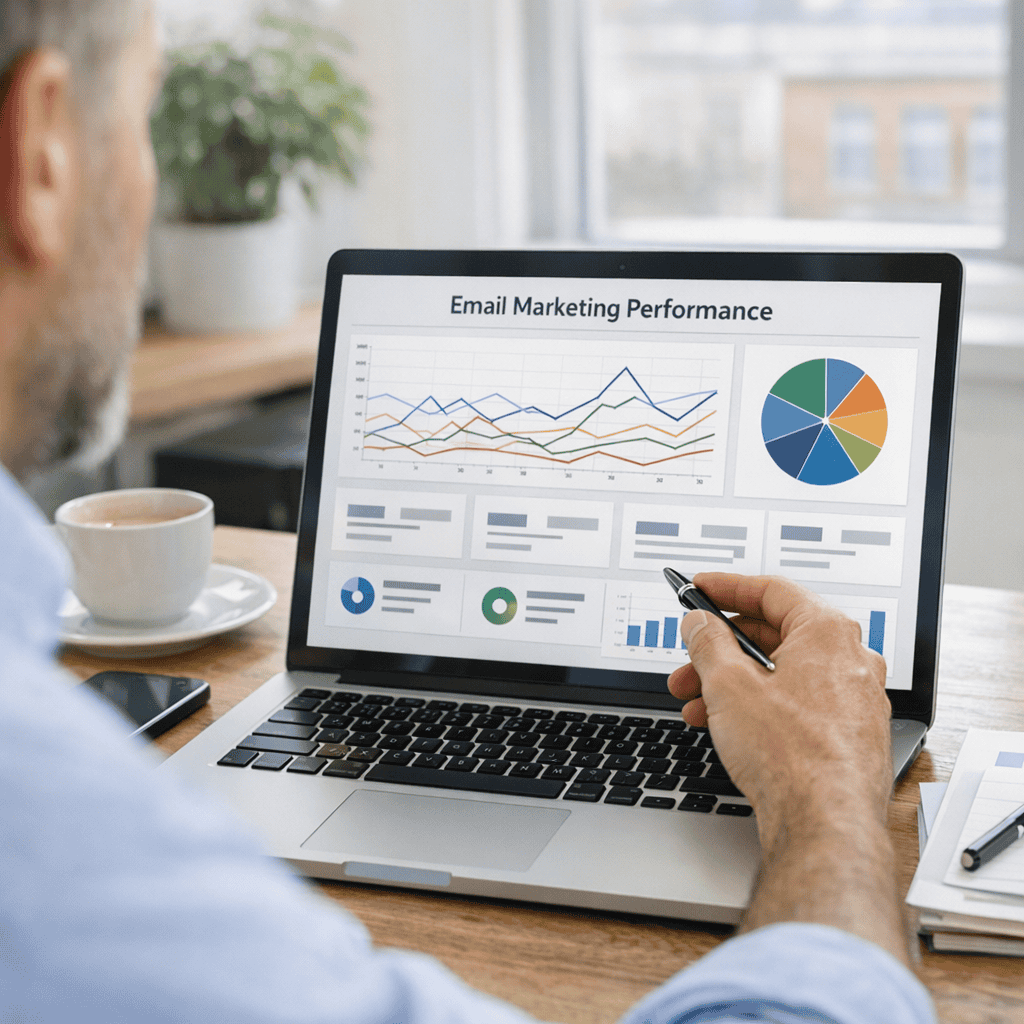
    Send Email Marketing Campaigns - consultant checking data results.

    What makes a successful email marketing campaign

    A successful campaign is not just one that gets opened. It is one that moves the reader towards a useful business outcome. That could be booking a consultation, downloading a guide, making a purchase, requesting a quote or simply taking the next step in your sales process.

    Good email marketing strategy starts with understanding what success looks like before you write a single line.

    Define the goal before you send

    Every campaign should have one primary goal. If you try to achieve too much in one email, the message becomes diluted and the reader is less likely to act.

    For example, a UK accountancy firm might send one email focused on booking year-end tax planning calls. A local retailer might send a campaign promoting a limited-time seasonal offer. A B2B service provider might send a lead nurturing email designed to encourage a discovery call. Each of these has a different purpose, and the content should reflect that.

    Before sending, ask:

    • What do we want the reader to do?
    • Why does this matter to the business?
    • How will we measure success?
    • What action should happen after the click?

    This helps shape everything else, including the subject line, body copy, call to action and landing page.

    A common mistake is sending a newsletter-style email packed with updates, offers, blog links and company news, all competing for attention. Unless your audience actively expects a digest, this often reduces response. A focused email with one clear message usually performs better.

    Choose the right audience and offer

    Even strong copy will underperform if it goes to the wrong people. Relevance is one of the biggest drivers of email open rates and click-through performance.

    Start by segmenting your list. You do not need a complex system to do this well. In many cases, simple segmentation based on customer type, service interest, purchase history, location or stage in the buying journey can make a big difference.

    For example:

    • A solicitor may send different emails to family law enquiries and commercial clients
    • A trades business may separate domestic customers from commercial property managers
    • An ecommerce brand may target previous buyers with related product recommendations
    • A consultant may send one campaign to warm leads and another to existing clients

    The offer also needs to match the audience. A discount may work for some sectors, but in professional services, a useful consultation, audit, checklist or case study may be more effective. The key is to give the recipient a clear reason to engage now.

    If the audience and offer are well matched, your campaign has a much better chance of generating meaningful action.

    Send Email Marketing Campaigns - team discussing reports on marketing

    How to plan your email campaign properly

    Strong campaigns are usually built before the email is ever designed. Planning reduces mistakes, keeps messaging focused and makes it easier to assess performance later.

    Build a simple campaign brief

    A campaign brief does not need to be long, but it should cover the essentials. This is especially important if more than one person is involved in content, design, approvals or sending.

    A practical campaign brief should include:

    • The campaign goal
    • The target audience
    • The main message
    • The offer or value proposition
    • The call to action
    • The landing page or destination
    • The send date and time
    • Any supporting assets needed
    • How success will be measured

    For example, if you are promoting a free website review for local businesses, your brief might state that the goal is to generate consultation bookings from small business owners in Scotland. The audience is existing leads and newsletter subscribers who have shown interest in digital marketing. The message is that a quick review can identify missed opportunities. The call to action is to book a review through a dedicated landing page.

    This level of clarity makes writing easier and keeps the campaign commercially aligned.

    If you need support with planning, writing and managing campaigns as part of a wider strategy, our Marketing Packages can help you build a more effective approach.

    Set timing, frequency and segmentation

    Timing matters, but not as much as relevance. There is no universal best day or hour for every business. What matters is when your audience is most likely to notice and act on your message.

    For B2B campaigns, weekday mornings often perform well, especially when the email supports a business decision. For consumer campaigns, evenings or weekends may be stronger depending on the product or service. The best approach is to test and compare.

    Frequency also needs careful thought. Send too often and people unsubscribe or ignore you. Send too rarely and they forget who you are. A sensible schedule depends on your audience, your sales cycle and how much useful content you genuinely have.

    As a guide:

    • Weekly can work for active ecommerce promotions or regular content-led brands
    • Fortnightly suits many service businesses
    • Monthly is common for general updates and lead nurturing
    • Ad hoc campaigns can support launches, events or seasonal offers

    Segmentation should be built into this planning stage, not added as an afterthought. If one campaign is going to multiple audience groups, consider whether each group needs a different version. Even small changes to the opening paragraph, offer or call to action can improve results.

    This is where email marketing software becomes valuable. Most platforms allow you to segment lists, automate sends, personalise content and track behaviour. You do not need the most expensive platform, but you do need one that gives you visibility and control.

    How to write emails people actually open and click

    Once the planning is done, the writing needs to be clear, relevant and easy to act on. Good campaign copy is not about sounding clever. It is about helping the reader understand the value quickly and making the next step obvious.

    Create subject lines and preview text that work

    The subject line is one of the biggest factors in whether your email gets opened. It needs to earn attention in a crowded inbox without sounding vague, misleading or overly promotional.

    Effective subject lines are usually:

    • Clear rather than cryptic
    • Specific rather than generic
    • Relevant to the reader
    • Short enough to display well on mobile
    • Connected to the content inside

    Examples include:

    • Book your free website review this month
    • A simple way to improve your Google visibility
    • 3 email campaign mistakes costing you leads
    • Your spring service reminder
    • Still interested in reducing your ad spend waste?

    Preview text is often overlooked, but it can strengthen the open decision. It should support the subject line, not repeat it. Think of it as a second chance to explain why the email matters.

    For example:

    Subject line: Book your free website review this month

    Preview text: We will show you where your site may be losing traffic and enquiries

    Avoid clickbait. If the subject line overpromises and the email does not deliver, trust drops quickly. That affects future engagement and can damage your sender reputation over time.

    If you want to send email marketing campaigns consistently well, build a habit of testing subject lines. A simple A/B test between two versions can reveal whether your audience responds better to direct benefit-led wording, urgency, questions or more personalised phrasing.

    Write clear copy with one strong call to action

    The body of the email should do three things:

    • Show the reader you understand their situation
    • Explain the value of what you are offering
    • Make the next step easy

    Start with a strong opening. The first few lines should quickly establish relevance. For example, if you are emailing small business owners about lead generation, open with a challenge they recognise, such as inconsistent enquiries, poor website conversion or wasted ad spend.

    Keep paragraphs short and readable. Most people scan emails before deciding whether to engage properly. Dense blocks of text reduce response, especially on mobile.

    Use plain language. Avoid jargon unless your audience expects it. If you are writing to business owners, managers or decision-makers, clarity usually outperforms complexity.

    A simple structure works well:

    • Opening line that identifies the issue or opportunity
    • A short explanation of the value or offer
    • A few supporting points or benefits
    • One clear call to action

    For example, a local marketing consultant might write:

    Many small businesses are investing in digital marketing without knowing which channels are actually generating enquiries.

    Our marketing review helps you identify what is working, where the budget is being wasted and what to improve first.

    You will get:

    • A quick review of your current activity
    • Practical recommendations
    • Clear next steps based on your goals

    Book your review here.

    That is straightforward, specific and action-led.

    The call to action should be singular and obvious. If the goal is to book a call, say so. If the goal is to download a guide, make that the focus. Avoid multiple competing buttons or links unless there is a strong reason.

    Send Email Marketing Campaigns - Consultant working on a campaign

    How to send email marketing campaigns the right way

    Good content can still fail if the technical side is neglected. Sending properly means checking the campaign before launch, protecting deliverability and making sure the experience is smooth for the recipient.

    Test before you launch

    Testing should be part of every campaign, even if it is a simple one. Small errors can reduce trust, break the user journey or make your business look careless.

    Before sending, check:

    • Subject line and preview text
    • Personalisation fields
    • Spelling and grammar
    • Links and buttons
    • Images and formatting
    • Mobile display
    • Landing page performance
    • Tracking setup

    Send test emails to yourself and, ideally, to a colleague. Open them on desktop and mobile. Click every link. Read the email as if you were the recipient. Ask whether the message is clear, whether the call to action stands out and whether the destination page matches the promise in the email.

    Also check whether the email feels too long. In many cases, tighter copy improves click-through rates because it gets to the point faster.

    If you are using automation, test the workflow as well. Make sure the right people receive the right message at the right time. A mistimed follow-up or incorrect trigger can create a poor impression.

    Check deliverability, mobile design and compliance

    Deliverability is critical. If your emails are landing in spam or promotions folders unnecessarily, performance will suffer no matter how good the content is.

    To support deliverability:

    • Use a reputable email marketing software platform
    • Keep your list clean and remove inactive or invalid contacts
    • Avoid buying email lists
    • Use a verified sending domain
    • Set up authentication records such as SPF, DKIM and DMARC where possible
    • Maintain consistent sending habits
    • Avoid overly spammy language and formatting

    List quality matters more than list size. A smaller, engaged list will usually outperform a larger, poorly maintained one.

    Mobile design is equally important. A large proportion of business emails are opened on phones. If the layout is awkward, text is too small or buttons are hard to tap, you will lose clicks.

    Make sure your emails:

    • Use responsive templates
    • Have clear spacing and readable font sizes
    • Keep important content near the top
    • Use buttons that are easy to tap
    • Load quickly
    • Do not rely on images alone to communicate the message

    Compliance is non-negotiable. In the UK, your email activity should align with data protection and privacy rules, including GDPR and PECR where relevant. That means having a lawful basis for sending, being transparent about how data is used and giving recipients a clear way to unsubscribe.

    Do not hide the unsubscribe link or make opting out difficult. It is better to let disengaged contacts leave than to keep sending to people who no longer want to hear from you.

    Email campaign best practices are not just about performance. They are also about protecting your brand and building trust.

    Send Email Marketing Campaigns 2 - Steve Welsh Marketing

    How to measure and improve campaign performance

    The businesses that get the best results from email marketing are usually the ones that review performance consistently and adjust over time. Improvement comes from evidence, not guesswork.

    Track opens, clicks and conversions

    At a basic level, every campaign should track:

    • Open rate
    • Click-through rate
    • Click-to-open rate
    • Conversion rate
    • Unsubscribe rate
    • Bounce rate

    Open rate gives you a rough indication of how effective your subject line and sender name are, although privacy changes mean it should not be treated as a perfect measure. Click-through rate is often more useful because it shows whether the content and call to action generated interest.

    Conversion rate matters most. If people click but do not complete the next step, the issue may be on the landing page rather than in the email itself.

    For example:

    High opens, low clicks may suggest the email content is weak or the offer is not compelling

    • Low opens may point to poor subject lines, weak list quality or deliverability issues
    • Good clicks, low conversions may indicate a mismatch between the email and the landing page
    • High unsubscribes may mean the content is irrelevant or the frequency is too high

    For email marketing for small business, even a modest list can produce strong returns if you track the right metrics and act on them. A campaign sent to 500 engaged contacts can outperform one sent to 5,000 disengaged names if the message is targeted and the offer is relevant.

    Use tracking links, goal completions and CRM data where possible so you can connect email activity to actual enquiries and revenue, not just surface-level engagement.

    Use results to improve the next campaign

    The real value of reporting is what you do with it. After each campaign, review what worked and what did not.

    Ask questions such as:

    • Which segment responded best?
    • Which subject line style performed better?
    • Did the offer match the audience?
    • Was the call to action clear enough?
    • Did the landing page convert well?
    • Was the send time effective?
    • Did mobile users behave differently from desktop users?

    Then apply those insights to the next campaign.

    For example, if one audience segment consistently clicks on educational content but ignores direct sales emails, you may need a longer nurturing sequence before making an offer. If one type of subject line improves email open rates, use that learning in future sends. If shorter emails generate more clicks, simplify your copy.

    Over time, this creates a stronger email marketing strategy based on real audience behaviour.

    It is also worth reviewing inactive subscribers regularly. If people have not opened or clicked for a long period, consider a re-engagement campaign. Ask whether they still want to hear from you, offer something useful or invite them to update their preferences. If they remain inactive, remove them. This helps maintain list quality and supports deliverability.

    Email marketing works best as an ongoing process, not a one-off task. The more disciplined your testing and review process, the more reliable your results become.

    Sending better campaigns starts with better decisions

    To send email marketing campaigns that get results, you need a clear goal, the right audience, a relevant offer and copy that makes action easy. You also need to send at the right time, test properly, protect deliverability and measure what happens after the click.

    None of this needs to be overcomplicated. In fact, the most effective campaigns are often the simplest. One message, one audience, one call to action and one clear business objective.

    If your current campaigns are underperforming, the answer is rarely to send more emails. It is to send better ones. Better planned. Better written. Better targeted. Better measured.

    That is how email becomes a reliable channel for generating leads, increasing sales and strengthening customer relationships.

    If you want help planning and managing email campaigns that support your wider marketing goals, Steve Welsh Marketing can help you build a smarter, more effective approach. Get in touch to discuss how to improve your email marketing strategy and turn more sends into real business results.

    If you need support with planning, writing and managing campaigns as part of a wider strategy, our Marketing Packages can help you build a more effective approach.

    Questions

    FAQs

    1. What should I do before I send an email marketing campaign?

      Before you send, define the campaign goal, choose the audience, confirm the offer, write one clear call to action and check the landing page. You should also test links, personalisation, mobile display and tracking.

    2. How can I improve email open rates?

      Improve open rates by sending relevant emails to the right audience, using clear subject lines, supporting them with useful preview text and keeping your list clean. Avoid misleading wording because it can reduce trust and harm future engagement.

    3. How often should a small business send marketing emails?

      The right frequency depends on your audience, sales cycle and how much useful content you have. Many service businesses work well with fortnightly or monthly campaigns, while ecommerce brands may send more often when the emails are relevant.

    4. What email marketing software do I need?

      Choose email marketing software that lets you segment lists, send responsive emails, manage unsubscribes, test campaigns and track performance. You do not need the most expensive platform, but you do need one that gives you control and clear reporting.

    5. How do I know if my email campaign has worked?

      Look beyond opens and measure clicks, conversions, unsubscribes, bounces and enquiries generated. If people click but do not convert, review the landing page and offer as well as the email itself.

    6. When should I get help with email marketing?

      Consider getting help if your campaigns lack a clear plan, open rates are low, clicks are not becoming enquiries or you do not have time to manage testing and reporting. Support can also help connect email activity with your wider marketing strategy.

  • Choose The Best Social Media Platforms For Your Business

    Choose The Best Social Media Platforms For Your Business

    Originally published: July 2020
    Last updated: April 2026

    Quick answer:

    The best social media platforms for your business are the ones that match your audience, goals and content capacity. For many UK businesses, LinkedIn works well for B2B trust and lead generation, Facebook remains useful for local visibility and community engagement, Instagram suits visual brands, and YouTube helps answer buyer questions over time. TikTok can support reach if you can create regular short videos that feel natural to the platform. Start with one primary channel and one secondary channel rather than trying to be everywhere. Use customer insight, clear goals and realistic resources to choose where to focus, then review enquiries, website traffic and engagement before expanding.

    Intro:

    Choosing the best social media platforms for your business is not about opening an account everywhere and hoping for results. For most UK businesses, the right approach is far more focused. You need to know who you want to reach, what you want social media to achieve, what type of content you can produce consistently, and how much time and budget you can realistically commit.

    That matters because social media can support several commercial goals at once. It can build awareness, generate enquiries, strengthen trust, support recruitment, improve customer service, and keep your brand visible between sales conversations. But those results only come when your platform choices match your audience and your business model.

    A local service business, an ecommerce brand, a B2B consultancy and a hospitality venue will not all need the same channels. The best social media platform for business depends on where your customers spend time, how they prefer to consume content, and what action you want them to take next.

    This guide will help you choose social media channels with more confidence. It covers the main decision factors, compares the leading platforms, highlights common mistakes, and gives you a practical framework for building a social media strategy for business growth.

    The Best Social Media Platforms - Team discussing social media

    What The Best Social Media Platforms Mean For Your Business

    When people search for the best social media platforms, they often expect a simple ranking. In reality, there is no universal number one. The best choice is the one that helps your business reach the right people, communicate clearly, and generate measurable value.

    For one business, that may be LinkedIn because it brings in qualified B2B leads. For another, it may be Instagram because visual content drives product interest and direct messages. For a third, Facebook may still be the strongest option because it supports local visibility, community engagement and paid targeting.

    The key is to stop thinking in terms of popularity and start thinking in terms of fit.

    Why the right platform depends on your audience

    Your audience should be the starting point for every social media decision. If your ideal customers are not active on a platform, or they do not use it in a way that suits your offer, your effort is unlikely to pay off.

    Start by asking a few simple questions:

    • Who are your ideal customers?
    • Are they consumers or business decision-makers?
    • What age range are they in?
    • Are they local, regional, national or international?
    • What problems are they trying to solve?
    • What type of content are they likely to engage with?

    For example, if you run a UK B2B service business targeting directors, marketing managers or operations leads, LinkedIn is often a strong choice. It allows you to share expertise, build credibility and connect with decision-makers in a professional setting.

    If you sell visually appealing products to consumers, Instagram may be a better fit. It works well for product showcases, behind-the-scenes content, user-generated content and short-form video.

    If you serve a broad local audience, Facebook can still be highly effective. Community groups, local recommendations, events and targeted advertising all make it useful for many social media platforms for small business strategies.

    Audience fit also includes behaviour. Some platforms are used for discovery, some for research, some for entertainment and some for networking. A person may use several platforms, but for different reasons. Your content needs to match the mindset they are in when they are there.

    H3: How business goals shape platform choice

    The second major factor is your goal. Social media should support a business objective, not just fill a content calendar.

    Common goals include:

    • Building brand awareness
    • Driving website traffic
    • Generating leads or enquiries
    • Supporting sales conversations
    • Growing an email list
    • Improving customer retention
    • Recruiting staff
    • Strengthening authority in your sector

    Different platforms support these goals in different ways.

    LinkedIn is often strong for authority, lead generation and relationship building in B2B markets.

    Facebook can support local awareness, community engagement, customer service and paid lead generation.

    Instagram is useful for brand building, product visibility and audience engagement, especially where visuals matter.

    YouTube can help with long-term visibility, education and search traffic, especially if your customers need more information before buying.

    TikTok can be effective for reach and attention if your audience is there and your business can create content that feels natural to the platform.

    X can still have value in certain sectors such as media, events, tech and public affairs, but it is not the right fit for every business.

    Before choosing channels, define what success looks like. If your goal is lead generation, follower count is not the main metric. If your goal is awareness, reach and engagement may matter more. If your goal is recruitment, your content and platform mix will look different again.

    How To Choose The Best Social Media Platforms Step By Step

    A practical selection process will save time, reduce wasted effort and make your social media more commercially useful. Instead of guessing, work through a few clear stages.

    Define who you want to reach

    Start with your ideal customer profile. Be specific. Broad descriptions such as “small businesses” or “homeowners” are not enough to guide a strong social media strategy for business.

    Try to identify:

    • Industry or sector
    • Job role or buying responsibility
    • Location
    • Age and life stage where relevant
    • Pain points
    • Buying triggers
    • Questions they ask before purchasing
    • Preferred content style

    For example, a UK accountancy firm targeting owner-managed businesses may want to reach directors who care about tax efficiency, compliance and growth planning. Those people may respond well to practical LinkedIn posts, short educational videos and occasional Facebook content if the firm also serves local businesses.

    A beauty brand selling directly to consumers may need a very different approach, focusing on Instagram and TikTok because those platforms are better suited to visual product discovery and creator-style content.

    You should also consider where your audience is most likely to trust information. Some people expect professional insight on LinkedIn. Others are more likely to engage with product recommendations on Instagram or YouTube.

    If you already have customers, use real data. Check your website analytics, CRM notes, enquiry forms and sales conversations. Ask customers how they found you and which platforms they use. This is often more valuable than relying on general platform statistics.

    H3: Match each platform to your content and resources

    Once you know who you want to reach, look at what you can realistically create and manage.

    Every platform has its own content demands. A channel may look attractive in theory, but if you cannot produce the right type of content consistently, it will become difficult to maintain.

    Consider the following:

    • Can you create strong visuals regularly?
    • Can you record short videos confidently?
    • Do you have useful written insights to share?
    • Can you respond to comments and messages promptly?
    • Do you have someone in the business who can be the face of the brand?
    • Can you commit to posting consistently for at least three to six months?

    This is where many businesses make poor choices. They select a platform because it is trendy, then struggle to keep up with the content style it requires.

    For example, TikTok can deliver strong reach, but it usually needs a steady flow of short, engaging video content that feels native to the platform. If your team has no appetite for that, another channel may be more effective.

    LinkedIn may be easier if you already have expertise to share in written form, can comment on industry issues, and want to build authority with decision-makers.

    Instagram works well if you have a visual brand, products, projects, people or processes worth showing.

    YouTube can be powerful if your audience needs education and you can create useful videos that answer real questions.

    You should also think about paid support. Organic social media can help, but some platforms are far more effective when combined with advertising. If you have budget for paid campaigns, Facebook and Instagram can be strong options for targeted reach. LinkedIn ads can work well in B2B, though costs are often higher, so the offer and audience need to be well defined.

    A good rule is to choose one primary platform and one secondary platform to start with. That gives you focus without spreading your time too thinly.

    The Best Social Media Platforms - Checking content calendar on smartphone

    A Practical Comparison Of The Main Social Media Platforms

    To choose the best social media platforms, it helps to understand what each one does well and where it may be less suitable. The right answer depends on your audience, goals and resources, but the following comparison gives a practical starting point for UK business social media planning.

    Facebook, Instagram and LinkedIn for UK businesses

    Facebook

    Facebook remains useful for many UK businesses, especially those serving local communities or broad consumer audiences. It is particularly strong for:

    • Local awareness
    • Community engagement
    • Events and promotions
    • Customer service
    • Paid advertising
    • Retargeting website visitors

    It can work well for trades, hospitality, health and wellbeing, retail, education and local professional services. Business pages alone may not deliver strong organic reach, but Facebook groups, local sharing and paid campaigns can still make it commercially valuable.

    Facebook is often a sensible option if your audience is 30 plus, your business has a local footprint, or you want to support enquiries with targeted ads.

    Instagram

    Instagram is one of the best social media platforms for brands that can communicate visually. It is useful for:

    • Product showcases
    • Brand storytelling
    • Lifestyle content
    • Short-form video
    • Behind-the-scenes updates
    • Influencer or creator collaboration

    It suits ecommerce, hospitality, beauty, fashion, interiors, food, fitness and any business with strong visual appeal. It can also work for service businesses if they can make their work visible through case studies, team content, before-and-after examples or educational reels.

    Instagram is less effective if you have little visual content or no realistic capacity to create regular images and video. It can support direct enquiries, but it is often strongest as a brand-building and engagement platform.

    LinkedIn

    LinkedIn is often the best social media platform for business when the target audience is professional, especially in B2B. It is strong for:

    • Thought leadership
    • Lead generation
    • Networking
    • Employer branding
    • Recruitment
    • Sharing expertise
    • Building trust with decision-makers

    For consultants, agencies, financial services, legal firms, software providers, training businesses and other B2B organisations, LinkedIn can be one of the most commercially useful channels available.

    It rewards useful insight, consistency and a clear point of view. You do not need polished corporate content to succeed. In many cases, practical posts from real people perform better than highly branded updates.

    If you want a joined-up approach to content, SEO and lead generation, our Marketing Packages can help you build a social media strategy that supports wider business growth.

    TikTok, X and YouTube for reach and engagement

    TikTok

    TikTok can be highly effective for reach, discovery and brand personality. It is especially useful if your audience is comfortable with short-form video and your business can create content that feels authentic rather than overly polished.

    It can work well for:

    • Consumer brands
    • Hospitality and leisure
    • Beauty and fashion
    • Education
    • Personal brands
    • Businesses with strong stories or demonstrations

    TikTok is not just for younger audiences, but it does require a clear understanding of platform culture. Businesses that simply repost formal promotional content often struggle. If you can educate, entertain or show your process in a quick, engaging way, it may be worth testing.

    X

    X can still be useful in specific contexts, but it is no longer a default choice for every business. It may suit:

    • Journalists and media-facing brands
    • Tech businesses
    • Event organisers
    • Public affairs and policy organisations
    • Businesses commenting on live news or trends

    For many small and medium-sized businesses, it is not the strongest use of time unless there is a clear audience and purpose. It tends to move quickly, requires regular posting, and can be difficult to use as a primary lead generation channel.

    YouTube

    YouTube is often underestimated in UK business social media planning. It is both a social platform and a search platform, which makes it valuable for long-term visibility.

    It is strong for:

    • Educational content
    • How-to videos
    • Product demonstrations
    • Case studies
    • Webinars and interviews
    • Search-driven discovery

    If your customers ask detailed questions before buying, YouTube can help answer them. It is especially useful for service businesses, technical products, training providers and any business that benefits from explanation and trust-building.

    The main challenge is production time. Videos do not need to be expensive, but they do need to be useful, clear and consistent. If you can create content that solves real problems, YouTube can become a strong long-term asset.

    The Best Social Media Platforms - Selection of social channel icons on a laptop

    Common Mistakes When Choosing Social Media Channels

    Many businesses know they need social media, but the results disappoint because the channel choice was rushed or based on assumptions. Avoiding a few common mistakes can improve performance quickly.

    Trying to be active on every platform

    One of the biggest mistakes is trying to maintain a presence on every major network at once. This usually leads to weak content, inconsistent posting and poor engagement.

    A better approach is to focus on the platforms most likely to deliver commercial value. For many businesses, that means starting with one or two channels and doing them well.

    Being selective gives you more time to:

    • Create better content
    • Respond to your audience
    • Track what works
    • Refine your message
    • Support campaigns properly

    A smaller, focused presence is usually more effective than a scattered one. If your team is small, this matters even more. Social media platforms for small business need to be manageable, not just aspirational.

    You can always expand later once you have a repeatable process and clear evidence that another channel is worth the investment.

    Choosing platforms without a clear content plan

    Another common problem is choosing a platform first and only then wondering what to post. Without a content plan, businesses often fall into repetitive self-promotion, which rarely performs well.

    Your content should support both audience needs and business goals. A useful plan usually includes a mix of:

    • Educational content
    • Proof and credibility content
    • Brand personality content
    • Promotional content
    • Frequently asked questions
    • Customer stories or case studies
    • Timely updates where relevant

    For example, a service business on LinkedIn might share practical tips, client results, common mistakes, team expertise and occasional service-led calls to action.

    A local business on Facebook might post offers, customer reviews, event updates, community involvement and quick video updates.

    An ecommerce brand on Instagram might combine product features, user-generated content, tutorials, behind-the-scenes footage and launch announcements.

    Without this structure, it is easy to lose momentum. A platform is only useful if you can feed it with content that your audience actually wants.

    The Best Social Media Platforms - Checking customer personas

    How To Build A Social Media Plan That Supports Growth

    Choosing the best social media platforms is only the first step. To get real business value, you need a plan that connects activity to outcomes.

    That means setting priorities, creating a manageable workflow, measuring performance and adjusting over time.

    H3: Set realistic posting goals and measure results

    Your posting schedule should be realistic enough to maintain. Consistency matters more than intensity. It is better to post two strong updates each week than to post daily for a fortnight and then disappear.

    Set a simple rhythm based on your resources. For example:

    • LinkedIn: two to three posts per week
    • Facebook: three to five posts per week plus ad support where relevant
    • Instagram: three posts or reels per week plus stories
    • YouTube: two to four videos per month
    • TikTok: three to five short videos per week if the platform is a priority

    Then define what success looks like. Metrics should match your objective.

    If your goal is awareness, track reach, impressions, video views and follower growth.

    If your goal is engagement, track comments, shares, saves, direct messages and click-through rates.

    If your goal is lead generation, track website visits, form submissions, booked calls and enquiries attributed to social media.

    Do not rely on vanity metrics alone. A post with modest reach but several qualified enquiries may be far more valuable than one with high views and no commercial outcome.

    It is also worth reviewing content themes over time. Which topics generate the most engagement? Which formats drive clicks? Which platform sends the best traffic? These insights help you improve your social media strategy for business performance rather than posting on instinct.

    When to get help with your social media marketing

    Many businesses begin by managing social media in-house, which can work well if there is time, clarity and accountability. But there comes a point when outside support can make a real difference.

    You may need help if:

    • Posting is inconsistent
    • Content quality is uneven
    • You are active but not seeing results
    • There is no clear strategy behind the activity
    • Your social media is disconnected from SEO, email or lead generation
    • Your team lacks time to plan, create and analyse content
    • You want to run paid campaigns properly

    Professional support can help you choose social media channels more strategically, create content with a clearer purpose, and connect your social activity to wider marketing goals.

    That is especially important if you want social media to do more than maintain visibility. If you want it to support lead generation, authority, website traffic and sales conversations, it needs to be part of a broader marketing system.

    The strongest results usually come when platform choice, messaging, content planning and measurement all work together.

    Choosing the best social media platforms for your business is not about following trends. It is about making smart decisions based on audience, goals, content fit, budget and time. For some businesses, that will mean LinkedIn and a focused B2B content plan. For others, it will mean Facebook for local reach, Instagram for visual engagement, or YouTube for educational authority.

    The right answer is the one that helps your business grow in a practical, sustainable way.

    If you want help building a social media approach that supports real business results, Steve Welsh Marketing can help you create a clearer strategy, choose the right channels and turn your content into a stronger source of leads and growth with our Marketing Packages. Get in touch to discuss the right next step for your business.

    Questions

    FAQs

    1. Which social media platform is best for my business?

      The best platform is the one your target customers use and trust. LinkedIn is often strong for B2B, Facebook for local audiences, Instagram for visual brands, and YouTube for educational content. Choose based on audience fit, goals and what you can manage consistently.

    2. Should a small business be on every social media platform?

      No. Most small businesses get better results by focusing on one or two platforms first. This makes it easier to create useful content, respond to customers, measure performance and avoid wasting time on channels that do not support your goals.

    3. Is LinkedIn better than Facebook for B2B marketing?

      LinkedIn is often better for reaching professional decision-makers, sharing expertise and building B2B relationships. Facebook can still help some B2B firms with local awareness, re-marketing, and community visibility, so the right choice depends on your audience and offer.

    4. How do I know if Instagram or TikTok is worth using?

      They are worth testing if your audience uses them, and your business can create regular visual or short-form video content. Instagram is often stronger for polished visual storytelling, while TikTok usually needs quick, natural content that fits the platform culture.

    5. When should I get help choosing social media channels?

      Get help if your posting is inconsistent, your results are unclear, or your social media is not connected to wider marketing goals such as enquiries, SEO, email or lead generation. Steve Welsh Marketing can support this through Marketing Packages that align channels, content and measurement.