
Originally published: 26 October 2020
Last updated: April 2026
Quick answer:
The most effective local business marketing strategies focus on being visible where nearby customers search, building trust quickly and making it easy to enquire. Start with the basics: optimise your Google Business Profile, improve key website pages, show the areas you serve and make contact options clear on mobile. Then add useful local SEO, customer reviews, practical content and social media activity that supports calls, bookings or visits. The aim is not to do everything at once. Choose the channels most likely to reach your ideal local customers, measure enquiries and refine your plan regularly so your marketing becomes more consistent and commercially useful.
Intro:
For many UK businesses, winning more customers does not come down to doing everything. It comes down to doing the right things consistently in the places your local audience already looks. Whether you run a trades business, accountancy firm, clinic, salon, legal practice, restaurant or independent shop, strong local business marketing strategies can help you generate more enquiries, increase footfall and turn visibility into sales.
The challenge is that local marketing often becomes fragmented. A business might have a website, a Facebook page and a Google Business Profile, but no clear plan for how those channels work together. That usually leads to wasted time, patchy results and missed opportunities.
The good news is that local marketing for small businesses does not need to be complicated. If you focus on visibility, trust and conversion, you can build a practical system that brings in more local customers. In this guide, we will look at eight practical ways to improve your marketing, with clear advice that is relevant to UK businesses and grounded in commercial outcomes.

Why local business marketing matters
How local customers search for products and services
Most local buying journeys now start online, even when the final sale happens in person or over the phone. A potential customer may search for “electrician near me”, “best accountant in Glasgow” or “emergency plumber open now”. They may also search more broadly for a service, then compare businesses based on location, reviews, website quality and how easy it is to get in touch.
That means your business needs to be visible at the exact moment someone is ready to act. In practical terms, local customers often move through a simple process:
- They identify a need.
- They search on Google, Google Maps or social media.
- They compare a shortlist of providers.
- They choose the business that looks credible, local and easy to contact.
If your business is missing from those search results, has weak information online or gives people little confidence, you are likely losing work to competitors who are not necessarily better, just easier to find and trust.
This is why local SEO for businesses matters so much. It helps your business appear when people search in your area. But visibility alone is not enough. Once someone finds you, your online presence needs to reassure them quickly. They want to know what you do, where you work, whether others recommend you and what the next step is.
For service-based businesses especially, local search intent is often highly commercial. Someone searching for a roofer in their town or a solicitor nearby is not usually browsing out of curiosity. They are often looking to call, request a quote or book an appointment. Good local business marketing strategies are designed to capture that intent before it goes elsewhere.
The commercial value of being visible in your area
Being visible locally has direct business value. It can increase:
- Phone calls from people ready to buy
- Website enquiries from nearby prospects
- Walk-in visits and footfall
- Bookings for consultations or appointments
- Quote requests from high-intent leads
- Repeat business and referrals within your area
This is one of the reasons UK business marketing strategies should be built around local demand, not just broad awareness. A local campaign that generates ten high-quality enquiries is often more valuable than a wider campaign that brings in hundreds of irrelevant clicks.
There is also a trust advantage in local visibility. People often prefer to buy from businesses that feel established in their area. They want to know you understand local needs, can serve them quickly and have a reputation nearby. If your business appears consistently across Google, your website, review platforms and social channels, that familiarity can make the difference between being shortlisted and being ignored.
Local marketing also tends to be more cost-effective than broad, untargeted promotion. Instead of trying to reach everyone, you focus your budget and effort on the people most likely to become customers. That makes your marketing more efficient and easier to measure.
Get your local online presence working harder
Optimise your Google Business Profile and website basics
One of the most effective local business marketing strategies is to improve the assets you already have. For many businesses, the quickest wins come from tightening up their Google Business Profile and website basics.
Your Google Business Profile is often the first thing a local prospect sees. It needs to be complete, accurate and active. Make sure you have:
- The correct business name
- A consistent address and phone number
- Accurate opening hours
- A clear business description
- Relevant service categories
- Good quality photos
- A link to your website
- Regular updates or posts where appropriate
If you serve multiple areas, make that clear in your profile and on your website. If you are appointment-based, include booking options where possible. If calls are important, make your phone number prominent.
Your website then needs to do the next job well. It should confirm quickly that you are the right business for the customer. Start with the essentials:
- Make your contact details easy to find
- State clearly what services you offer
- Show the areas you cover
- Use fast-loading, mobile-friendly pages
- Include strong calls to action
- Add trust signals such as reviews, accreditations and case studies
A common issue with small business marketing ideas is that they focus on attracting attention but ignore what happens after the click. If your website is slow, vague or difficult to use on mobile, you can lose valuable leads even if your visibility is good.
Each core service should ideally have its own page. If location matters strongly to your business, create useful area-specific pages where appropriate. For example, a cleaning company might have separate pages for domestic cleaning in different towns it serves. These pages should be genuinely useful and tailored, not duplicated with only the place name changed.
If you want a joined-up approach, our Marketing Packages page explains how we can support your business with a tailored strategy that brings these local business marketing strategies together.
Use local SEO signals to improve visibility
If you want to know how to get more local customers, local SEO should be a priority. It helps search engines understand where you are, what you do and which searches your business is relevant for.
Some of the most important local SEO signals include:
- Consistent business details across your website and directories
- Location-specific keywords used naturally on key pages
- Google Business Profile optimisation
- Local backlinks from relevant websites
- Customer reviews
- Clear service and location information
- Structured website content that search engines can crawl easily
Start by reviewing your core pages. Do they mention the towns, cities or regions you serve in a natural way? Do they explain your services clearly? Do title tags and page headings reflect what local customers actually search for?
For example, a page called “Our Services” is less useful than a page called “Boiler Repairs in Leeds” if that is the service and location you want to rank for. The goal is not to stuff keywords in awkwardly. It is to align your pages with real search behaviour.
Next, look at citations and directory listings. Your business name, address and phone number should be consistent everywhere. Even small differences can create confusion for search engines and users.
Reviews are another strong local signal. Encourage satisfied customers to leave reviews on Google and other relevant platforms. Respond professionally to reviews, both positive and negative. This shows engagement and can improve trust as well as visibility.
Finally, think about local links. These might come from local business groups, chambers of commerce, suppliers, sponsorships, community organisations or local press coverage. Relevant local links can support your authority and help search engines connect your business to a geographic area.

Use content and social media to build trust
Create helpful content that answers local customer questions
Content works best when it helps people make decisions. For local businesses, that means answering the questions customers ask before they enquire, call or book.
This can be a powerful part of local marketing for small businesses because it builds trust before direct contact. It also gives you more opportunities to appear in search results for useful, intent-driven queries.
Think about the questions you hear regularly from prospects. These might include:
- How much does the service cost?
- How quickly can you come out?
- What areas do you cover?
- What is included?
- How do I choose the right provider?
- What happens during the process?
- Do I need an appointment?
- How long will it take?
Each of these can become useful website content. For example:
- A physiotherapy clinic could publish a guide on when to see a physio for back pain
- A solicitor could explain the steps involved in writing a will
- A builder could outline what affects the cost of a home extension
- A beauty clinic could answer common questions about treatment aftercare
The key is to make content practical and relevant to your local audience. Where appropriate, include local context. Mention the areas you serve, the types of customers you work with and the real concerns people have in your market.
This kind of content supports enquiries because it reduces uncertainty. A customer who feels informed is more likely to contact you. It also helps position your business as knowledgeable and trustworthy, which matters in competitive local markets.
Aim for quality over volume. A handful of genuinely useful pages can do more for your business than dozens of generic blog posts that say little. Focus on topics that support commercial intent and move people closer to action.
Choose social media activity that supports enquiries
Social media can help local businesses, but only when it supports a clear business goal. Too often, businesses post simply to stay active, without asking whether that activity leads to calls, bookings or sales.
The best approach is to use social media in a way that reinforces your local presence and builds confidence. That might include:
- Sharing recent work or completed projects
- Posting customer testimonials
- Showing behind-the-scenes activity
- Answering common questions
- Promoting seasonal services or offers
- Highlighting local involvement or community activity
- Encouraging direct messages, calls or website visits
For service-based businesses, proof matters. A local decorator can post before-and-after images. A dentist can share advice and explain treatments. A restaurant can highlight new dishes, events or busy service times. A personal trainer can share client wins and explain how sessions work.
Choose platforms based on where your audience is and what type of content suits your business. You do not need to be everywhere. For many local businesses, one or two well-managed channels are enough.
It is also important to connect social activity to your website and lead process. If someone sees a post and becomes interested, what should they do next? Make sure your profile links are current, your contact options are clear and your messaging encourages action.
Good social media should support your wider UK business marketing strategies, not distract from them. If a platform is taking time but not generating useful engagement or enquiries, rethink how you use it.
Turn attention into enquiries and sales
Improve calls to action, landing pages and lead capture
Attracting attention is only half the job. One of the most overlooked local business marketing strategies is improving what happens when a prospect is ready to take the next step.
Many businesses lose leads because their calls to action are weak or unclear. If someone lands on your website, they should know exactly what to do next. That might be:
- Call now
- Request a quote
- Book an appointment
- Arrange a consultation
- Send an enquiry
- Visit your shop
- Get a free estimate
Use calls to action that match the customer’s intent. Someone looking for an emergency service may want to call immediately. Someone considering a higher-value service may prefer to request a callback or complete a short enquiry form.
Your landing pages should also be built for conversion. A good local service page should include:
- A clear headline
- A simple explanation of the service
- The areas covered
- Benefits and outcomes
- Trust signals
- Frequently asked questions
- A strong call to action
- Easy contact options
Keep forms short. Ask only for the information you need to start the conversation. Long forms can reduce response rates, especially on mobile.
If phone calls are important, make your number visible at the top of the page and clickable on mobile devices. If bookings matter, make the booking route obvious and friction-free.
You should also think about response speed. Local leads often contact more than one business. If you respond slowly, you may lose work to a competitor who replies first. Good lead capture is not just about collecting enquiries. It is about handling them efficiently.
Use reviews, case studies and proof to reduce hesitation
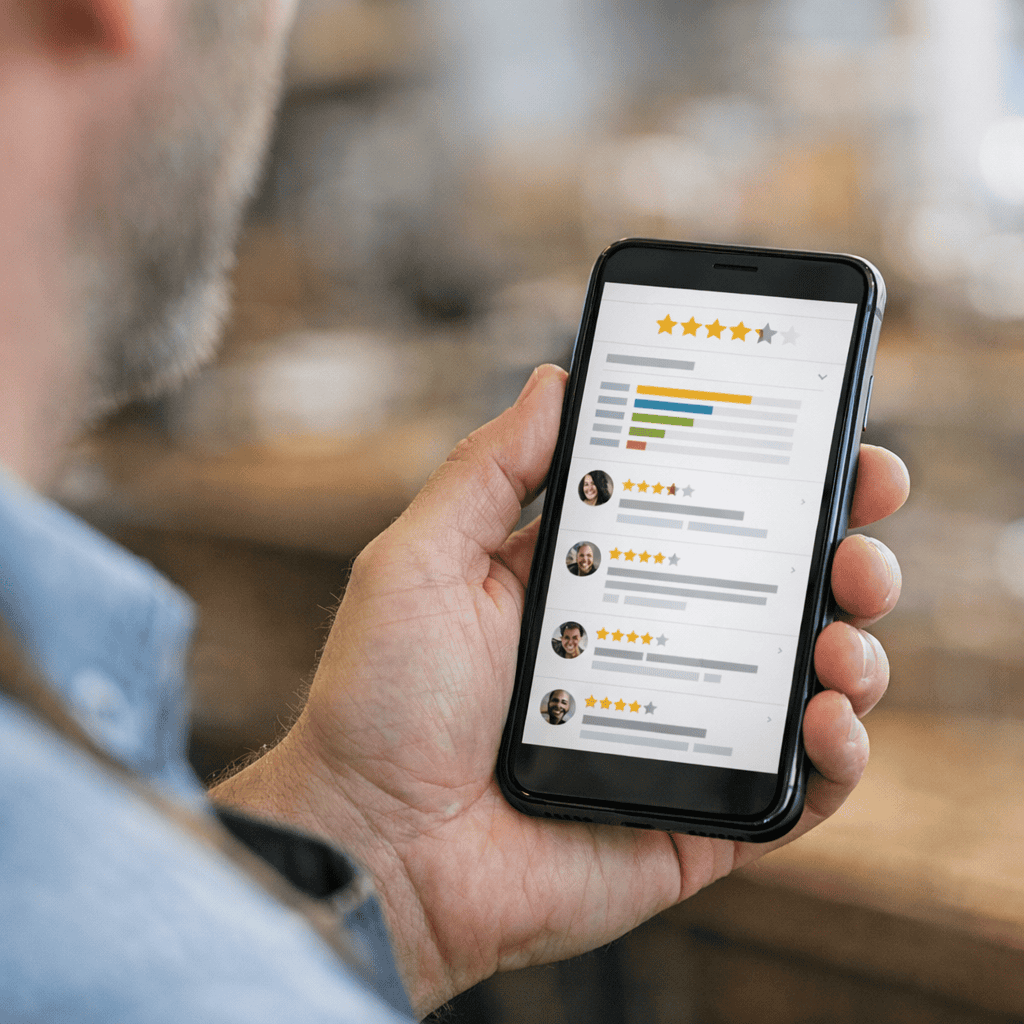
When someone is comparing local providers, proof can be the deciding factor. Reviews, testimonials and case studies help reduce hesitation and reassure prospects that they are making a safe choice.
This is especially important for businesses where trust is central, such as healthcare, legal services, financial advice, home improvement and professional services. But it matters for almost every local business.
Start with reviews. Make gathering them part of your process. Ask happy customers at the right moment, ideally soon after a successful job or positive experience. Direct them to the platform that matters most to your business, often Google.
Do not just collect reviews. Use them well. Feature strong reviews on your website, especially on service pages and contact pages. Highlight comments that mention outcomes, responsiveness, professionalism and local service.
Case studies can go further by showing how you solve real problems. A strong case study should explain:
- The customer’s challenge
- What you did
- The result
- Why your approach worked
For example, a local marketing agency might show how a campaign increased enquiries for a trades business in a specific area. A landscaping company could show how it transformed an outdoor space for a homeowner and delivered the project on time.
Visual proof also helps. Photos of your work, team, premises or completed projects can make your business feel more real and credible. For local businesses, authenticity matters more than polished corporate imagery.
The aim is simple. Remove doubt. If a prospect can see that other people in their area trust you and have had good results, they are more likely to get in touch.
Build a simple marketing plan that keeps working
Prioritise the tactics that fit your budget and goals
One of the biggest mistakes local businesses make is trying to do too much at once. A better approach is to build a simple plan around the tactics most likely to generate results for your business.
Start by asking a few practical questions:
- Where do your best customers currently come from?
- What services are most profitable?
- Which areas do you most want to target?
- What actions matter most, calls, bookings, footfall or quote requests?
- What can you realistically maintain each month?
Your answers will help you prioritise. For example:
- A local trades business may focus on Google Business Profile, service pages, reviews and paid search
- A clinic may prioritise local SEO, treatment pages, testimonials and appointment booking
- A restaurant may focus on Google visibility, social media, reviews and local promotions
- A B2B service provider may invest in location pages, case studies, email follow-up and targeted content
This is where many small business marketing ideas become more effective. Instead of chasing trends, you choose a few channels that support your goals and use them consistently.
A simple monthly plan might include:
- Updating your Google Business Profile
- Publishing one useful piece of content
- Posting proof-based social content each week
- Requesting reviews from recent customers
- Checking website enquiries and calls
- Improving one key service page each month
That level of activity is manageable for many businesses and can create steady momentum over time.
Budget matters too. Not every business needs a large campaign. But every business does need focus. Even modest investment can work well when it is directed at the right audience with the right message and a clear route to conversion.
Review results and refine your local marketing strategy
Marketing works best when it is measured and improved. If you want your local business marketing strategies to keep delivering, you need to review performance regularly and adjust based on what the data shows.
You do not need overly complex reporting. Start with the metrics that connect to commercial outcomes, such as:
- Website enquiries
- Phone calls
- Bookings
- Direction requests
- Footfall
- Quote requests
- Conversion rates on key pages
- Google Business Profile views and actions
- Keyword visibility for important local searches
Look for patterns. Which services generate the most leads? Which pages convert best? Which locations bring in the strongest enquiries? Which channels drive action rather than just traffic?
This helps you make better decisions. If one service page attracts visits but not enquiries, it may need stronger messaging or proof. If your Google Business Profile gets views but few calls, your profile or offer may need work. If social media gets engagement but no leads, your content may be too broad or lacking a clear next step.
Refining your strategy is not about constant reinvention. It is about making sensible improvements based on evidence. Over time, this can make your marketing more efficient, more predictable and more profitable.
For many businesses, the most effective approach is to review monthly and plan quarterly. That gives you enough time to see trends without letting problems drift for too long.
If your current marketing feels disconnected, now is the time to simplify it. Strong local business marketing strategies are not built on guesswork. They are built on visibility, trust, conversion and consistent improvement.
If you want to get more local customers and turn your marketing into a reliable source of enquiries, bookings and sales, Steve Welsh Marketing can help. Get in touch to discuss a practical strategy tailored to your business, your area and your growth goals.
If you want a joined-up approach, our Marketing Packages page explains how we can support your business with a tailored strategy that brings these local business marketing strategies together.
Questions
FAQs
-
What are the best local business marketing strategies for a small UK business?
The best strategies are the ones that improve local visibility, build trust and create enquiries. For many small UK businesses, this means optimising Google Business Profile, improving service pages, collecting reviews, using local SEO, publishing helpful content and making calls to action clear.
-
How can I get more local customers from Google?
Start by making sure your Google Business Profile is complete, accurate and active. Add clear service information, opening hours, photos, reviews and a link to your website. Your website should also mention the services and areas you cover in a natural, useful way.
-
Do I need social media for local marketing?
Social media can help if it supports a clear business goal. Use it to show recent work, share reviews, answer common questions and encourage people to call, book or visit your website. You do not need to be on every platform. Focus on where your local audience is most active.
-
How important are customer reviews for local businesses?
Customer reviews are very important because they help people compare local providers and feel more confident before enquiring. Ask satisfied customers for reviews at the right moment, respond professionally and use strong reviews on your website where they support trust.
-
When should I consider a marketing package for my local business?
Consider a marketing package if your website, Google profile, content, reviews and social media feel disconnected or inconsistent. A structured package can help bring these activities into one practical plan, with clearer priorities and a better route from visibility to enquiries.

Steve Welsh is a digital marketing consultant and founder of Steve Welsh Marketing, helping businesses improve search visibility, attract better leads, and grow through practical, results-focused marketing.
More about Steve →