Originally published: 27 June 2024
Last updated: May 2026
Quick answer:
Effective email marketing strategies focus on sending relevant, timely messages to people who have chosen to hear from your business. For UK businesses, that means building a clean permission-based list, segmenting contacts by behaviour or interest, writing clear subject lines, using mobile-friendly layouts and giving each email one obvious next step. Automation can then support welcome emails, abandoned cart reminders and follow-ups after enquiries or downloads. The aim is not to send more emails, but to improve quality, trust and timing so more subscribers open, click and buy. Steve Welsh Marketing can help connect email activity with wider lead generation and Marketing Packages when needed.
Intro:
Email remains one of the most reliable ways for UK businesses to generate leads, nurture prospects and drive repeat sales. While social platforms, paid ads and search all have their place, email gives you direct access to people who have already shown interest in your business. That makes it one of the most commercially valuable channels available.
The challenge is that simply sending more emails does not produce better results. Businesses see stronger returns when they use effective email marketing strategies built around relevance, timing and clear commercial goals. The best campaigns do not just fill inboxes. They move people closer to a purchase.
If you want better open rates, more clicks and a stronger email conversion rate, the answer is not guesswork. It is a structured email campaign strategy based on list quality, segmentation, automation and testing. In this guide, we will look at practical email marketing tips that UK businesses can apply to improve performance and increase sales.

Why effective email marketing strategies still drive sales
Email marketing has been around for years, but it continues to perform because it supports the full buying journey. It can introduce your business, build trust, answer objections, promote offers and bring previous customers back. Few channels can do all of that so efficiently.
For many businesses, email is not just a support channel. It is a sales channel in its own right. When used properly, it helps you stay visible without relying entirely on rising ad costs or unpredictable platform changes.
How email supports lead nurturing and repeat purchases
Most people do not buy the first time they visit your website. They compare options, look for reassurance and often need several touchpoints before making a decision. Email helps you stay in front of them during that process.
A strong lead nurturing sequence can educate prospects, explain your offer and build confidence over time. For example, a service business might send a welcome email, then follow up with a case study, a useful guide and finally an invitation to book a call. Each message has a purpose and helps move the lead forward.
Email is also highly effective for repeat purchases. If someone has already bought from you, they are far more likely to buy again than a completely cold prospect. This is where effective email marketing strategies can have a major impact on revenue.
Examples include:
- A retailer sending product recommendations based on previous orders
- A consultant following up with existing clients about related services
- A training provider promoting advanced courses to past attendees
- A subscription business reminding customers to renew before expiry
These campaigns work because they are relevant. They are based on what the customer has already done, not what you hope they might do.
Why email often outperforms other channels on ROI
Email often delivers a stronger return on investment than many other forms of digital marketing because the costs are relatively low and the targeting can be highly precise. Once someone joins your list, you can continue communicating with them without paying for every click.
That does not mean email works automatically. Poor targeting, weak messaging and inconsistent sending can all reduce results. But when your list is healthy and your campaigns are well planned, email can produce sales at a lower cost than many paid channels.
It also gives you more control. You own your email list. You are not relying on an algorithm to decide whether your audience sees your message. That makes email a valuable long term asset for any UK business that wants more predictable lead generation and sales.

Build a stronger email list before you send
A successful campaign starts long before the first email goes out. If your list is weak, unengaged or poorly targeted, even the best creative will struggle. One of the most overlooked email marketing tips is to improve list quality before focusing on campaign volume.
A smaller list of genuinely interested contacts is usually far more valuable than a large list of people who barely remember signing up.
Use sign-up forms, lead magnets and website pop-ups properly
Your website should actively support list growth. Too many businesses hide their sign-up form in the footer and then wonder why nobody subscribes. If email is important to your sales process, your list building needs to be visible and intentional.
Good options include:
- A homepage sign-up section with a clear benefit
- Pop-ups triggered by time on page or exit intent
- Embedded forms on blog posts and service pages
- Dedicated landing pages for downloadable resources
- Checkout opt-ins for future offers and updates
The key is to give people a reason to subscribe. Generic wording such as “Join our newsletter” is rarely compelling. A stronger offer might be:
- Get practical marketing tips for growing your business
- Download our guide to improving lead generation
- Receive exclusive offers and product updates
- Get monthly insights to help increase enquiries and sales
Lead magnets can work especially well when they match your audience’s needs. For example, a B2B business might offer a checklist, pricing guide or industry report. An ecommerce brand might offer a first order discount or early access to new products.
Make sure the sign-up process is simple. Ask only for the information you need. In many cases, a first name and email address are enough to get started. Too many fields can reduce conversion rates.
Focus on permission-based list growth and quality over quantity
Permission matters. Buying email lists or adding people without clear consent is not only poor practice, it damages campaign performance. Low engagement, spam complaints and poor sender reputation can all follow.
For UK businesses, permission-based email marketing is also important from a compliance perspective. Contacts should understand what they are signing up for and how their data will be used. Clear consent builds trust and improves long term results.
Quality should always come before quantity. A list full of engaged prospects and customers gives you:
- Better open rates
- Higher click-through rates
- More accurate reporting
- Lower unsubscribe rates
- Stronger email conversion rate
It is also worth cleaning your list regularly. Remove inactive contacts, correct obvious errors and monitor engagement over time. If someone has not opened or clicked in months, consider a re-engagement campaign. If they still do not respond, it may be better to suppress them from future sends.
A clean list improves deliverability and gives you a more realistic view of what your email campaign strategy is achieving.
Segment your audience for more relevant campaigns
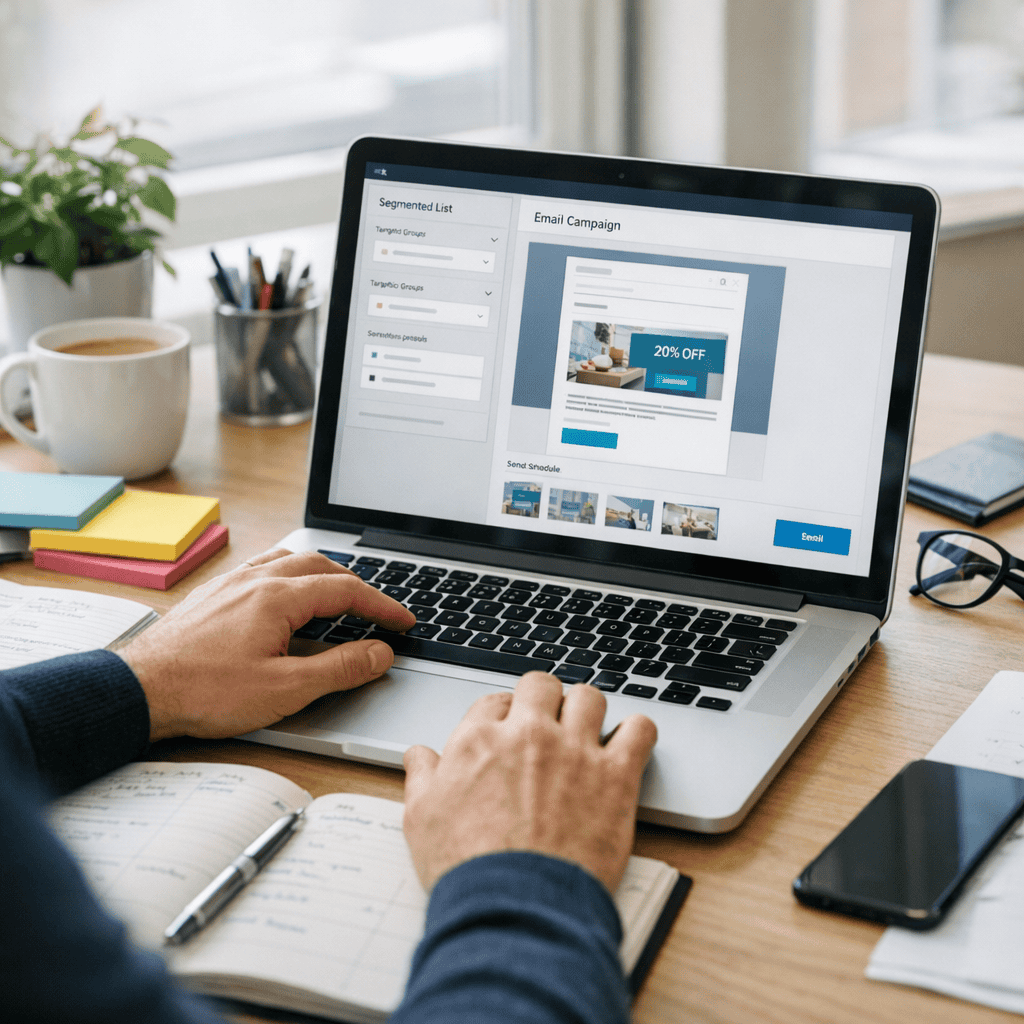
One of the biggest reasons email campaigns underperform is that businesses send the same message to everyone. That approach ignores the fact that different contacts are at different stages, have different interests and respond to different offers.
Email segmentation helps you send more relevant messages, which usually leads to better engagement and more sales. It is one of the most effective email marketing strategies because it improves both customer experience and commercial performance.
Group contacts by behaviour, purchase history and interests
Segmentation does not need to be complicated to be effective. Start with the data you already have and build from there.
Useful ways to segment your audience include:
- New subscribers
- Existing customers
- Repeat buyers
- Inactive contacts
- Leads who downloaded a specific resource
- People who clicked on a certain product or service
- Customers by order value
- Contacts by sector, location or service interest
Behavioural data is especially useful. If someone has viewed a service page multiple times, clicked on a pricing email or abandoned a basket, that tells you something important about their intent.
Purchase history is another strong segmentation tool. A customer who bought one product may be interested in a related item, an upgrade or a replenishment reminder. A client who used one service may be open to another if the timing is right.
Interests can be gathered through sign-up forms, preference centres or observed behaviour. Even simple categories can improve relevance significantly.
Tailor offers and messaging to each segment
Once you have segments in place, the next step is to tailor your messaging. This is where many businesses miss the opportunity. They create segments but still send broadly similar emails to each group.
Your content should reflect what matters to that audience.
For example:
- New subscribers may need an introduction to your business and proof that you can help
- Warm leads may need case studies, FAQs and a clear next step
- Existing customers may respond better to loyalty offers or complementary services
- Inactive contacts may need a stronger incentive or a re-engagement message
The same applies to offers. A first time buyer discount may work for new subscribers, but it is unlikely to be the best message for a loyal customer. Likewise, a high level strategic service pitch may not suit someone who has only just discovered your business.
Segmentation also helps with timing. A follow-up email sent shortly after a key action is often more effective than a general campaign sent days later. Relevance plus timing is a powerful combination.
If your business wants stronger results from email segmentation, start with a few meaningful groups rather than trying to build dozens at once. Even basic segmentation can make a noticeable difference to opens, clicks and conversions.
Improve open rates and click-through rates
If people do not open your emails, they cannot buy from them. If they open but do not click, your message is not moving them forward. Improving these two areas is essential if you want your email campaign strategy to produce more sales.
Open rates and click-through rates are influenced by several factors, including list quality, timing, relevance and design. Small improvements across each area can create a significant uplift in results.
Write subject lines and preview text that earn attention
Your subject line is the first hurdle. It needs to stand out in a crowded inbox without sounding vague, misleading or overly promotional.
Strong subject lines tend to be:
- Clear rather than clever
- Specific rather than generic
- Relevant to the recipient
- Focused on value or curiosity
- Short enough to display well on mobile
Examples include:
- 5 ways to improve your lead generation this month
- Still thinking about [service]? Here is what to know
- Your exclusive offer ends tomorrow
- How to reduce abandoned baskets
- A quick guide to better email results
Preview text matters too. It supports the subject line and gives the reader another reason to open. Instead of letting the first line of body copy appear by default, write preview text intentionally.
For example:
Subject line: Improve your next email campaign
Preview text: Practical changes that can increase opens, clicks and sales
Avoid overusing capital letters, excessive punctuation or spammy phrases. These can reduce trust and may affect deliverability.
Personalisation can help, but only when it adds value. Using a first name is not enough on its own. A more effective approach is personalising based on behaviour or interest, such as referencing a viewed product or downloaded guide.
Use clear calls to action and mobile-friendly email design
Once someone opens your email, the content needs to guide them towards a clear next step. Too many emails fail because they try to do too much or bury the call to action.
Every email should have one main objective. That could be:
- Book a consultation
- View a product
- Download a guide
- Read a case study
- Redeem an offer
Your call to action should be easy to spot and easy to understand. Phrases such as “Learn more” can work, but more specific wording often performs better. For example:
- Book your free call
- View the full range
- Download the guide
- Claim your offer
- See how it works
Design also plays a major role. Most emails are opened on mobile devices, so your layout must be easy to read on smaller screens. That means:
- Short paragraphs
- Clear headings
- Plenty of white space
- Buttons large enough to tap
- Images that support the message rather than distract from it
Do not overload the email with too many links or competing messages. If the reader has too many choices, they may take none.
It is also worth checking that the landing page matches the email. If the email promises a specific offer or solution, the click should take the reader directly to the relevant page. Friction after the click can quickly reduce your email conversion rate.
Use automation and testing to increase conversions
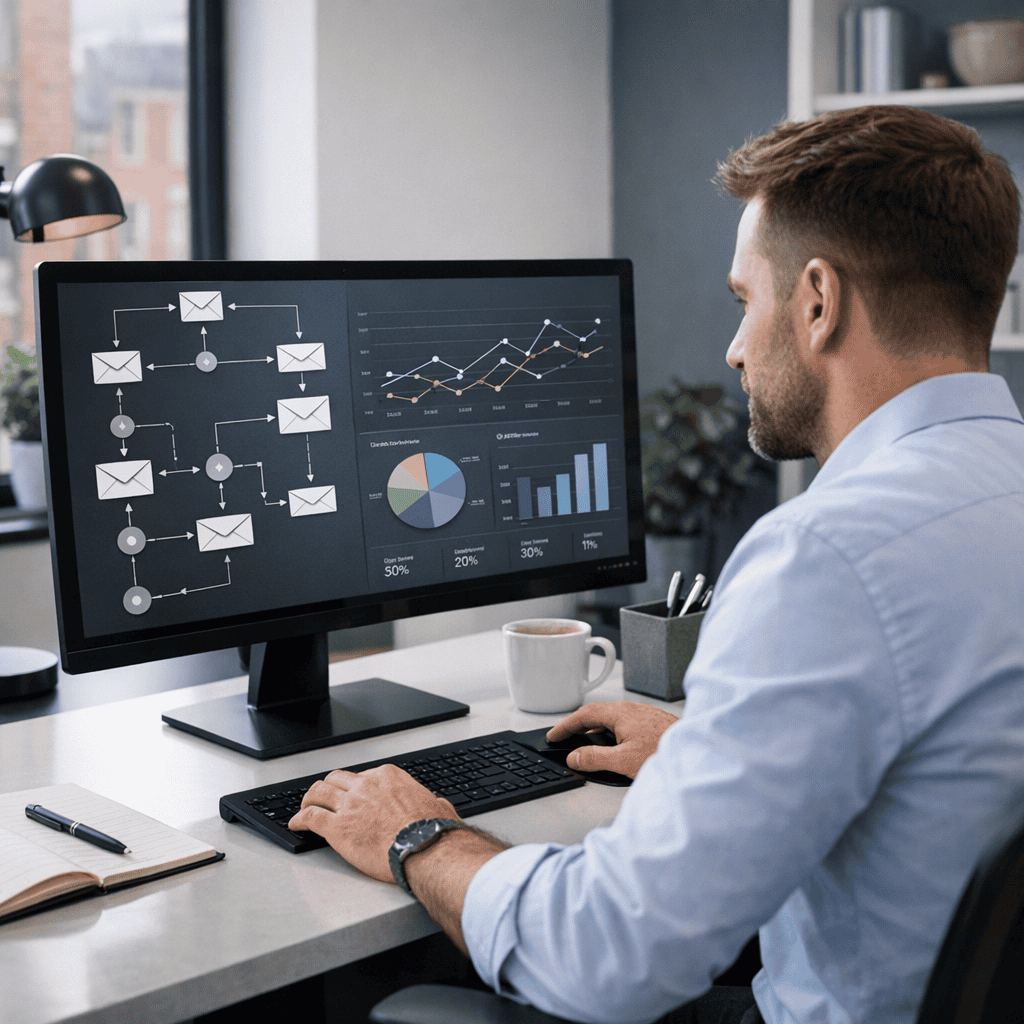
Manual campaigns are useful, but automation allows you to scale communication without losing relevance. It helps you send the right message at the right time based on what the contact does.
Combined with regular testing, email automation can improve consistency, save time and increase conversions. For businesses that want better results without constantly reinventing each campaign, this is one of the most valuable areas to develop.
Set up welcome, abandoned cart and follow-up sequences
Automated sequences work best when they are tied to clear commercial moments in the customer journey.
A welcome sequence is often the first place to start. When someone joins your list, they are at peak interest. A good welcome series can introduce your brand, set expectations and guide the subscriber towards a first conversion.
A simple welcome sequence might include:
- Email 1: Thank them for subscribing and deliver the promised resource or offer
- Email 2: Explain how you help customers and what makes your business different
- Email 3: Share proof such as testimonials, results or case studies
- Email 4: Invite them to take the next step, such as booking a call or making a purchase
Abandoned cart emails are another high value automation for ecommerce businesses. If someone adds products to their basket but does not complete the purchase, a timely reminder can recover lost revenue. These emails often perform well because the intent is already there.
A typical abandoned cart sequence could include:
- A reminder shortly after abandonment
- A second email highlighting benefits or answering objections
- A final message with urgency or a limited incentive if appropriate
Follow-up sequences are useful for service businesses too. If someone downloads a guide, attends a webinar or enquires through your website, automation can keep the conversation moving. Instead of relying on one generic response, you can send a sequence that educates and qualifies the lead.
Test send times, content and offers to refine performance
Even strong campaigns can usually be improved. Testing helps you move beyond assumptions and make decisions based on evidence.
Areas worth testing include:
- Subject lines
- Preview text
- Send times and days
- Call to action wording
- Email length
- Image use
- Offer type
- Button placement
- Personalisation approach
For example, one audience may respond better to a concise email with a direct offer, while another may need more context and proof before clicking. A B2B audience may engage more during working hours, while a consumer audience may open more often in the evening.
Test one variable at a time where possible. If you change everything at once, it becomes difficult to understand what caused the result.
Look beyond opens and clicks alone. The real goal is conversion. A subject line that boosts opens but attracts the wrong audience may not improve sales. Focus on the full path from open to click to action.
Review your data regularly and use it to refine future campaigns. Over time, these small improvements can have a major impact on revenue.
If you want a joined-up approach that supports email, content and wider lead generation, explore our Marketing Packages for a strategy built around your business goals.
Effective email marketing strategies are not about sending more messages. They are about sending better ones. When you build a high quality list, use email segmentation, improve your creative, apply email automation and test what matters, email becomes a powerful sales tool rather than just another marketing task.
For UK businesses, the opportunity is clear. Email can help you nurture leads, increase repeat purchases and improve your overall email conversion rate without the rising costs associated with many other channels. The businesses that get the best results are the ones that treat email as a strategic part of their marketing, not an afterthought.
If your current campaigns are underperforming, start with the basics. Improve list quality. Segment your audience. Tighten your subject lines. Simplify your calls to action. Build automations around key customer actions. Then test and refine.
These effective email marketing strategies can help you generate more value from the audience you already have and turn more interest into sales. If you want expert support building an email strategy that fits your wider marketing goals, get in touch with Steve Welsh Marketing today.
Questions
FAQs
-
What makes an email marketing strategy effective?
An effective email marketing strategy links list quality, segmentation, timing, content and clear calls to action to a commercial goal. Instead of emailing everyone with the same message, it sends useful, relevant content based on where each contact is in the buying journey.
-
How often should a UK business send marketing emails?
There is no fixed schedule that suits every business. Start with a frequency you can sustain, and that matches audience expectations, such as weekly, fortnightly or monthly. Monitor opens, clicks, unsubscribes and sales. If engagement drops, review relevance and timing before increasing volume.
-
What is email segmentation, and why does it matter?
Email segmentation is grouping contacts by factors such as new subscribers, existing customers, interests, behaviour or purchase history. It matters because each group can receive messages and offers that better match their needs, which can improve engagement and conversion.
-
Which email automations should I set up first?
Start with automations tied to clear customer actions. A welcome sequence for new subscribers, abandoned cart reminders for ecommerce, and follow-up emails after enquiries or downloads are often practical first steps because they support moments of active interest.
-
How can I improve my email conversion rate?
Use a clean list, relevant segments, clear subject lines, concise copy, one main call to action and a landing page that matches the email. Test one change at a time so you can see what improves clicks, enquiries or purchases.
-
When should I consider a Marketing Package for email marketing?
Consider a Marketing Package if your campaigns lack structure, your list is not segmented, automations are missing or your email is not connected to wider marketing goals. A joined-up package can help align email with content, lead generation and sales activity.

Steve Welsh is a digital marketing consultant and founder of Steve Welsh Marketing, helping businesses improve search visibility, attract better leads, and grow through practical, results-focused marketing.
More about Steve →