
Quick answer
AI chatbots in digital marketing plans can help UK businesses capture more leads, answer common questions faster and improve the customer experience without replacing human support. The best results come when the chatbot has a clear job, such as qualifying enquiries, booking calls or handling routine service questions, and when there is an easy handover to a person for more complex cases. Used this way, a chatbot supports lead generation, customer service and digital marketing automation in a practical, measurable way. For many businesses, the key is to start with a specific business goal and build from there.
Intro
AI chatbots in digital marketing plans are no longer just a novelty for large brands with big budgets. For many UK businesses, they are becoming a practical tool for generating leads, improving customer service and reducing the time spent on repetitive enquiries.
Used well, a chatbot can answer common questions, collect useful prospect information, guide visitors towards the right service and help your team respond faster. Used badly, it can frustrate potential customers, create extra admin and damage trust. That is why the real value does not come from adding a chatbot for the sake of it. It comes from building one into a clear marketing strategy with defined goals, sensible automation and a smooth handover to a real person when needed.
For small and medium-sized businesses in particular, the appeal is obvious. Many teams are stretched. Enquiries come in through the website, social media, email and online ads. Prospects expect quick answers. Existing customers want support without delays. A well-planned chatbot can help bridge that gap without replacing the human side of your business. At Steve Welsh Marketing, we deeply researched AI chatbots to implement them in our marketing packages.
In this guide, we will look at what chatbots actually do in a digital marketing plan, why more UK businesses are using them, the best ways to apply them for commercial results and the mistakes to avoid if you want them to support growth rather than get in the way.

What AI chatbots do in a digital marketing plan
AI chatbots in digital marketing plans sit at the point where marketing, sales and customer service overlap. They are designed to interact with website visitors or prospects in real time, usually through a chat interface on your website, landing pages, social channels or messaging platforms.
At a basic level, a chatbot can answer frequently asked questions, direct people to the right page and collect contact details. At a more advanced level, it can qualify leads, book appointments, suggest relevant services, trigger follow-up emails and support wider digital marketing automation.
The key point is that a chatbot should not be treated as a standalone tool. It works best when it supports your wider goals, such as increasing enquiries, improving conversion rates, reducing response times or helping your team focus on higher value conversations.
How chatbots support lead capture and qualification
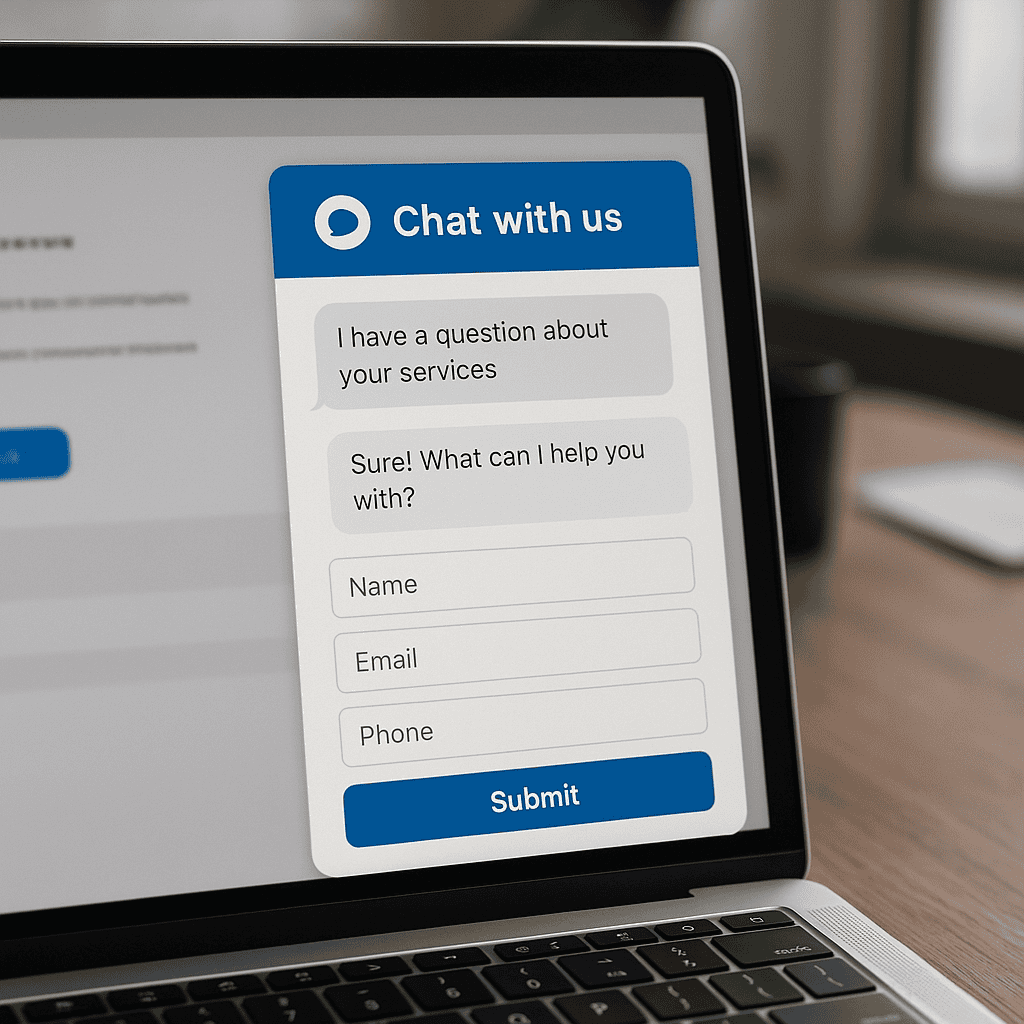
One of the strongest use cases for chatbots for lead generation is their ability to engage visitors while they are actively considering your service. Instead of relying on a static contact form, a chatbot can start a guided conversation that feels more immediate and useful.
For example, a visitor lands on your website after clicking a Google Ads campaign for a service. They may have a few questions before they are ready to enquire. A chatbot can ask what they need help with, identify the relevant service, gather key details and offer the next step, such as requesting a quote or booking a call.
This can improve lead capture in several ways:
- It reduces friction. Many people are more likely to answer a few simple questions in a chat than complete a long form.
- It helps qualify leads. Instead of receiving vague messages, your team can collect useful information such as budget range, location, service type, urgency and business size before a human follows up.
- It can work outside office hours. If someone visits your site in the evening or at the weekend, the chatbot can still capture the enquiry rather than losing it.
For service-based businesses, this can be especially useful. A marketing agency, consultant, trades business, legal firm or B2B provider can all use a chatbot to sort serious prospects from general browsers and route them appropriately.
Where chatbots fit across the customer journey
A good AI chatbot strategy looks at the full customer journey, not just the first interaction. Chatbots can support different stages depending on what your business needs most.
At the awareness stage, they can answer top-level questions and guide visitors to useful content. This helps keep people engaged when they are still researching.
At the consideration stage, they can compare services, explain processes, share case studies or answer objections. This can help move prospects closer to an enquiry.
At the conversion stage, they can collect lead details, book consultations, generate quote requests or direct people to the right contact point.
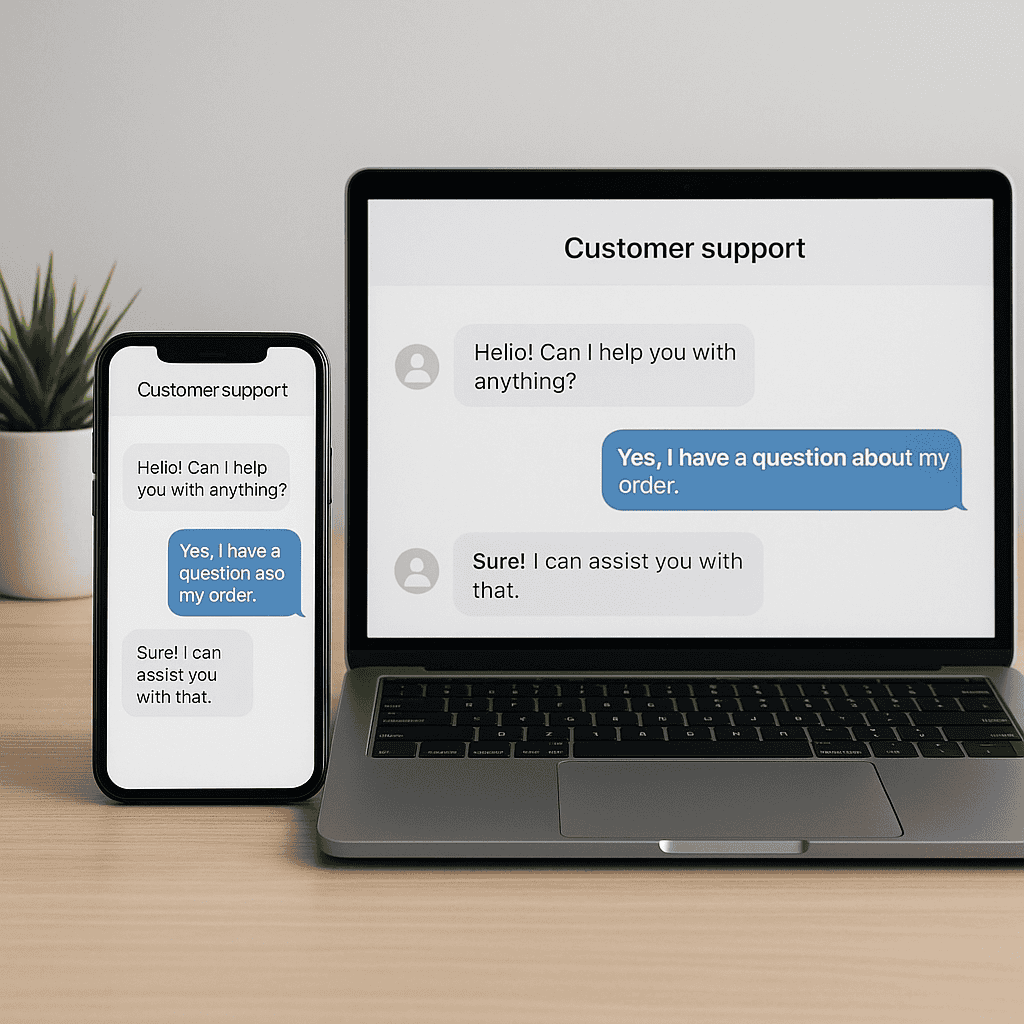
After conversion, customer service chatbots can help with onboarding, appointment reminders, delivery updates, support queries and account information. This improves the customer experience while reducing pressure on your team.
In practical terms, this means a chatbot can support both marketing and service delivery. That is why it belongs in a digital marketing plan when there is a clear business case for it.

Why UK businesses are adding chatbots to marketing strategies
More UK businesses are using chatbots because they solve real operational and commercial problems. Customers expect speed. Teams need efficiency. Marketing budgets need to show results. A chatbot can contribute to all three when it is planned properly.
This is not about replacing staff or removing personal service. It is about using digital marketing automation to handle routine interactions more effectively, so your team can spend more time on work that needs judgement, empathy and expertise.
Saving time on repetitive enquiries and admin
Many businesses receive the same questions repeatedly. What are your opening hours? Do you cover my area? How much does this service cost? Can I book a consultation? How long does the process take?
Answering these manually takes time, especially when they come through multiple channels. A chatbot can deal with these standard enquiries instantly and consistently.
That creates several benefits:
- Your team spends less time on repetitive admin.
- Prospects get answers straight away.
- Staff can focus on qualified leads and more complex customer needs.
- Internal processes become more efficient.
For smaller businesses without a dedicated sales or support team, this can make a noticeable difference. A chatbot does not need breaks, and it does not forget key information. It can provide a reliable first line of response while your team handles the conversations that matter most.
This is one reason chatbots are increasingly relevant within marketing packages for small businesses. They can offer a practical way to improve enquiry handling without needing to hire additional staff immediately.
Improving response speed and conversion rates
Speed matters in digital marketing. If a prospect has a question and cannot get an answer quickly, they may leave your site and contact a competitor instead.
A chatbot can reduce that delay. It can engage visitors the moment they arrive, answer common objections and move them towards action. That can improve conversion rates, especially on high-intent pages such as service pages, pricing pages and landing pages linked to paid campaigns.
For example, if someone clicks through from a local search ad and wants to know whether you serve their area, a chatbot can answer immediately. If they want to book a call, it can present available options. If they are unsure which service fits their needs, it can ask a few simple questions and recommend the best route.
This kind of responsiveness can make your marketing more effective because it helps convert existing traffic rather than simply chasing more of it.
If you want a broader strategy that brings together content, automation and lead generation, explore our Marketing Packages for a practical approach built around your business goals.
Best ways to use AI chatbots for marketing results
Not every chatbot use case delivers equal value. The best results usually come from applying chatbots to specific tasks where speed, consistency and structured information make a real difference.
The goal is not to automate everything. It is to identify the points in your marketing and sales process where a chatbot can improve outcomes.
Website enquiries, booking requests and quote generation
For many businesses, the website is the most obvious place to start. A chatbot can support visitors at the exact moment they are considering an enquiry.
Some of the most effective website uses include:
- Handling service enquiries. A chatbot can ask what service the visitor is interested in, gather their requirements and direct them to the right next step.
- Booking consultations or calls. Instead of asking people to send an email and wait, the chatbot can offer a booking option or collect preferred times for follow-up.
- Generating quote requests. For businesses that provide tailored pricing, the chatbot can gather the key information needed for a more informed quote request.
- Filtering unsuitable enquiries. If your service is only for certain sectors, regions or project sizes, the chatbot can identify this early and save your team time.
- Supporting high-intent landing pages. If you are running paid campaigns, a chatbot can help convert traffic from ads by answering immediate questions and reducing drop-off.
A practical example might be a UK home improvement company. A chatbot could ask what type of work is needed, the postcode, estimated budget and preferred timeline. That gives the sales team a much better starting point than a generic message saying, “Please call me.”
Likewise, a B2B consultancy could use a chatbot to ask about company size, service interest and current challenges before offering a discovery call. This creates a more efficient lead qualification process and improves the quality of sales conversations.
Email, social media and remarketing support
Chatbots are not limited to websites. They can also support wider digital marketing automation across other channels.
In email marketing, chatbot data can help segment leads based on interests or intent. If someone uses the chatbot to ask about a specific service, that information can feed into tailored follow-up emails.
On social media, chatbots can help manage direct messages, answer common questions and guide people towards your website or booking process. This is useful for businesses that receive high volumes of enquiries through Facebook or Instagram.
In remarketing, chatbot interactions can help identify where prospects drop off or what objections they raise. That insight can then improve your ad messaging, landing pages and follow-up campaigns.
For example, if many chatbot users ask about pricing before converting, you may need clearer pricing guidance or stronger value messaging in your ads and website content. If they often ask whether you cover certain locations, your local targeting and page content may need refining.
This is where AI chatbot strategy becomes more than just customer support. It becomes a source of marketing insight that can improve campaign performance across the board.

How to plan a chatbot that actually helps your business
The difference between a useful chatbot and an annoying one usually comes down to planning. Before choosing tools or writing prompts, you need to be clear about what the chatbot is there to do.
A chatbot should support a business objective. That might be increasing qualified leads, reducing support workload, improving conversion on landing pages or helping customers get answers faster. If the purpose is vague, the results will be too.
Setting goals, prompts and handover rules
Start with one or two clear goals. For example:
- Increase website lead capture by 20 per cent
- Reduce repetitive customer service emails
- Improve response time for out-of-hours enquiries
- Increase bookings from key service pages
Once you know the goal, map the conversations the chatbot needs to handle. Think about the most common questions, the information you need to collect and the actions users should be able to take.
Good prompts matter. The chatbot should use clear, natural language and guide users without overwhelming them. Keep questions simple and relevant. Avoid trying to sound overly clever or robotic.
It is also essential to set handover rules. Not every conversation should stay with the bot. There should be a clear route to a human when:
- The query is complex
- The user is frustrated
- The issue is sensitive
- The lead is high value and ready to speak to someone
- The chatbot does not understand the request
This is one of the most important parts of customer service chatbots. A bot should support the human experience, not block access to it.
Choosing the right tools and measuring performance
The right tool depends on your business size, budget, website setup and marketing goals. Some chatbot platforms are simple and template-based. Others offer more advanced AI, integrations and custom workflows.
When choosing a tool, consider:
- How easily it integrates with your website and CRM
- Whether it can connect to your email marketing or booking system
- How much control you have over scripts and workflows
- Whether it supports GDPR-conscious data handling
- How reporting works
- How easy it is for your team to manage
Do not choose based on features alone. Choose based on fit. A simpler tool that solves a clear problem is often more valuable than a complex platform your team never fully uses.
Measurement is equally important. Track performance against your original goals. Useful metrics may include:
- Number of chatbot conversations
- Lead capture rate
- Qualified leads generated
- Booking requests completed
- Response time improvements
- Reduction in repetitive support queries
- Conversion rate from chatbot-assisted visitors
- Customer satisfaction feedback
Review the data regularly and refine the chatbot over time. The first version should not be the final version. Like any part of a digital marketing plan, it should improve through testing and learning.
Common mistakes to avoid with AI chatbots
AI chatbots in digital marketing plans can deliver strong results, but only if they are implemented with care. Many of the problems businesses experience come from unrealistic expectations or poor setup rather than the technology itself.
Over-automating and losing the human touch
One of the biggest mistakes is trying to automate too much. Not every customer interaction should be handled by a bot. If the chatbot becomes a barrier rather than a help, it will hurt trust and conversions.
This often happens when businesses force users through rigid flows, hide contact details or make it difficult to speak to a real person. It can also happen when the chatbot gives generic answers that feel disconnected from the actual needs of the user.
The solution is balance. Use the chatbot for speed, structure and routine tasks. Use people for nuance, reassurance and decision-making. That balance is especially important in sectors where trust matters, such as professional services, healthcare, finance and high-value B2B sales.
Your tone also matters. The chatbot should sound like your brand, not like a generic software template. It should be clear, polite and helpful. It does not need to pretend to be human, but it should still feel professional and approachable.
Ignoring compliance, tone and user experience
Another common mistake is focusing on automation while neglecting compliance and usability.
If your chatbot collects personal data, you need to think about GDPR, consent and data storage. Users should understand what information is being collected and why. If the chatbot connects to other systems, those integrations should also be reviewed carefully.
Tone is another issue. A chatbot that sounds too casual, too sales-heavy or too vague can undermine confidence. For UK businesses, clarity and professionalism usually work better than gimmicks.
User experience is equally important. If the chatbot appears too quickly, interrupts browsing or asks too many questions before offering value, people may close it immediately. It should feel helpful, not intrusive.
A few practical ways to improve user experience include:
- Trigger the chatbot on relevant pages rather than every page
- Offer clear choices at the start of the conversation
- Keep early questions short and purposeful
- Make it easy to exit or contact a person
- Test the chatbot on mobile as well as desktop
- Review real chat transcripts to spot friction points
The best chatbot experiences are often the simplest. They solve a problem quickly and move the user forward.
AI chatbots in digital marketing plans can be a smart addition for UK businesses that want to improve lead generation, customer service and efficiency. They can help capture more enquiries, qualify leads more effectively, answer common questions faster and support your team by reducing repetitive work.
But they are not a shortcut to better marketing on their own. To get real value, you need a clear AI chatbot strategy, sensible goals, strong conversation design and a proper link to your wider marketing activity. That means thinking about where the chatbot fits in the customer journey, what outcomes you want it to drive and when a human should step in.
For some businesses, the right chatbot setup can improve conversion rates and save hours each week. For others, the better move may be to refine the website, lead process or content strategy first. The important thing is to make the decision based on business need, not hype.
If you are considering how AI chatbots in digital marketing plans could support your growth, Steve Welsh Marketing can help you build a practical strategy that fits your goals, your audience and your budget. Get in touch to discuss a smarter marketing setup that turns more traffic into leads and gives your customers a better experience from the first interaction.
Questions
FAQ’s
-
What are AI chatbots in digital marketing plans used for?
They are used to answer common questions, capture lead details, guide visitors to the right service and support faster responses across marketing and customer service.
-
How can chatbots help with lead generation?
They can start a guided conversation, qualify interest and collect useful details such as service need, location and urgency before passing the enquiry on.
-
Can a chatbot improve customer service?
Yes. Customer service chatbots can handle routine queries, provide quick answers and help customers get the next step without waiting for a manual reply.
-
When should a chatbot hand over to a real person?
It should hand over when the query is complex, sensitive, high value or when the user wants to speak to someone directly.
-
What should UK businesses consider before adding a chatbot?
They should define the goal, plan the conversations, check GDPR and data handling, and make sure the chatbot fits the wider marketing strategy.

Steve Welsh is a digital marketing consultant and founder of Steve Welsh Marketing, helping businesses improve search visibility, attract better leads, and grow through practical, results-focused marketing.
More about Steve →