
Originally published: 13 March 2024
Last updated: May 2026
Quick answer:
Personalised email campaigns help UK businesses send more relevant emails to different types of customers, leads and subscribers. Instead of sending one generic message to everyone, you use details such as service interest, location, past enquiries, purchase history or engagement level to shape the subject line, content and call to action. This can improve open rates, clicks and conversions because the email feels more useful and timely. Start by segmenting your list, cleaning your data and matching each message to a clear business goal. Keep the process simple, practical and respectful of customer preferences.
Intro:
Personalised email campaigns remain one of the most effective ways for UK businesses to build stronger customer relationships, improve engagement and generate more conversions. When done properly, they help you send more relevant messages to the right people at the right time, rather than relying on broad, generic email blasts that are easy to ignore.
For service businesses, SMEs and growing brands, this matters because inboxes are crowded and attention is limited. People expect communication that reflects their needs, interests and stage in the buying journey. That does not mean every email needs to be complex or heavily automated. It means your email marketing should be more targeted, more useful and more focused on action.
In this guide, we will look at how personalised email campaigns work, why they still deliver strong results, and the practical steps you can take to improve open rates, clicks and conversions. We will also cover common mistakes to avoid and how email personalisation fits into a wider marketing strategy.
Why personalised email campaigns still matter
Email remains one of the few marketing channels where you can speak directly to prospects and customers without depending on third-party platforms or changing algorithms. It gives you control over your message, your audience and your follow-up process. But that only works if your emails feel relevant.
Personalised email campaigns matter because relevance drives response. When someone receives an email that reflects what they care about, they are more likely to open it, read it and act on it. For businesses trying to generate leads, nurture enquiries or encourage repeat business, that can make a measurable difference.
How personalisation improves open rates and engagement
The first job of any email is to get opened. Subject lines, preview text and sender names all influence that decision. Personalisation can improve open rates because it signals that the email may be more relevant to the recipient.
This does not just mean adding a first name to the subject line. In many cases, stronger results come from tailoring the topic itself. For example:
- A marketing agency emailing existing clients about a new reporting feature
- A local accountant sending tax deadline reminders to limited company directors
- A training provider promoting a course based on previous attendance
- A retailer recommending products related to a recent purchase
These messages are more likely to be opened because they connect with a known interest or need.
Once the email is opened, personalisation also helps improve email campaign engagement. If the content reflects the recipient’s sector, service interest, location, purchase history or stage in the sales funnel, it becomes easier for them to see why the message matters. That often leads to better click-through rates and stronger email conversion rates.
For UK businesses, this can be especially valuable in service-led sectors where trust and timing matter. A well-timed, relevant email can move someone from initial interest to booked consultation far more effectively than a generic newsletter.
Why generic email marketing no longer performs as well
Generic email marketing often underperforms because it tries to speak to everyone in the same way. That usually leads to broad messaging, weak calls to action and low relevance.
If a business sends the same email to new leads, long-term customers, inactive contacts and recent buyers, the message is unlikely to match what each group needs. A new lead may need education and reassurance. An existing customer may need upsell opportunities or service updates. An inactive contact may need a re-engagement offer. Sending one message to all of them usually means missing the mark.
There is also a trust issue. Recipients quickly notice when emails feel automated in the wrong way. If the content is too broad, too sales-heavy or clearly not relevant, they are more likely to ignore future emails or unsubscribe altogether.
That is why segmented email marketing has become so important. It allows businesses to move away from one-size-fits-all communication and towards more targeted email marketing that reflects real customer behaviour and intent.

What makes a personalised email campaign effective
Effective personalised email campaigns are not built on gimmicks. They are built on useful data, clear segmentation, relevant messaging and strong calls to action. The goal is not to make every email feel clever. The goal is to make it feel timely and worthwhile.
A good personalised campaign starts with a clear purpose. Are you trying to generate enquiries, book calls, encourage repeat purchases, recover abandoned baskets, promote an event or nurture leads over time? Once that objective is clear, you can shape the campaign around the audience most likely to respond.
Using segmentation to send the right message
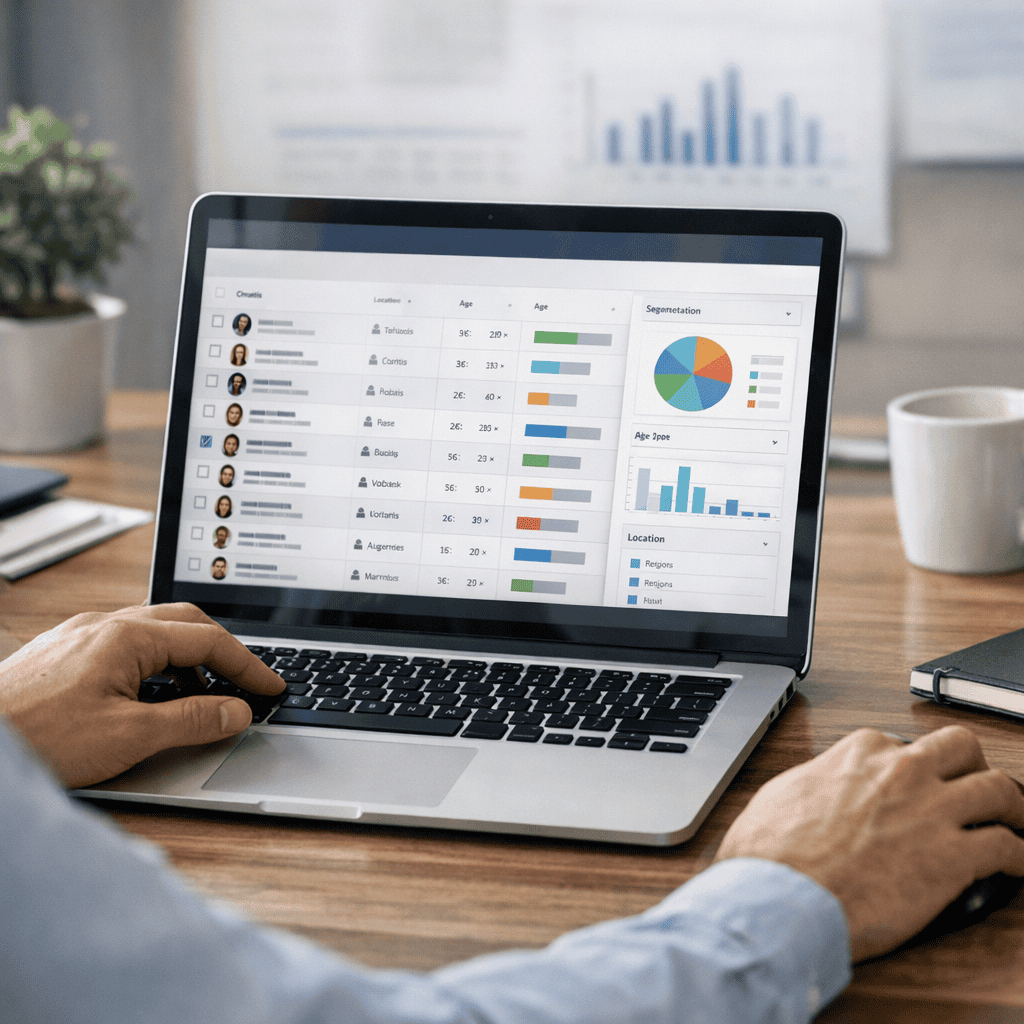
Segmentation is one of the most practical and effective forms of email personalisation. It means dividing your email list into smaller groups based on shared characteristics, then sending messages that fit those groups more closely.
Useful segmentation options for UK businesses include:
- Industry or business type
- Location
- Service interest
- Stage in the buying journey
- Past purchases or enquiries
- Website behaviour
- Engagement level
- Customer status such as lead, active client or lapsed customer
For example, a business offering digital marketing services could segment contacts into:
- New leads who downloaded a guide
- Prospects who requested a quote but did not proceed
- Current clients using one service only
- Past clients who have not engaged in six months
Each of these groups should receive different messaging. New leads may benefit from educational content and case studies. Quote-stage prospects may need reassurance, FAQs or a clear next step. Existing clients may respond well to cross-sell opportunities. Lapsed clients may need a reactivation email with a timely offer or update.
This is where segmented email marketing becomes commercially powerful. It helps you focus on what each audience segment needs to hear, rather than sending the same message to everyone and hoping it lands.
Personalising subject lines, content and calls to action
Subject line personalisation can improve open rates, but it works best when it reflects relevance rather than novelty. A subject line such as “Ideas to improve your lead generation this quarter” may outperform a generic “Monthly newsletter” because it speaks to a business goal. Adding a company name, location or service category can also help if it feels natural.
Inside the email, content personalisation should continue that relevance. This might include:
- Referring to a service the recipient has shown interest in
- Showing content blocks based on audience segment
- Highlighting local information for regional audiences
- Recommending next steps based on previous actions
- Using examples that match the recipient’s sector
Dynamic content can be useful here. For instance, an email platform may allow you to show different sections to different contacts within the same campaign. A consultancy could send one email template where manufacturing businesses see one case study and professional service firms see another. This keeps the campaign efficient while improving relevance.
Calls to action should also be personalised where possible. A contact at the awareness stage may respond better to “Read the guide” or “See how it works” than “Book now”. A warm lead may be more likely to click “Request a proposal” or “Book your consultation”. Matching the call to action to intent is a simple but effective way to improve email conversion rates.
Practical ways to personalise emails for better results
Many businesses assume personalisation requires advanced automation, complex CRM systems or large data sets. In reality, you can make meaningful improvements with a relatively simple setup, provided your data is organised and your messaging is clear.
The key is to start with practical personalisation that supports business goals. Focus on what will make your emails more useful and more likely to convert.
Using customer data without overcomplicating the process
You do not need to collect every possible data point. In fact, too much data can become difficult to manage and may not improve results. Start with the information that helps you send better emails.
For many SMEs and service businesses, that includes:
- Name
- Company name
- Email source
- Service interest
- Location
- Previous enquiry or purchase
- Last engagement date
- Customer or lead status
This is often enough to create more targeted email marketing campaigns.
For example, if someone downloaded a guide about SEO, you can follow up with content related to SEO services, case studies and a consultation offer. If someone is an existing web design client, you can send relevant updates about conversion optimisation or ongoing marketing support. If a contact has not opened emails in months, you can send a re-engagement campaign rather than continuing with standard promotions.
Good email personalisation also depends on clean data. Make sure your forms, CRM and email platform are aligned. Standardise fields where possible. Remove duplicate contacts. Review inactive subscribers regularly. If your data is messy, personalisation can quickly become inaccurate, which damages trust.
It is also important to use data responsibly. Be transparent about how contacts join your list and what they can expect. Follow UK data protection requirements and make it easy for people to manage preferences or unsubscribe. Effective personalisation should feel helpful, not intrusive.
Examples of personalised emails for different business goals
Different business goals require different types of personalised email campaigns. Here are some practical examples.
Lead nurturing
A prospect downloads a pricing guide from your website. Instead of adding them to a generic newsletter, send a short sequence:
- Email 1: Deliver the guide and explain what it covers
- Email 2: Share a case study relevant to their sector
- Email 3: Address common objections or questions
- Email 4: Invite them to book a call
This sequence is more likely to convert because it reflects a specific interest and moves the lead towards a clear next step.
Enquiry follow-up
A prospect asks about a service but does not respond after the initial conversation. A personalised follow-up email could include:
- A summary of the service discussed
- A reminder of the likely outcomes
- A relevant testimonial or case study
- A direct call to action to continue the conversation
This works well for service businesses where decisions are not always immediate.
Repeat business
An existing client has completed one project with you. A follow-up email a few weeks later could suggest a related service based on their previous work. For example, after a website build, you might promote SEO support, email marketing or conversion tracking.
This is a strong example of targeted email marketing because it builds on an existing relationship and a known need.
Re-engagement
If subscribers have stopped opening emails, send a campaign specifically for inactive contacts. You might ask whether they still want to hear from you, offer a useful resource or invite them to update preferences. This can improve list quality and recover valuable contacts.
Event or webinar promotion
If you are running an event, segment your audience by relevance. Existing clients may receive one message focused on strategic value. Prospects may receive another focused on learning outcomes. Local contacts may receive location-specific details. This improves both attendance and post-event follow-up.
These examples show that personalised email campaigns are not just about inserting names. They are about matching message, timing and intent.
Common mistakes to avoid in personalised email marketing
While personalisation can improve performance, poor execution can have the opposite effect. Many businesses adopt surface-level tactics without thinking about relevance, user experience or campaign goals.
Avoiding common mistakes will help you get more value from your email marketing and protect your brand credibility.
Overusing first names and shallow personalisation
One of the most common mistakes is treating first-name insertion as the main form of personalisation. While using a name can sometimes help, it is rarely enough on its own. In some cases, it can even feel forced or overly familiar, especially in B2B communication.
Shallow personalisation happens when the email looks personalised but the message itself is generic. For example, “Hi James” at the top of an email about a broad offer sent to your entire database is not meaningful personalisation.
A better approach is to personalise around relevance. Think about:
- Why this person is receiving the email
- What they are likely to care about
- What action you want them to take next
- What information will help them make that decision
If you know a contact is interested in a specific service, mention that service. If they attended a webinar, refer to the topic. If they are an existing customer, acknowledge the relationship. This creates a more credible and useful experience.
Another issue is inaccurate data. If names, company details or preferences are wrong, the email can feel careless. Always test your campaigns and make sure personalisation fields are populated correctly.
Ignoring timing, relevance and mobile experience
Even strong content can underperform if it arrives at the wrong time or is difficult to read. Timing matters because relevance is often linked to context. A follow-up email sent one day after a download may perform well. The same email sent three weeks later may be ignored.
Consider where the recipient is in the journey. New leads often need prompt follow-up. Existing customers may respond better to regular but less frequent communication. Seasonal businesses may need campaigns aligned with buying cycles, deadlines or local demand patterns.
Relevance also changes over time. If someone has already converted, stop sending them pre-sale messaging for the same offer. If a lead has gone cold, adjust the tone and objective. Good personalised email campaigns are responsive, not static.
Mobile experience is another area businesses often overlook. A large share of emails are opened on phones, so your campaigns need to be easy to read and act on. That means:
- Clear subject lines
- Short paragraphs
- Strong visual hierarchy
- Buttons that are easy to tap
- Landing pages that work well on mobile
If your email is personalised but hard to use, engagement will still suffer. The user experience needs to support the message.
How personalised email campaigns support wider marketing goals
Email should not sit in isolation. The best personalised email campaigns support broader business objectives such as lead generation, customer retention, upselling and brand trust. When email is connected to your wider marketing activity, it becomes more strategic and more commercially valuable.
This is especially important for businesses investing in multiple channels. Your website, paid campaigns, social media, content marketing and CRM activity should all feed into a joined-up email strategy.
Linking email strategy with lead generation and sales
Personalised email campaigns can support lead generation by helping you turn interest into action. For example, someone may find your business through search, download a guide from your website, then receive a nurture sequence that builds trust and encourages a consultation. Without that follow-up, the lead may never progress.
Email also supports sales by keeping prospects engaged during longer decision cycles. In many B2B and service-led sectors, people do not buy immediately. They compare options, seek internal approval and revisit priorities. Relevant follow-up emails help keep your business visible and credible during that process.
For existing customers, email can support retention and lifetime value. You can use it to:
- Share useful updates
- Promote complementary services
- Encourage repeat purchases
- Request reviews or referrals
- Strengthen long-term relationships
This is why email personalisation should be tied to your sales process and customer journey, not treated as a standalone tactic. The more closely your campaigns reflect real business goals, the more likely they are to deliver measurable returns.
If you want a joined-up approach to email and wider digital activity, our Marketing Packages can help you build campaigns that support lead generation, customer retention and long-term growth.
When to use professional support for better campaign performance
Some businesses can improve results significantly with a few straightforward changes to segmentation, messaging and automation. Others reach a point where professional support becomes the smarter option.
You may benefit from expert help if:
- Your email list is growing but conversions are low
- You are sending regular campaigns without a clear strategy
- Your automation is limited or outdated
- Your messaging feels too generic
- You are unsure how to segment your audience effectively
- Your email activity is disconnected from sales and lead generation goals
Professional support can help with campaign planning, audience segmentation, copywriting, automation setup, testing and reporting. It can also ensure your email strategy aligns with your wider marketing efforts, which is often where the biggest gains are made.
For UK SMEs, this can be particularly valuable when internal time is limited. Rather than sending ad hoc emails that produce inconsistent results, a more structured approach can improve efficiency and performance at the same time.
Personalised email campaigns work best when they are planned with purpose, built around audience insight and refined over time. That does not mean they need to be complicated. It means they need to be relevant.
For UK businesses looking to improve engagement and drive more conversions, the opportunity is clear. Segment your audience. Use customer data sensibly. Personalise subject lines, content and calls to action based on real intent. Focus on timing, usability and commercial outcomes. Most importantly, make sure every email gives the recipient a good reason to care.
If your current email marketing feels too broad, too inconsistent or too disconnected from your wider goals, now is the time to improve it. A better email strategy can help you generate more leads, convert more opportunities and build stronger customer relationships. If you want support creating personalised email campaigns that deliver real business results, get in touch with Steve Welsh Marketing.
If you want a joined-up approach to email and wider digital activity, our Marketing Packages can help you build campaigns that support lead generation, customer retention and long-term growth.
FAQs
-
What is a personalised email campaign?
A personalised email campaign is an email campaign tailored to the recipient using relevant data such as their interests, location, enquiry history, customer status or stage in the buying journey. The aim is to make each message more useful and relevant than a generic email sent to the whole list.
-
How can personalised email campaigns improve engagement?
They improve engagement by making the subject line, content and call to action more relevant to the recipient. When an email reflects what someone is likely to care about, they are more likely to open it, read it and click through to the next step.
-
What data do I need to personalise emails effectively?
Most SMEs can start with simple data such as name, company name, service interest, location, previous enquiry or purchase, last engagement date and customer or lead status. Clean, accurate data is more useful than collecting too much information that is difficult to manage.
-
What is the difference between email personalisation and segmented email marketing?
Email personalisation adapts the message for the recipient. Segmented email marketing groups contacts by shared traits or behaviour, such as new leads, existing clients or inactive subscribers. Segmentation is often the practical foundation that makes personalisation more relevant.
-
When should a business get help with personalised email campaigns?
Professional support can help if your list is growing but conversions are low, your campaigns feel too generic, your automation is limited or your email activity is not connected to sales and lead generation goals. Steve Welsh Marketing can support this through joined-up Marketing Packages.